Level 1 vs Level 2 EV chargers in Singapore: what the levels mean here
What a Level 2 EV charger means in Singapore: how the US Level 1, 2 and 3 labels map to LTA's charging modes, and why household sockets are ruled out.
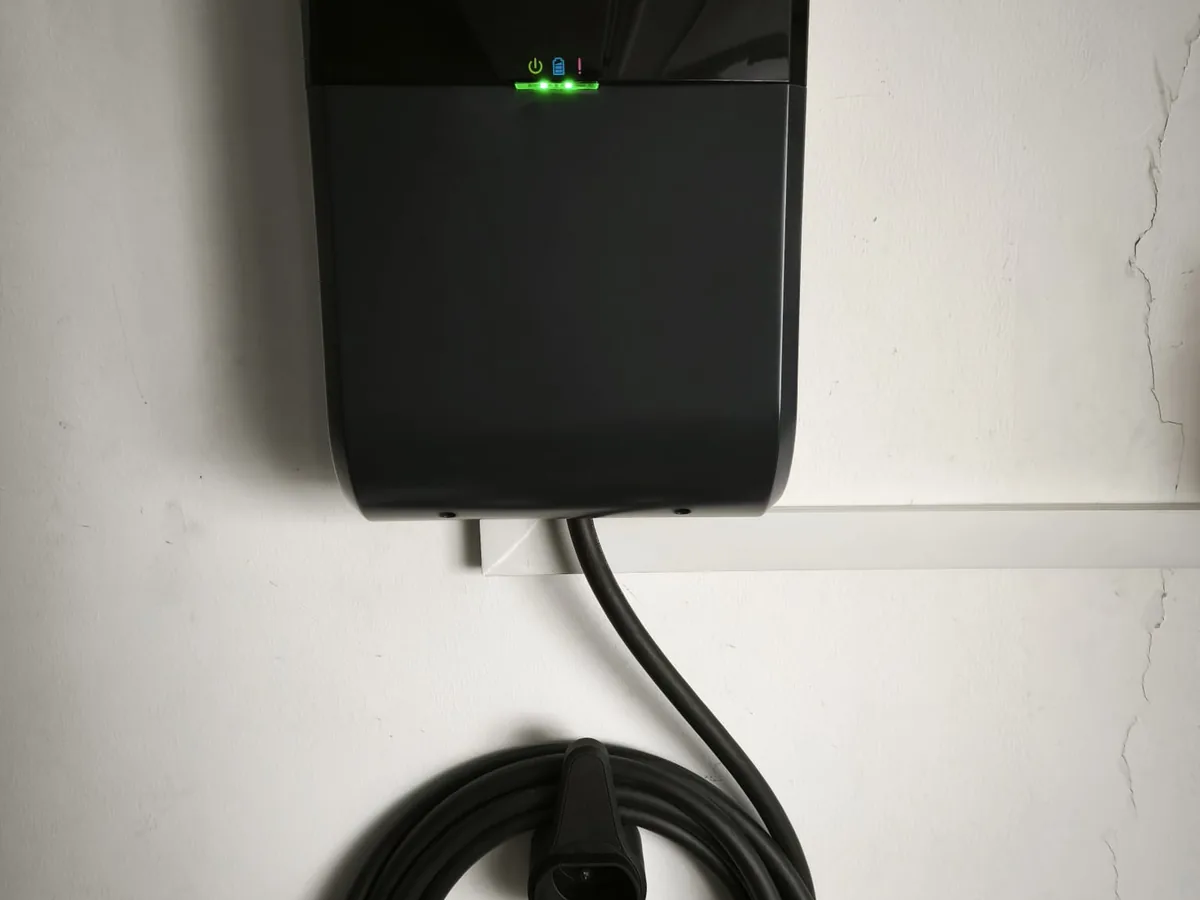
The short answer
Level 1, 2 and 3 are North American labels; LTA classifies chargers by IEC charging mode instead. A Level 2 EV charger here means a fixed Mode 3 AC wall charger, installed by a Licensed Electrical Worker and registered with LTA. Level 1 charging from a household socket is out: 13A household sockets are prohibited under the EV Charging Act.
- Level 1, 2 and 3 are North American shorthand. LTA classifies chargers by IEC charging mode.
- A Level 2 charger here is a fixed Mode 3 AC charger, wall-mounted or on a post, on its own protected circuit.
- Charging from a 13A household socket is prohibited under the EV Charging Act, and so are adaptors and extension cords.
- Portable (Mode 2) chargers are allowed only at landed homes: type-approved, registered, and on a dedicated switched socket with its own RCD.
- What Americans call Level 3 is DC charging, Mode 4 here, and it is the commercial end of the range.
On this page (7 sections)
What do Level 1, Level 2 and Level 3 mean?
The levels are North American shorthand for how a car is charged. Level 1 means charging from an ordinary household outlet through a portable cable. Level 2 means a dedicated, higher-power AC charger on its own circuit, usually mounted on a wall. Level 3 is the informal name for DC fast charging, where a large charger feeds the battery directly.
Search for "level 2 EV charger" from Singapore and much of what comes up is written for North American homes, about North American products. That is where the confusion starts, because Singapore does not use the levels at all. LTA's guidelines for supplying EV chargers classify them by charging mode, a system defined in the international standard IEC 61851-1, and the modes do not line up with the levels one for one.
When people here say "Level 2", what they mean is what LTA calls a fixed AC charger, or Mode 3. The rest of this guide maps each level to its Singapore equivalent, and explains what is allowed, what is restricted and what is ruled out.
How the levels map to Singapore's charging modes
IEC 61851-1 sorts charging into modes. In Mode 1 the car charges on AC from a domestic household supply with no further protective measures. Mode 2 adds a control and protection box built into the charging cable. Mode 3 is AC charging from a fixed charging station or wall box. LTA's supply guidelines list the charger types it accepts in these terms, with fixed DC chargers as Mode 4.
| US label | What it usually means | Nearest IEC mode | Where it stands in Singapore |
|---|---|---|---|
| Level 1 | A portable cable plugged into an ordinary household outlet | Mode 2: a portable cable with a control and protection device built in | Charging from a 13A household socket is prohibited under the EV Charging Act. A type-approved Mode 2 charger is allowed only at a landed home, on a dedicated switched socket with its own RCD. |
| Level 2 | A dedicated AC charger on its own circuit, usually on a wall | Mode 3: a fixed AC charger, wall-mounted or floor-standing | The standard way to charge at a home or a workplace. Installed by a Licensed Electrical Worker, certified, and registered with LTA before first use. |
| Level 3 (informal) | DC fast charging | Mode 4: a fixed DC charger | Accepted up to 500kW in LTA's guidelines. Installed at commercial sites; our range runs from 30kW to 240kW. |
Two things follow from the table. The Level 1 habit of plugging into whatever socket is nearest has no legal equivalent here. And portable charging, which overseas sits under Level 1 or Level 2, is a tightly restricted category in Singapore.
Can I charge from a normal household socket?
No. LTA's guide for EV drivers is direct about it: 13A household sockets are not designed for EV batteries, and using them is prohibited under the EV Charging Act. The same guide rules out adaptors and extension cords, which are not built for EV charging and could lead to electrocution or fire. Under the Act, it is an offence to use a charger improperly, or to allow one to be used improperly.
Portable chargers are a separate case, and they are allowed, within limits. LTA permits a non-fixed (Mode 2) charger only at a landed home, which the EV Charging Act treats as a restricted-access location. The charger must be a type-approved model, it must be registered with LTA like any other charger, and it must be used with a compatible, dedicated switched socket outlet that has its own residual-current device (RCD), without any extension cord, adaptor or portable socket outlet. Portable chargers are not allowed at condominiums or other non-landed private properties.
The only portable charger with LTA type approval is the QuickCharge Mercury 7 II. We supply it together with the dedicated socket it needs; see our portable EV charger page. If you charge in the same place every day, a fixed charger is still the better everyday set-up.
What a Level 2 charger is in Singapore
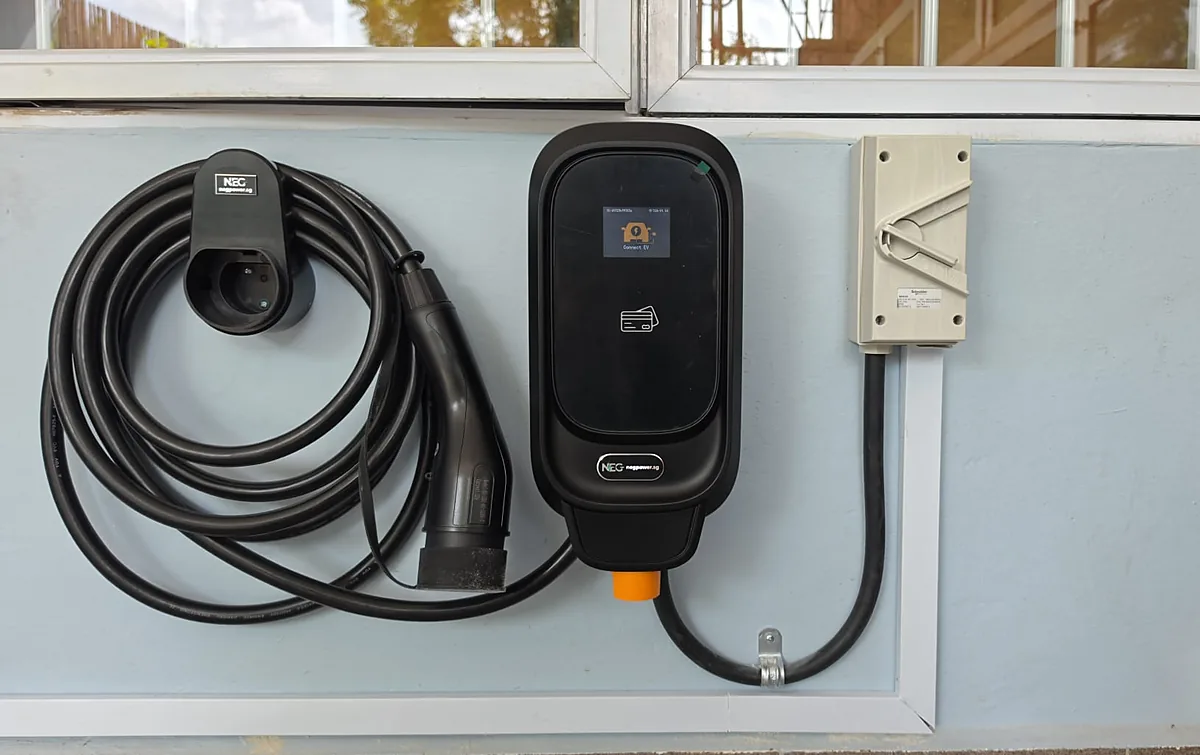
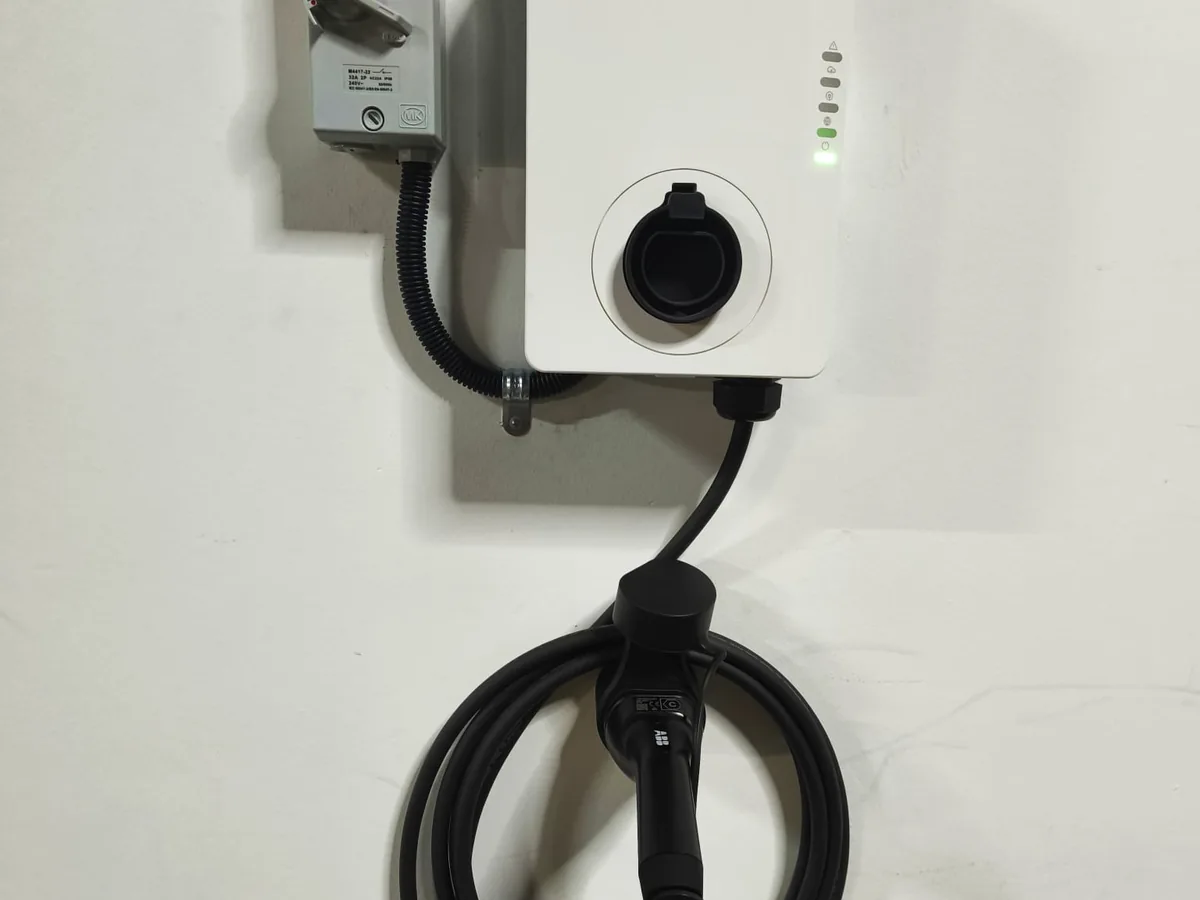
A Level 2 charger here is a fixed AC charger, Mode 3 in LTA's terms, either mounted on a wall or standing on its own post. It is wired back to your distribution board on a dedicated circuit with its own protection, and it has a Type 2 connector, the AC plug that matches the inlets on EVs here. Our guide to Type 2 and CCS2 connectors explains why that matters.
Because it is fixed, it comes with a process. Each step below is set by the EV Charging Act and LTA, and each one is something you can check.
- 1
A type-approved model
Every charger model must be type-approved by LTA before it can be supplied. LTA publishes the list of type-approved models on its safety page.
- 2
Installed by a Licensed Electrical Worker
LTA requires a fixed charger to be installed by a Licensed Electrical Worker (LEW).
- 3
Certified, with a Certificate of Fitness
A charger equipment specialist certifies the charger. The Certificate of Fitness issued after installation and certification is what the charger is registered with.
- 4
Registered before first use
Every charger, home chargers included, must be registered with LTA before it is used, and the owner is responsible for that. We do not do the registration for you, so you make the application yourself, and a registration mark must be affixed within 60 days.
We handle the supply, the installation and the certification. Registration is yours to do as the owner, and how LTA charger registration works has the detail. Time on site for a home AC installation is 1–3 hours, and the typical turnaround to your first charge is 1–3 days. Our outdoor installations are rated IP55.
We install ten AC brands, all LTA type-approved. Browse the AC wall chargers we fit, or compare all twelve brands we carry, DC included.
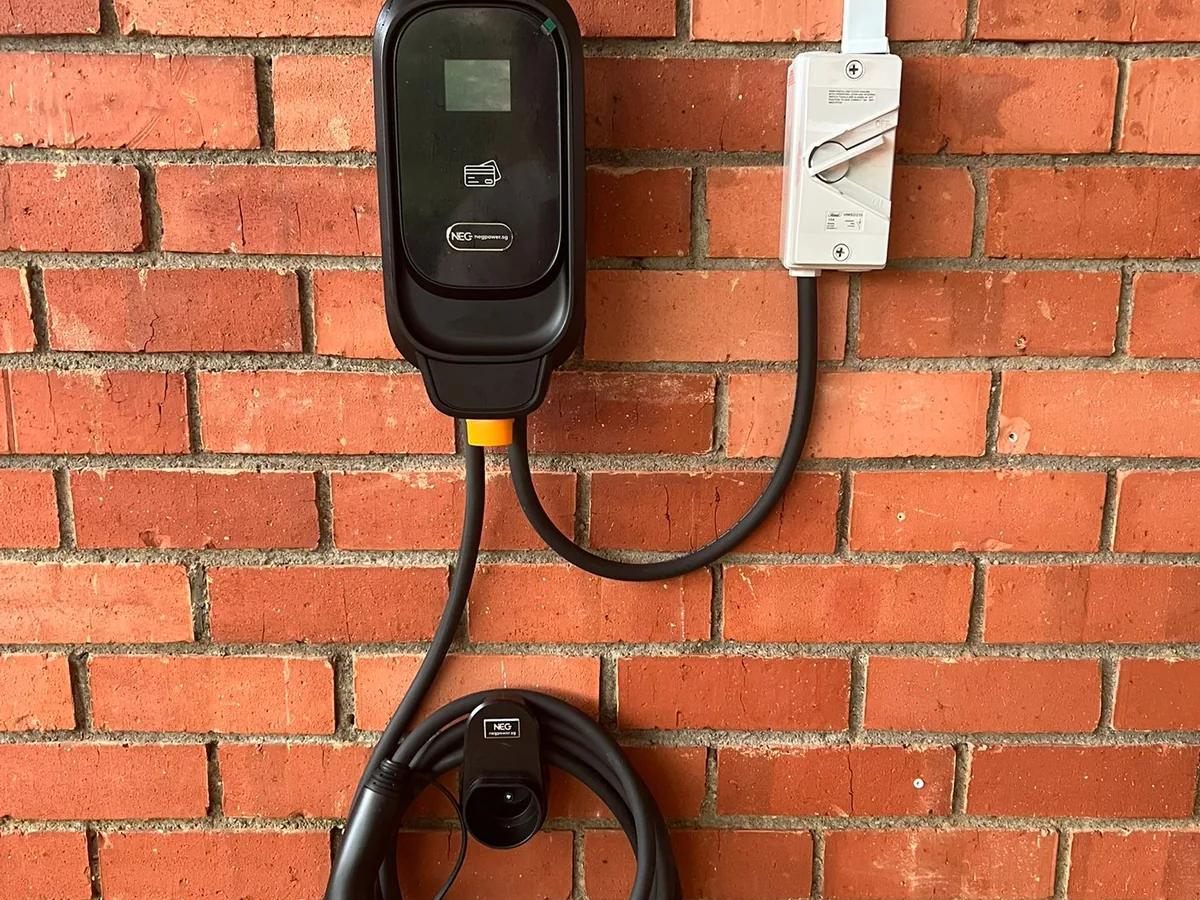
How fast is a Level 2 charger?
Two things decide it: your electricity supply and your car.
Your supply. Low-voltage supply in Singapore comes as 230V single-phase or 400V three-phase, according to SP Group. A single-phase supply takes a charger of up to 7.4kW. A three-phase supply takes 11kW or 22kW.
Single-phase
230V on one phase
32A × 230V ≈ 7.4kW at most
Three-phase
400V across three phases
16A per phase ≈ 11kW · 32A per phase ≈ 22kW
Your car. LTA's driver guide puts it in one line: the rate of AC charging is limited by the onboard charger, the part of the car that converts AC into DC for the battery. LTA's own example is a car that only supports single-phase charging. Connected to an 11kW three-phase charger, it still charges at 3.7kW. A more powerful charger only helps if your car's onboard charger accepts the extra power.
So the right size is the one your supply and your car agree on. That is what the free site survey settles before anything is quoted, and our 7kW vs 22kW guide sets out the trade-offs in detail.
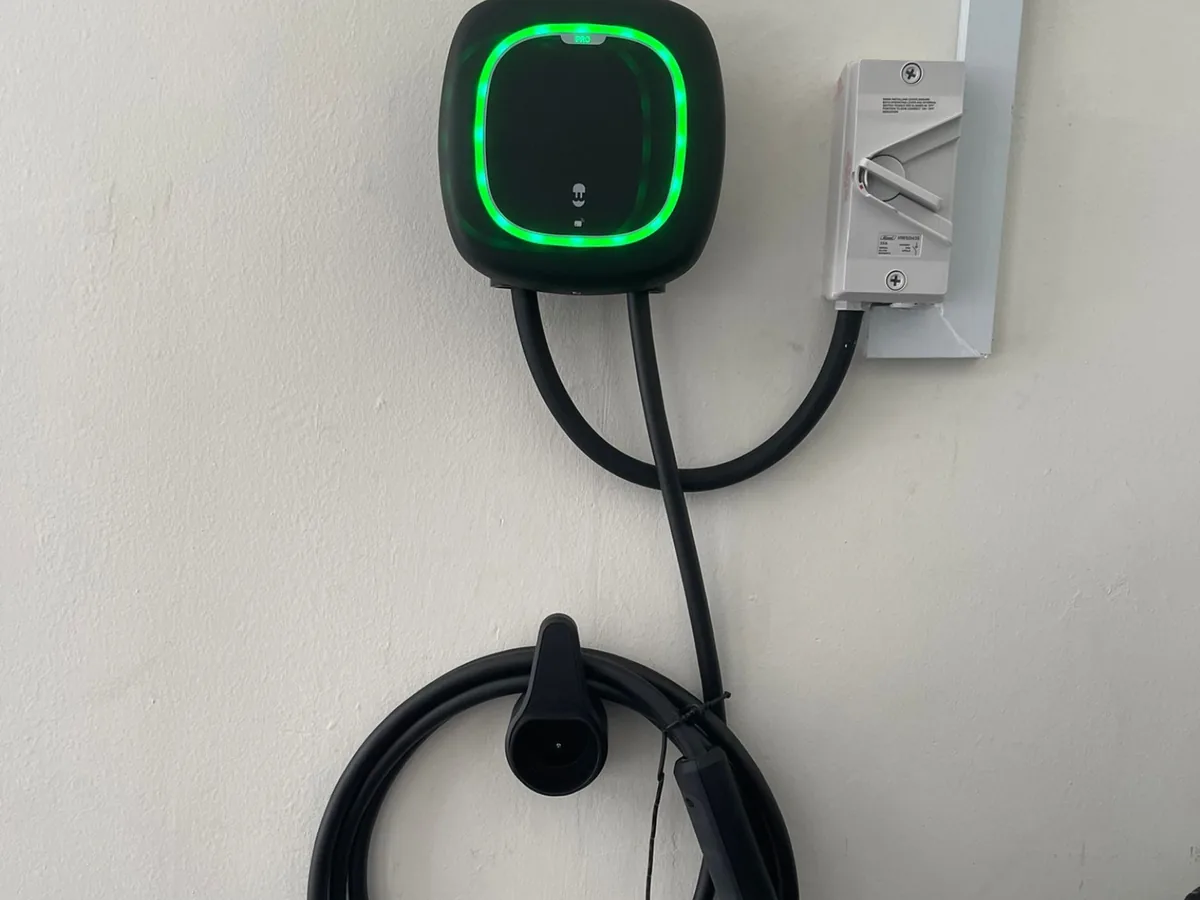
Is there a Level 3 charger in Singapore?
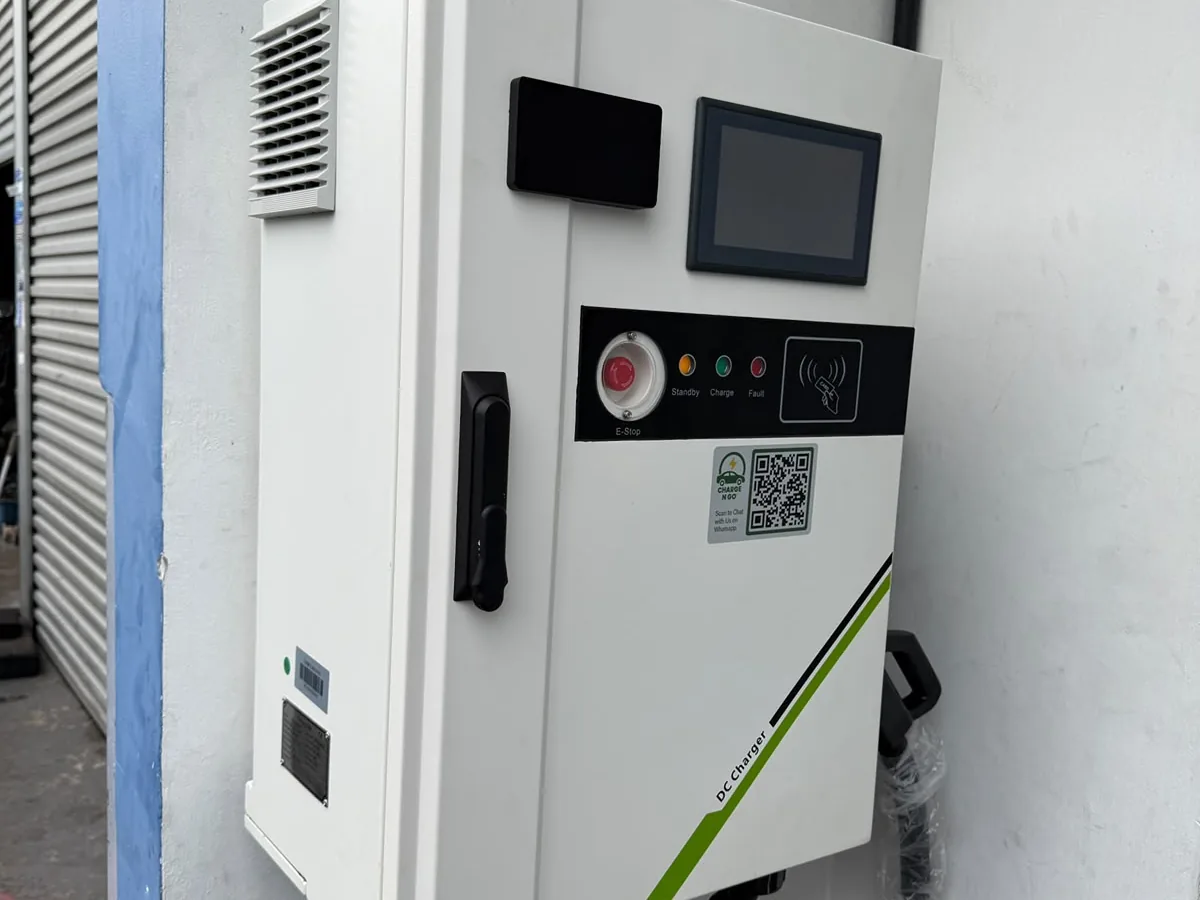
Not by that name. What North Americans call Level 3 is DC charging, and LTA's guidelines list it as Mode 4: a fixed DC charger, accepted up to 500kW. A DC charger converts the power inside the unit and feeds the battery directly, so the limit set by the car's onboard AC charger no longer applies.
We install DC chargers for businesses, from a 30kW wall unit to 240kW cabinets, at workplaces, dealerships, depots and fleet sites. If you are weighing up DC for a business, read AC vs DC charging first: it covers where each fits, and which grant applies to which charger.
Fixed or portable: which do you need?
At a condominium, the question does not arise: LTA does not allow portable chargers at non-landed private properties. At a landed home you have a genuine choice, and it is worth weighing honestly.
Fixed wall charger (Mode 3)
- Hard-wired on its own protected circuit, and stays on the wall.
- Up to 7.4kW on single-phase supply, or 11kW or 22kW on three-phase, if your car accepts it.
- Installed by an LEW, certified, and registered with LTA.
The everyday choice if you charge in the same place.
Portable charger (Mode 2)
- Landed homes only, on a dedicated switched socket with its own RCD.
- Must be a type-approved model, registered with LTA, just like a fixed charger.
- Plugs into its dedicated socket rather than being wired in.
A compliant option where you need flexibility, not a way round a proper installation.
If you are still deciding what to put on the wall, our guide to choosing a home EV charger in Singapore works through your car, your supply and the brands. If you are not sure what is possible where you live, start with charging at HDB, condo and landed homes.
Sources
The official pages this guide was checked against.
- Guidelines for the Supply of EV Chargers (Land Transport Authority, as of 15 October 2025)
- Electric Vehicle Guide for Drivers (Land Transport Authority, 2024)
- Guidelines for the Registration of EV Chargers (Land Transport Authority, as of 3 November 2025)
- Regulating the safety of EV chargers (Land Transport Authority)
- EV charger registration (OneMotoring, Land Transport Authority)
- Registration of EV chargers (Land Transport Authority)
- How to apply for electricity connection (SP Group, January 2026)
- E-mobility charging modes (Phoenix Contact, June 2014)
Written by Charge N Go's installation team. We supply and install EV chargers for homes and businesses across Singapore, and we update this guide when the rules or the sources above change.