

30kW DC — faster than AC, without rebuilding your electrical supply
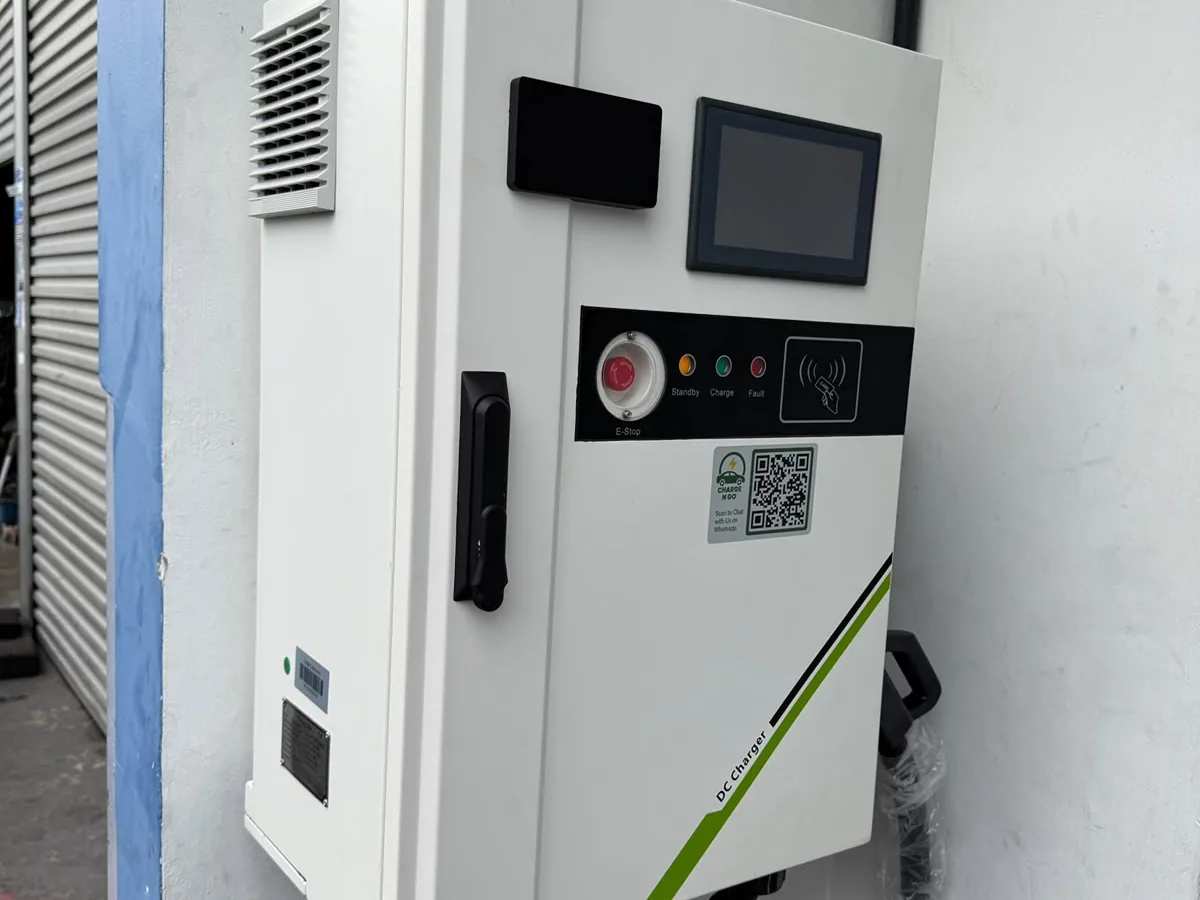
The entry point to DC charging. Around 28 minutes per 100km, CCS2, OCPP-managed, and light enough on supply that most sites take one without an upgrade.
- ~28 min per 100 km
- CCS2 — Singapore's DC standard
- Usually no supply upgrade
- Workplaces, dealerships, light vans
When AC is too slow and 120kW is overkill
Most sites that think they need fast charging actually need faster charging. A 30kW DC unit turns a four-hour AC top-up into a lunch break. That is enough for a dealership moving demo cars, a workplace with pool vehicles, or a service centre handing cars back the same day.
The real advantage is what it does not demand. High-power DC often means a new sub-main, a bigger incomer, sometimes a transformer conversation with SP Group. A 30kW unit is usually within the headroom a commercial site already has, so the civil and electrical works stay modest and the project stays on schedule.
- CCS2 connector, works across the local fleet
- OCPP-managed — access control and billing
- Modest supply demand, minimal site works
- Installed by a Licensed Electrical Worker
Time to add 100 km of range
- 30kW charger28 min
- 60kW charger14 min
- 120kW charger7 min
- 180kW charger4.7 min
Indicative only. Assumes 14 kWh per 100 km and the charger holding its rated output. In practice DC charging tapers as the battery fills, and a car capped at 50kW will not charge faster on a 240kW unit — your car's onboard limit, battery size, state of charge and temperature all matter. We confirm realistic figures for your actual vehicles at the site survey.
Enough speed, without the infrastructure bill
Roughly 4× an AC wallbox
A 22kW AC charger is limited by the car's onboard charger — many cap at 7.4 or 11kW. A 30kW DC unit bypasses that entirely and feeds the battery direct, so the car actually receives 30kW.
Lighter on your supply
Lower demand means you can often add DC on the spare capacity you already have, rather than funding a supply upgrade before the first car plugs in.
OCPP control & billing
An open OCPP backend gives access control, live usage data, reports and pay-per-use billing — so the unit can charge staff, tenants or customers per kWh or per session.
Honest about the ceiling
30kW will not turn a depot around at scale and it does not qualify for the EHVCG grant. If either matters to you, we will say so and quote the 60–240kW range instead.
30kW DC vs 22kW AC vs 60–240kW DC
| Factor | AC 22kW | DC 30kW | DC 60–240kW |
|---|---|---|---|
| Time per 100 km | ~45–90 min* | ~28 min | 3.5–14 min |
| Limited by the car? | Yes — onboard charger | No | No |
| Typical supply works | Minimal | Modest | Significant — often a supply upgrade |
| EHVCG eligible | No | No — below the 50kW minimum | Yes, where the applicant qualifies |
| Best setting | Homes, condos, long-dwell workplaces | Dealerships, workplaces, light vans | Depots, heavy vehicles, public hubs |
| Connector | Type 2 | CCS2 | CCS2 |
*AC speed depends entirely on the car's onboard charger — a vehicle capped at 7.4kW draws 7.4kW from a 22kW wallbox. DC bypasses that limit. Figures are indicative and confirmed at your site survey.
Frequently asked questions
What is CCS2?
CCS2 (Combined Charging System, Type 2) is the DC fast-charging connector standard adopted across Singapore. It adds two DC pins beneath the familiar Type 2 AC inlet, so a single port on the car handles both AC and DC. Every EV sold for the local market supports CCS2 for DC charging, so a CCS2 charger works across the fleet — no proprietary plug needed. A handful of older models used CHAdeMO, but CCS2 is the standard here.
Is a 30kW DC charger eligible for the EHVCG grant?
No. LTA's Electric Heavy Vehicle Charger Grant needs the charger to be rated at least 50kW, so a 30kW unit falls below it whoever is applying. If the grant matters to your business case, look at our 60 to 240kW range. Remember too that the grant is tied to registering a new electric heavy vehicle, not simply to installing a charger.
Will 30kW be fast enough for my site?
It depends on dwell time and how many vehicles share the unit. One vehicle needing 100km over a lunch break is comfortable. Four vehicles queueing for the same bay across a two-hour window is not. We count your vehicles, how long each actually parks and when demand peaks, then tell you honestly whether 30kW clears it or whether you need higher power or a second unit.
Do I need a power supply upgrade for 30kW?
Usually not, which is much of the appeal. Many commercial sites have enough spare capacity for a 30kW unit, especially with dynamic load management sharing the supply between chargers. We confirm it properly at the survey, by checking your incoming supply, the load you already carry, and your switchboard capacity, before anything is quoted. We would rather find the limit on day one than halfway through the installation.
What is OCPP, and can I bill users?
OCPP (Open Charge Point Protocol) is the open, vendor-neutral standard that lets a charger talk to a management backend, so you are not locked to one supplier's software. Our DC chargers are OCPP-compliant, giving remote monitoring, access control, usage reports and billing. Yes — you can bill staff, tenants, visitors or the public per kWh or per session, with RFID or app start/stop.
Do you maintain them?
Yes. DC chargers are power electronics and benefit from planned upkeep. We offer maintenance and service support — remote monitoring through the OCPP backend, firmware updates, preventive checks and on-site repair — to keep uptime high. We will recommend a service arrangement suited to how hard your site actually uses the unit.