How to install an EV charger at home in Singapore (landed homes)
How to install an EV charger at a landed home in Singapore: the free survey, supply checks, install day, certification, LTA registration and SP upgrades.
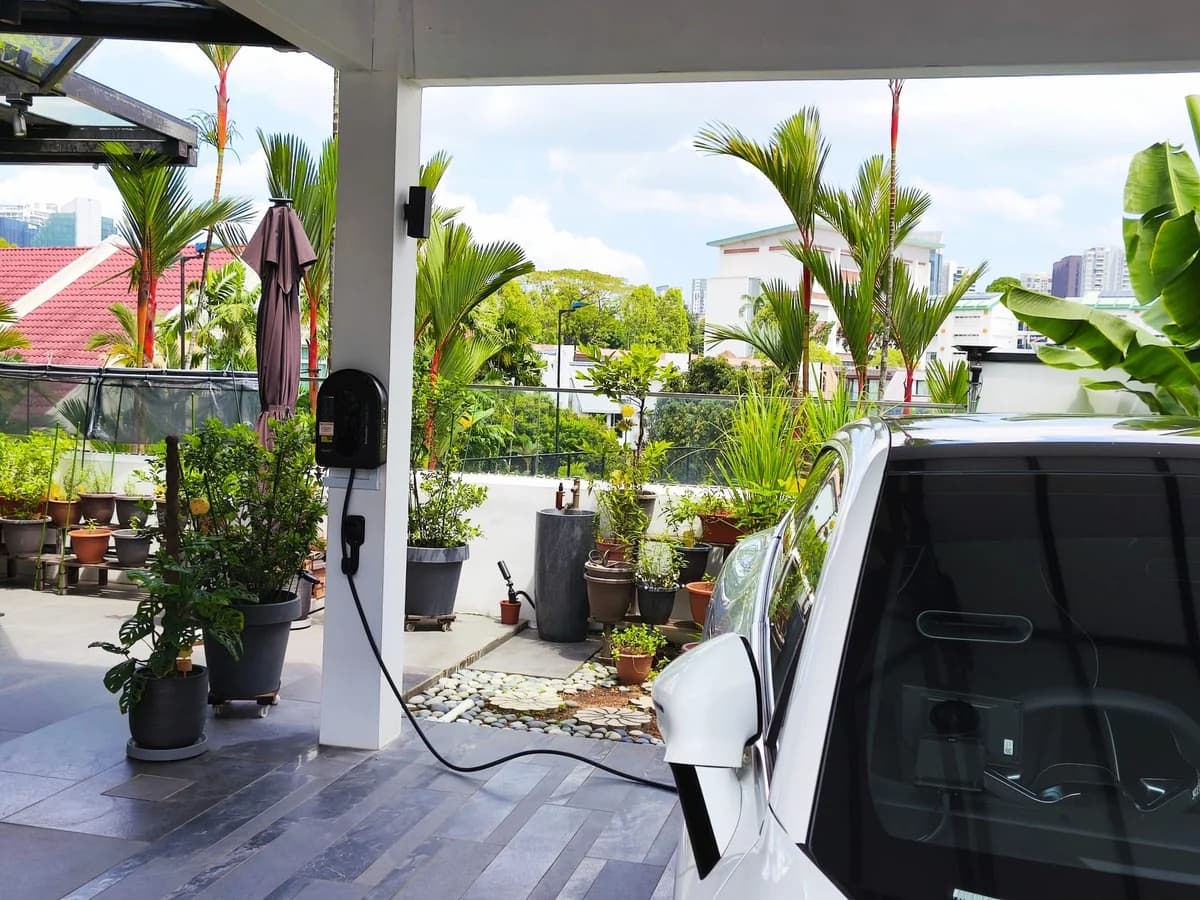
The short answer
Installing an EV charger at a landed home in Singapore starts with a free site survey of your supply and cable route. A Licensed Electrical Worker then installs an LTA type-approved charger on its own protected circuit, a charger equipment specialist certifies it, and it is registered with LTA before use. The AC install takes 1–3 hours on site.
- A private home charger belongs at a landed home; condos and HDB carparks work differently.
- The free site survey checks your supply, spare capacity, cable route and mounting spot before anything is quoted.
- A Licensed Electrical Worker installs the charger, and a charger equipment specialist certifies it.
- Every charger must be registered with LTA before use, and your installer can submit the application for you.
- An AC install takes 1–3 hours on site, and you are typically charging within 1–3 days, unless SP has to upgrade your supply first.
On this page (8 sections)
Is your home suitable for a home charger?
This guide is for landed homes: terraces, semi-detached houses and bungalows, where you park on your own property. The EV Charging Act treats a parking space within, or adjoining, a landed house as a restricted access location, and that is where a private home charger belongs. LTA's guide for drivers says that at residential premises, chargers may only be installed in garages or designated carparks, and that you do not have to engage a licensed EV charging operator to run a charger at a private landed home.
If you live in a condominium or an HDB flat, the route is different. Condo chargers are shared, sit in common areas and need the management corporation's approval. Chargers in HDB carparks are deployed and operated by LTA-appointed EV charging operators. Our guide to EV charging at HDB, condo and landed homes explains what is possible in each.
One more thing to know before you start: there is no government grant for a charger at a landed home. You pay for the whole installation, so it is worth knowing what each part of it is for. Everything below is what our landed home EV charger installation covers, from the survey to the registration.
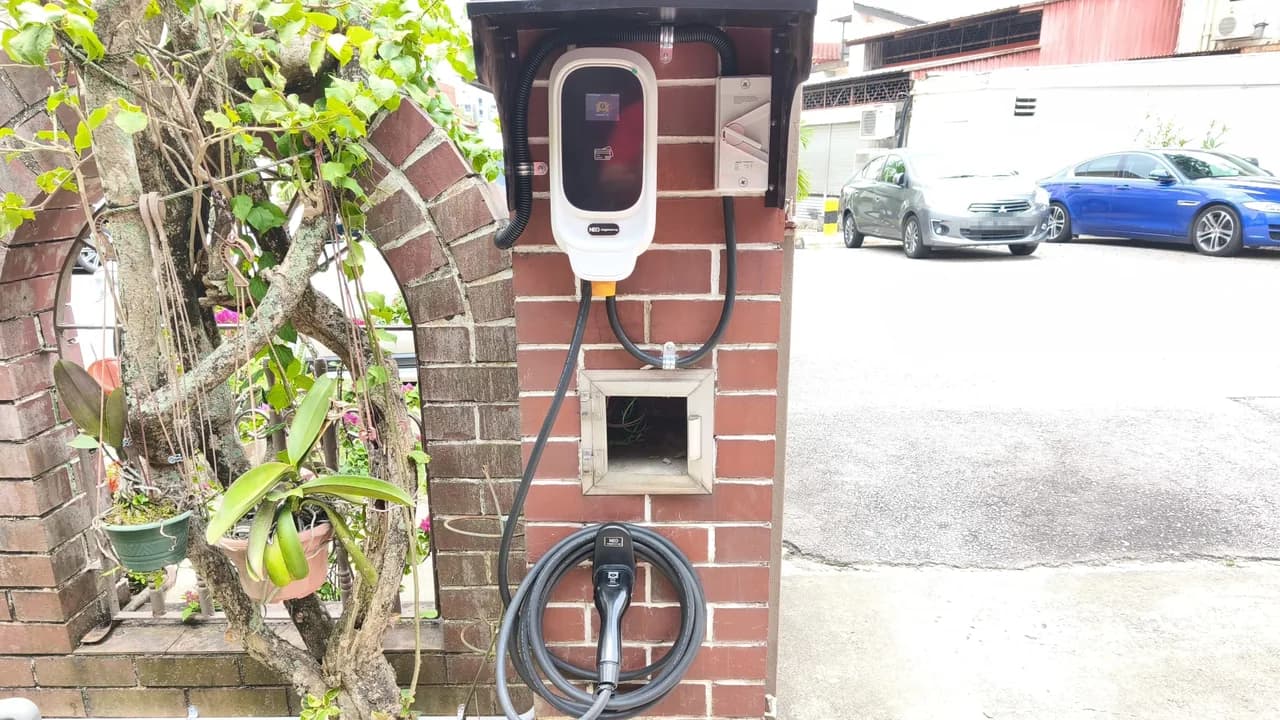
How to install an EV charger at home, step by step
A home installation is a short sequence. Most of the paperwork can be done for you, but it still helps to know what each step is and who signs for it.
- 1
Tell us your car and where you park
Your car model tells us the AC charging power it accepts. Where you park tells us where the charger will go and how far the cable has to run.
- 2
Free site survey
A surveyor checks your incoming supply, the spare capacity at your distribution board, the cable route and the mounting spot, usually in 30 to 45 minutes, and quotes you on the spot.
- 3
Choose the charger
You pick an LTA type-approved charger sized to your supply and to your car. We will not sell you a speed your car cannot use.
- 4
Installation day
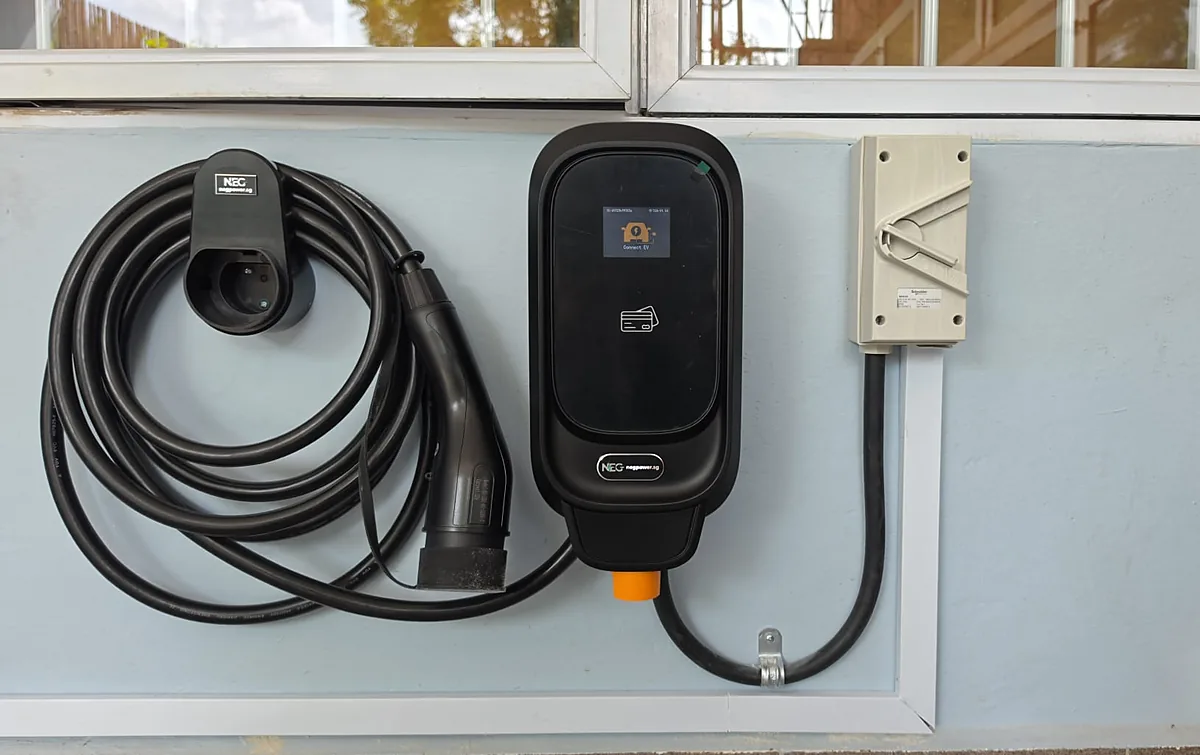
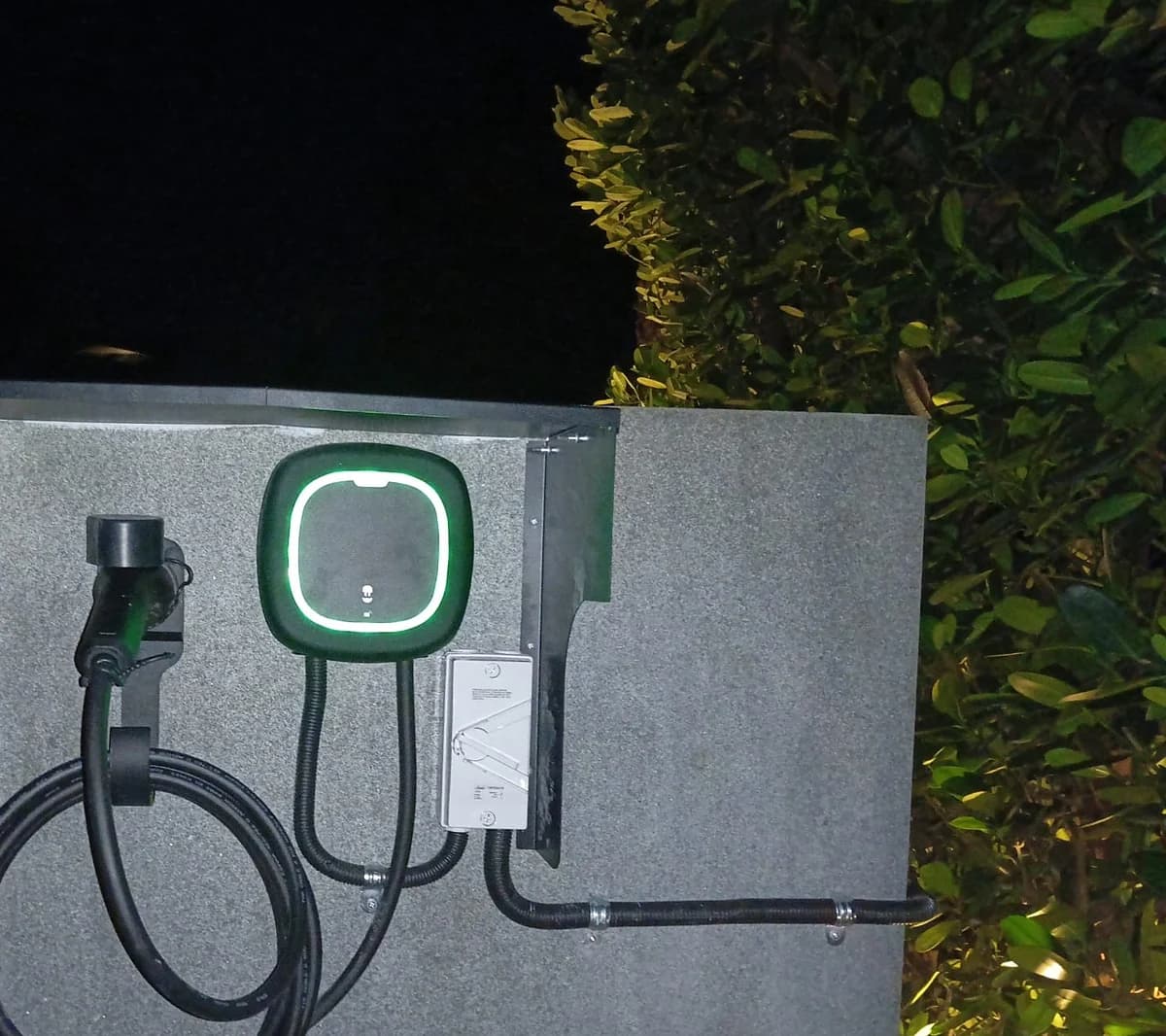
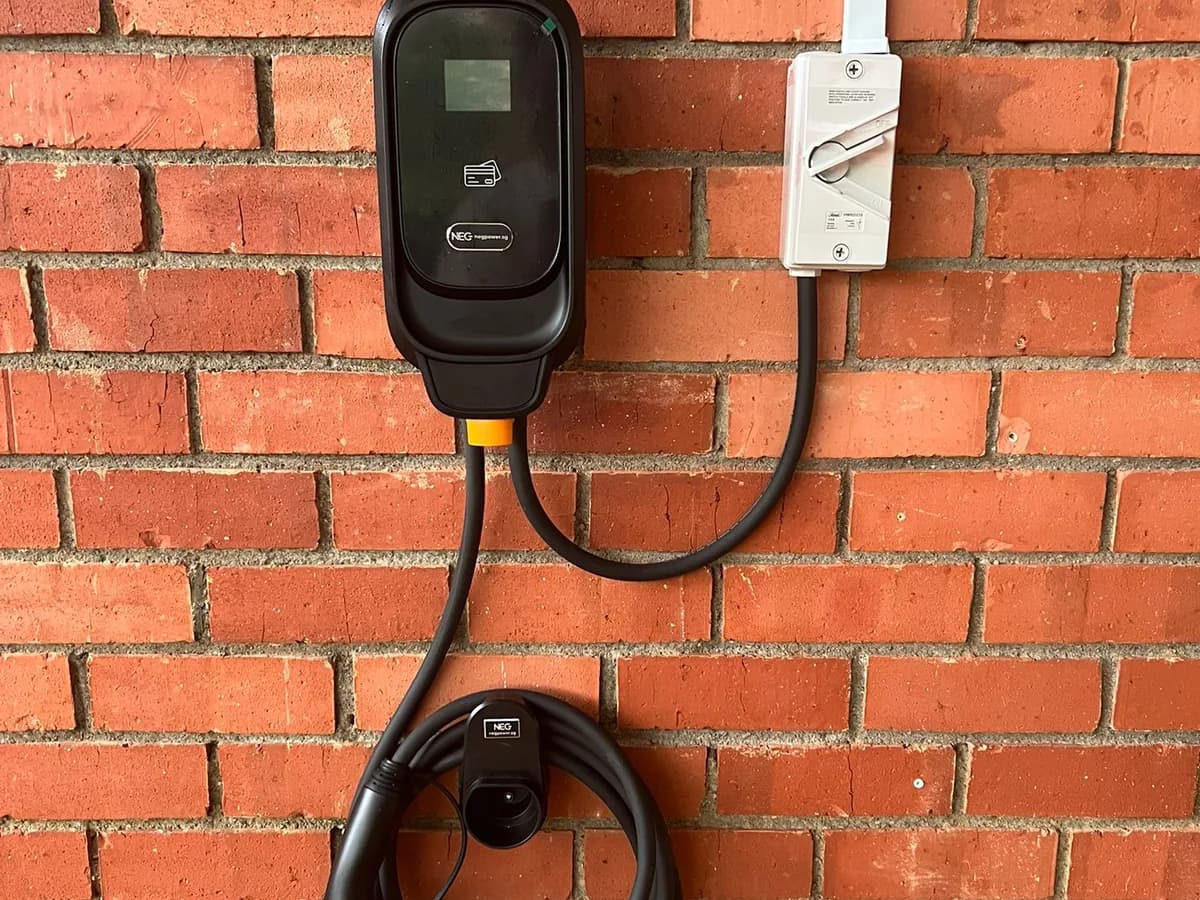
A Licensed Electrical Worker (LEW) installs the charger on its own protected circuit, with the cable run in neat trunking. An AC charger takes 1–3 hours on site.
- 5
Certification
A charger equipment specialist certifies the charger. The Certificate of Fitness issued after installation and certification is what the charger is registered with.
- 6
LTA registration
The charger is registered with LTA before it is used. We can submit the application for you; you then confirm the details on OneMotoring.
- 7
Registration mark
Once registered, the charger must carry its LTA registration mark within 60 days of the registration date.
Two different times matter here, and they are easy to confuse. The installation itself takes 1–3 hours on site for an AC charger. From the day you approve the quote, you are typically charging within 1–3 days, which allows for booking the visit and getting the paperwork through. The one thing that can stretch that is a supply upgrade by SP, covered further down.
What the free site survey checks
The survey is where the real decisions are made. A surveyor opens your distribution board, walks the route to where you park, and works out what your home can actually deliver. It is free, carries no obligation, and usually takes 30 to 45 minutes. What happens at the free site survey is set out in full on its own page; this is the short version.
| What we check | Why it matters |
|---|---|
| Incoming supply: single- or three-phase | SP's low-voltage supply is 230V single-phase or 400V three-phase. A single-phase supply takes a charger of up to 7.4kW; three-phase takes 11kW or 22kW. |
| Spare capacity at the distribution board | The board has to carry the charger as well as everything else in the house. Its headroom decides whether the charger goes straight in, needs load management, or needs work on the board or the supply first. |
| Space for a new circuit | The charger needs its own breaker and residual-current protection, so the board needs a spare way or room to add one. |
| Cable route and distance | The run from the board to your parking spot sets how much cable and trunking the job needs, and where it can be fixed neatly. |
| Mounting spot | A solid wall or post within easy reach of your car's charging port, with room to hang the cable. |
| Outdoor exposure | Whether the charger will take afternoon sun or driven rain. Our outdoor installs are IP55, and an exposed spot may also warrant a canopy or enclosure. |
| Earthing and protection | Proper earthing and RCD or RCBO protection are part of every compliant installation. |
To help the surveyor, have your car model ready, so we can confirm the AC charging power it accepts, and make sure someone can let us reach the distribution board and the parking spot. The person at home does not have to be you.
Choosing the charger for your supply and your car
Once the survey has told you what your supply is, choosing the charger comes down to three questions: how much power the supply can carry, how much power the car can accept, and which features you want.
Single-phase
230V on one phase
32A × 230V ≈ 7.4kW at most
Three-phase
400V across three phases
16A per phase ≈ 11kW · 32A per phase ≈ 22kW
The car matters as much as the house. LTA puts it plainly: "Rate of AC charging is limited by the onboard charger." LTA's own example is a car that only supports single-phase charging, connected to an 11kW three-phase charger: it still charges at 3.7kW. A faster charger only helps if your car's onboard charger accepts the extra power, which is why the survey looks at the supply and the car together before recommending a size. Our guide to 7kW vs 22kW home chargers works through that choice in detail.
Whatever the size, the charger must be LTA type-approved: under the EV Charging Act, every model has to be approved before it can be supplied. The home chargers we install come from ten AC brands, all type-approved, all using the Type 2 connector that matches the AC inlet on EVs sold here, and all running on OCPP. For brands, smart features and warranties, read how to choose a home EV charger.
What happens on installation day
An AC home charger takes 1–3 hours on site. LTA requires a fixed charger to be installed by a Licensed Electrical Worker, and a tidy, compliant installation has three parts you can see for yourself.
- A dedicated circuit. The charger gets its own circuit from the distribution board, with its own breaker and residual-current protection (an RCD or RCBO), so it is protected separately from the rest of the house.
- Neat cabling. The cable runs in trunking or conduit from the board to the charger, along walls and edges rather than across the porch.
- Weatherproofing. Our outdoor installs are IP55-rated. Where the spot takes afternoon sun or driven rain, an optional canopy or charger housing keeps the weather off the unit.
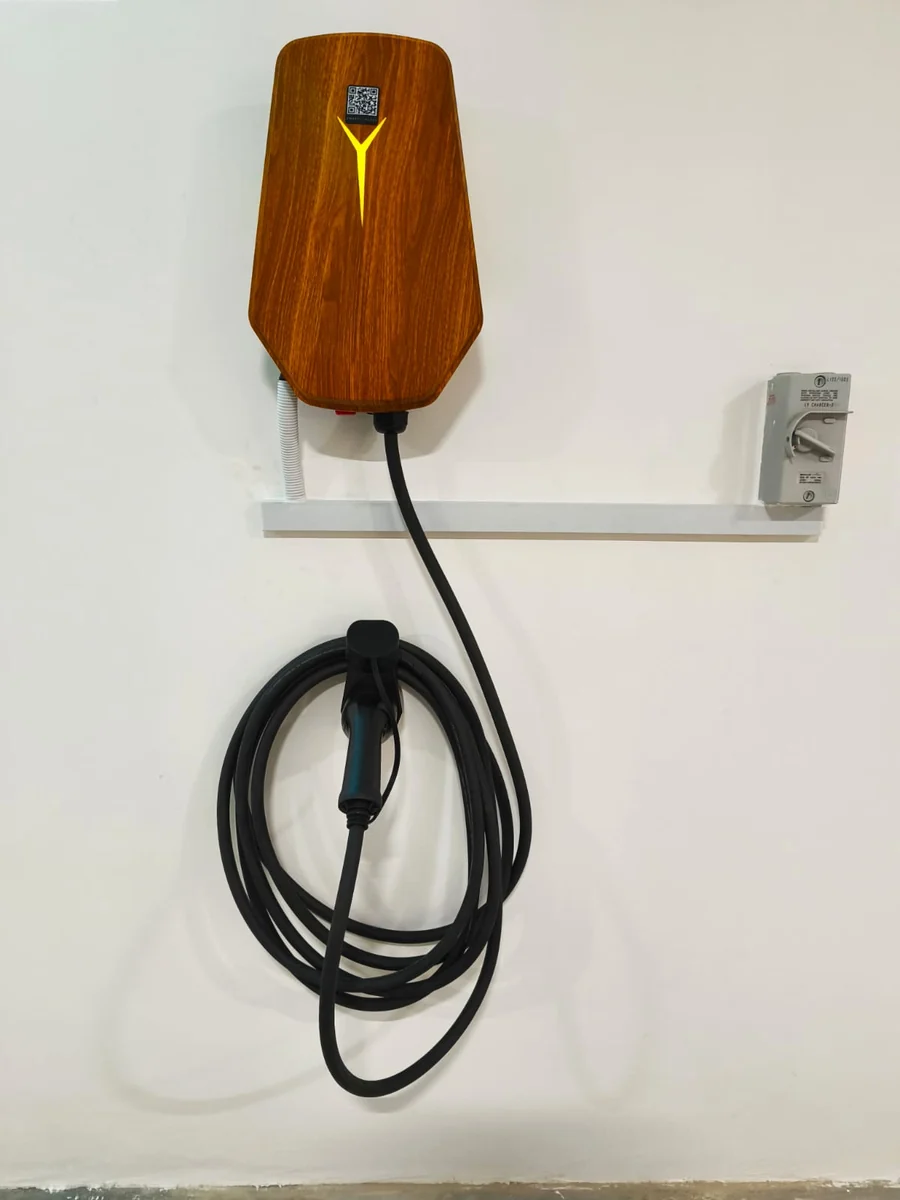
Certification and LTA registration: who does what
Several people sign off a home charger, and it helps to know which is which. LTA fixes the order: a model is type-approved first, and only then is the charger installed, certified and registered.
| Step | Who | What it involves |
|---|---|---|
| Type approval | LTA | Every charger model must be type-approved before it can be supplied. LTA publishes the list of type-approved models. |
| Installation | Licensed Electrical Worker | Installs the fixed charger on its own protected circuit. |
| Certification | Charger equipment specialist | Certifies the charger. The Certificate of Fitness issued after installation and certification is needed to register it. |
| Registration | The owner, or the installer on the owner's behalf | Every charger must be registered with LTA before use. An installer can submit the application as a third party; the owner then logs in to OneMotoring to verify the details. The registration mark must be affixed within 60 days of registration. |
The application asks for the charger's type approval ID and serial number, the installation address, the LEW's name and licence number, the equipment specialist's name and the Certificate of Fitness. LTA does not ask for photographs of chargers installed in landed homes.
Registration carries a fee. It is a mandatory fee paid to LTA, not to us, and it does not change the price of your installation. If you later transfer, relocate or deregister the charger, you must tell LTA. Our guide to LTA-approved chargers and registration covers the process in more detail.
What if your supply needs upgrading?
Sometimes the survey finds that the incoming supply cannot carry a charger on top of the house's existing load, or you want three-phase charging on a single-phase supply. Work on the distribution board, or a charger with load management that limits its own power, can solve some of these cases. When the supply itself has to change, SP Group does that work, and it is a separate process with its own timeline.
SP treats an upgrade of the load at an existing home as a modification of connection. The homeowner engages a Licensed Electrical Worker, and the LEW submits the application through SP's eBusiness Portal. SP's FAQ for landed homes says a new service cable typically takes about three weeks for approvals, and about another three weeks for the cable work once approvals are in.
How much does it cost to install an EV charger at home?
We do not publish prices, because no two landed installations are the same job. What we can tell you is what a quote is made of. Each part below is something the survey measures, so the quote you get after it is a firm figure rather than an estimate.
Board and supply
Spare ways and spare capacity decide whether works are needed first
Protection
A dedicated circuit with its own RCD or RCBO
Cable run
The distance and route from the board to the charger
Mounting
Wall or post, trunking, and any canopy or enclosure
Charger unit
Brand, power and smart features
- The distribution board. With spare capacity and a spare way, the charger connects straight in; without them, the board needs work first.
- Protection. A dedicated circuit with its own RCD or RCBO, on every installation.
- The cable run. The distance and route from the board to your parking spot, and how much trunking it needs.
- The charger. Brand, power rating and smart features.
- Housing, if needed. An optional canopy or enclosure for an exposed spot.
- Certification and registration. The Certificate of Fitness and LTA registration, handled as part of the job.
Our EV charger pricing page explains how each factor moves a quote. When you are ready for an exact figure, book a survey through our landed home installation page.
Sources
The official pages this guide was checked against.
- Regulating the safety of EV chargers (Land Transport Authority)
- Registration of EV chargers (Land Transport Authority)
- EV charger registration (OneMotoring, Land Transport Authority)
- Guidelines for the registration of EV chargers (Land Transport Authority, as of 3 November 2025)
- Electric vehicle guide for drivers (Land Transport Authority, 2024)
- FAQs on electricity supply connection for landed residential premises (SP Group)
- How to apply for electricity connection (SP Group, January 2026)
Written by Charge N Go's installation team. We supply and install EV chargers for homes and businesses across Singapore, and we update this guide when the rules or the sources above change.