How to choose a home EV charger in Singapore (2026 buyer's guide)
Choosing a home EV charger in Singapore: match it to your car and supply, check what your home allows, then compare features, brands and warranty.
The short answer
Choose a home EV charger by matching it to your car's onboard charger, which caps how fast it charges on AC, and to your electricity supply: single-phase takes up to 7.4kW, three-phase takes 11kW or 22kW. Where you live decides what you may install. Then compare smart features, warranty and support. A free site survey confirms the fit.
- Your car's onboard charger caps AC charging speed, whatever the wall charger is rated.
- Single-phase supply takes a charger of up to 7.4kW; three-phase takes 11kW or 22kW.
- Landed homes can have a private charger; condo chargers go through the MCST; HDB carpark chargers are run by LTA-appointed operators.
- Every charger must be LTA type-approved, installed by a Licensed Electrical Worker, certified, and registered with LTA before use.
- Choose the brand last, on smart features, warranty and who supports it locally.
On this page (8 sections)
Start with your car's onboard charger
Every electric car has an onboard charger: the part that converts the AC power from a wall charger into DC for the battery. The Land Transport Authority (LTA) puts the consequence plainly: "Rate of AC charging is limited by the onboard charger." A wall charger rated above your car's onboard charger does not make the car charge any faster.
LTA's guide for drivers sets out the common AC levels. A car supports either single-phase charging, at up to 3.7kW or 7.4kW, or three-phase charging, at up to 11kW, 22kW or 43kW. Which one your car supports is the first fact to settle, because it decides which charger sizes are worth considering at all.
If you expect to change cars in the next few years, think about the next car as well as this one. The charger is a fixed installation; the car on the drive is not.
Check your home's electricity supply
The second limit is the supply coming into your home. SP Group connects low-voltage supply in two forms: single-phase at 230V, up to a maximum of 23kVA (100A), and three-phase at 400V. A single-phase supply takes a charger of up to 7.4kW. A three-phase supply takes 11kW or 22kW.
The charger also needs room on your distribution board: a circuit of its own, with its own protection, that does not overload what the house already draws. A 7.4kW charger draws 32A by itself, so spare capacity is one of the first things we check.
If you want 11kW or 22kW and your home is single-phase, the supply itself has to change. That means an application to SP Group, made by a Licensed Electrical Worker. Our 7kW vs 22kW guide explains single-phase and three-phase in detail, and what an upgrade involves.
7.4kW, 11kW or 22kW: how the options compare
Put the car and the supply together and the choice narrows to three AC sizes. The range figures below are arithmetic, not a road test: they assume a car that uses 14kWh per 100km, and they only apply if the car's onboard charger accepts that power.
| Charger | Supply it needs | Current | Range added per hour* | Full speed needs a car that accepts |
|---|---|---|---|---|
| 7.4kW | Single-phase, 230V | 32A | About 53km | 7.4kW on AC |
| 11kW | Three-phase, 400V | 16A per phase | About 79km | 11kW on three-phase AC |
| 22kW | Three-phase, 400V | 32A per phase | About 157km | 22kW on three-phase AC |
Range added per hour of charging
At 14 kWh per 100 km. AC figures assume the car's onboard charger accepts that power.
- 7.4kW ACsingle-phase
- ~53 km
- 11kW ACthree-phase
- ~79 km
- 22kW ACthree-phase
- ~157 km
- 30kW DCcommercial
- ~214 km
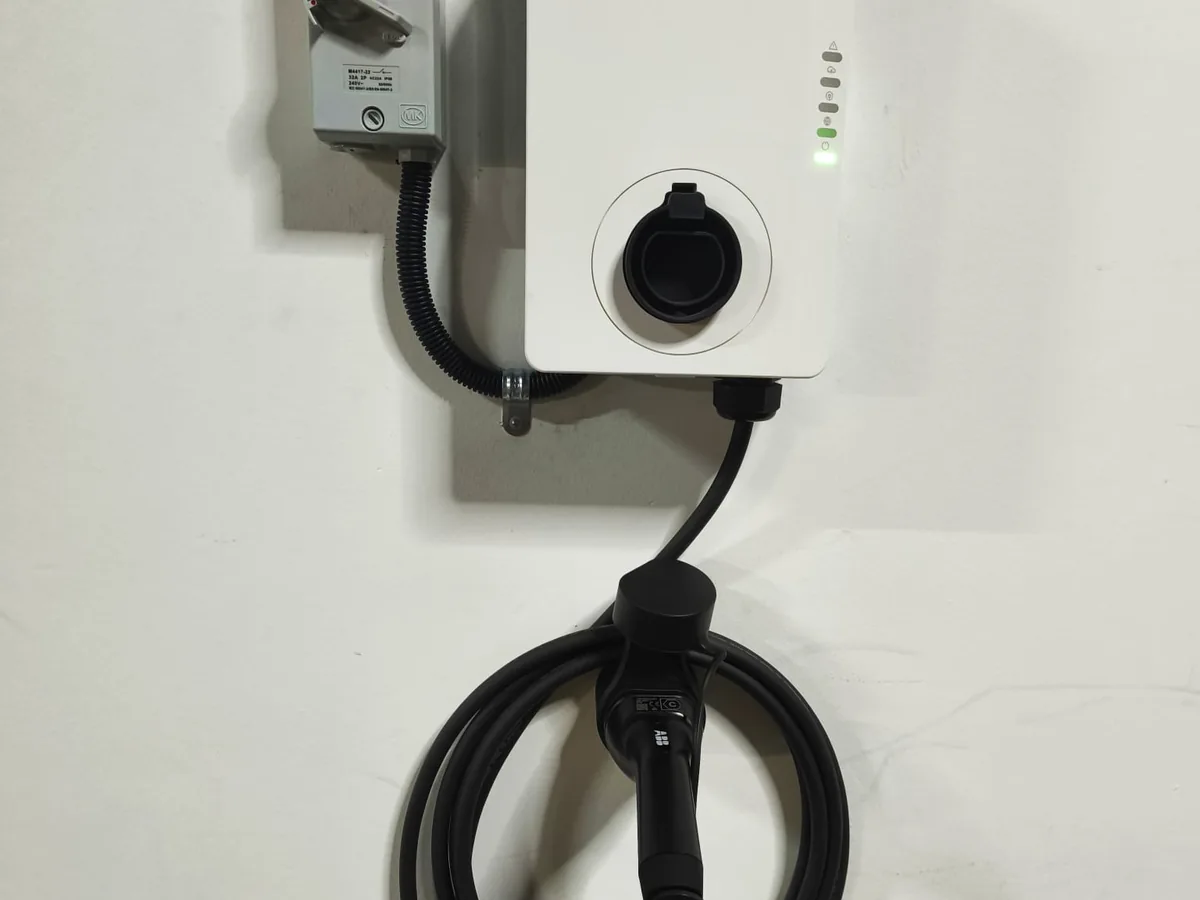
None of the three is right for everyone. A 22kW charger adds the most range per hour, and suits households where two cars share one charger, or where the car is parked for short spells between trips. A 7.4kW charger runs on a single-phase supply and matches cars whose onboard charger is single-phase. The AC chargers we supply come in all three sizes, and the site survey settles which one fits your car and your board.
Where you live changes what you can install
The rules differ by home type, and they matter as much as the hardware.
| Home | What you can install | Worth knowing |
|---|---|---|
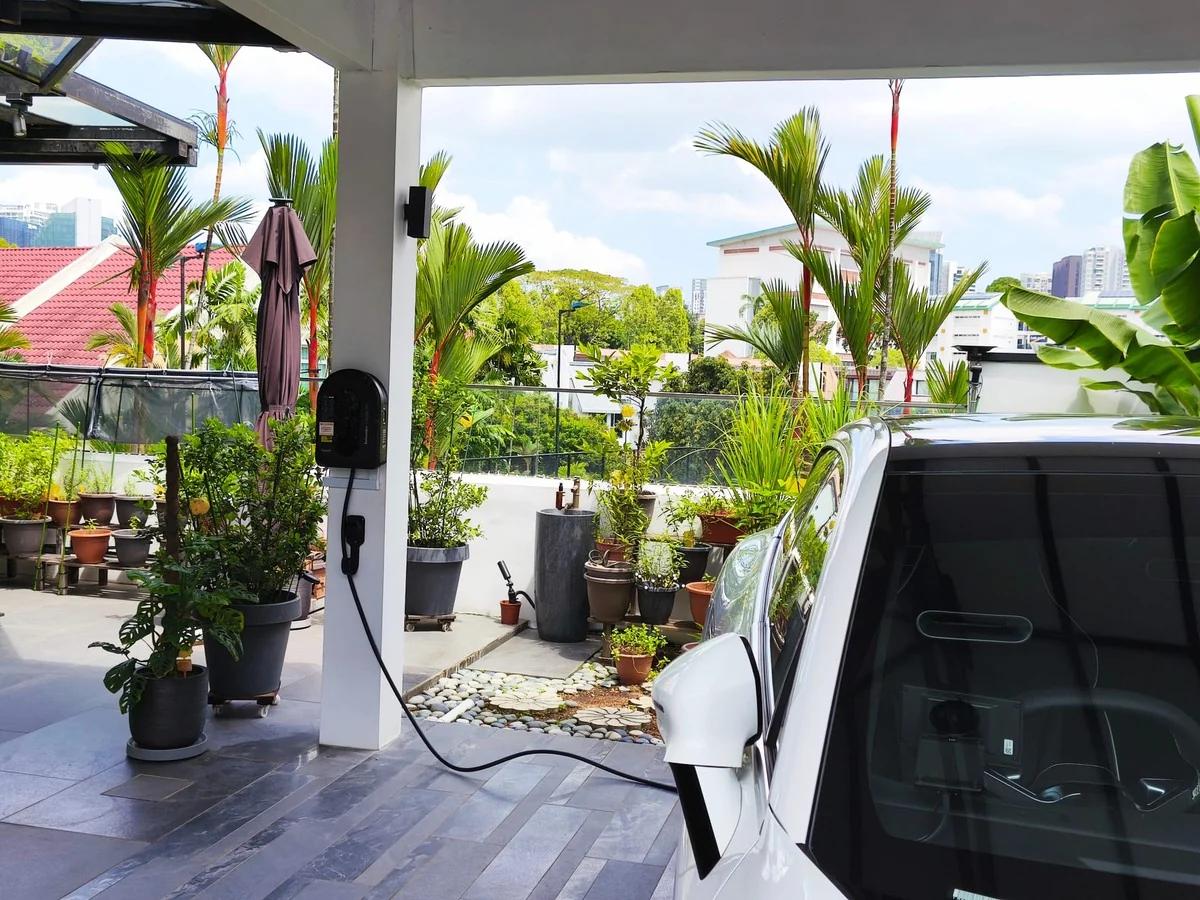
| Landed house | A fixed wall charger in your garage or designated parking space. A type-approved, registered portable charger is also allowed here, on a dedicated switched socket with its own residual-current device. | There is no government grant for a charger at a landed home. You do not need a licensed EV charging operator to run a charger at a private landed residence. |
| Condominium | Chargers in the car park, proposed to and approved by the MCST. Portable chargers are not allowed. | Chargers used by residents need a licensed EV charging operator. The ECCG grant may co-fund shared chargers in common areas until 31 December 2026, or until 3,500 chargers have been co-funded, whichever is earlier. |
| HDB | Chargers in HDB carparks are deployed and operated by LTA-appointed EV charging operators. | We are not aware of any scheme for HDB residents to install a private charger at their lot. |
For more on each, read EV charging at HDB, condo and landed homes. If you live in a landed home, our landed home installation page covers the process from survey to handover.
Smart features, OCPP and load management
Once the size is settled, features are what separate one charger from another. These are the ones worth looking at:
- App control and scheduling. Start, stop and schedule charging from your phone, and see what each session used.
- RFID access. A card or tag starts the charger, so nobody else can use it. Useful where the charger can be reached from the street, or is shared.
- Load management. The charger watches what the rest of the house is drawing and limits its own power, so your main supply does not trip. On a tight supply, it is an alternative to upgrading the board.
- OCPP. The Open Charge Point Protocol is an open, vendor-neutral standard that lets a charger talk to a management system, so you are not locked into one supplier's software. It matters most for shared chargers that bill each user, and it keeps a home charger's options open.
Every brand we install is LTA type-approved and OCPP-compliant. For a single car at home, app control and scheduling are the features you will use day to day. For a condo or a workplace, where several cars share the supply, load management and per-user billing are the point.
Choosing between the brands we carry
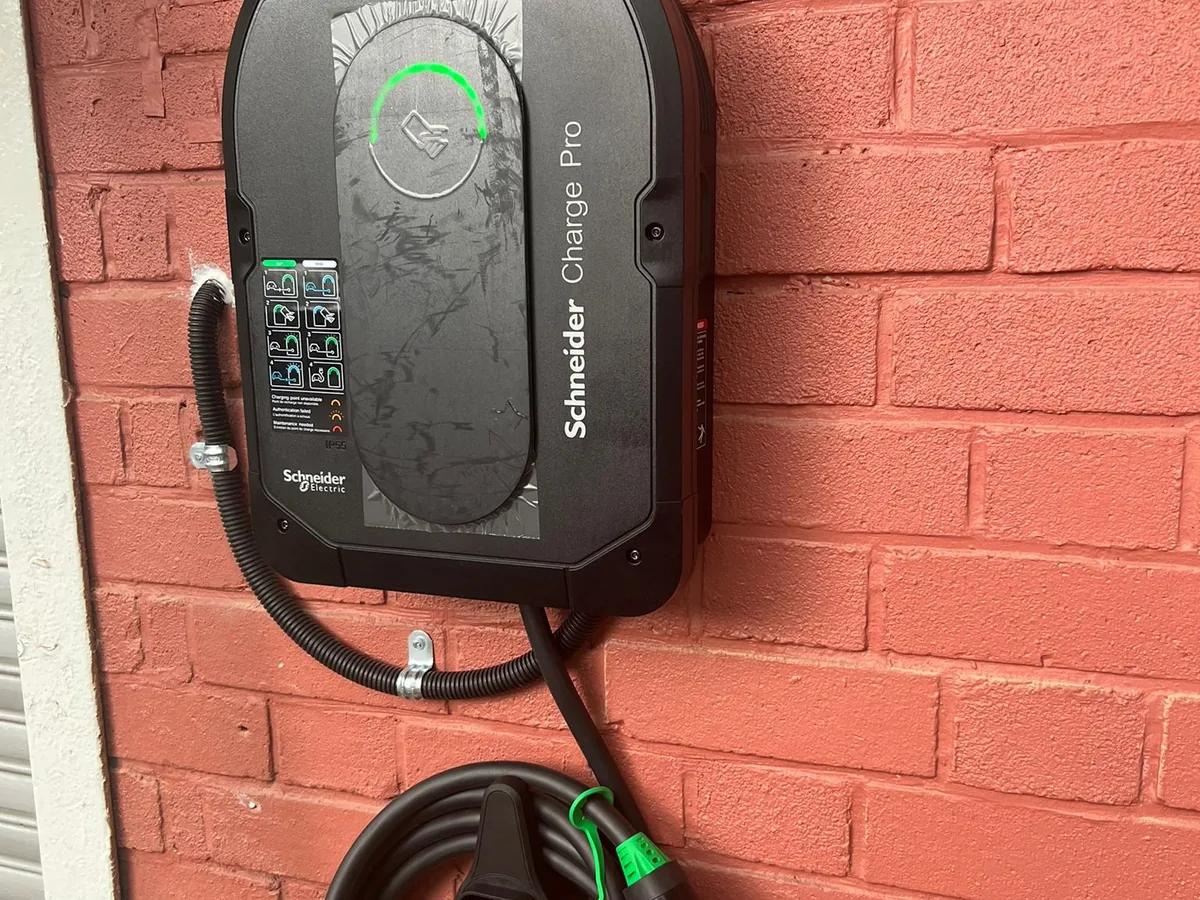
We install ten AC brands and are not tied to any of them. Rather than rank them, here is where to start, depending on what matters most to you. The brand comparison sets out power ratings, connectivity, smart features and warranty for every brand side by side.
| If you want | Start with |
|---|---|
| App control and scheduling at home | Wallbox, Autel, NEG Power |
| Load management across several chargers | Schneider Electric, ABB, Delta |
| The longest warranty of the ten | Delta |
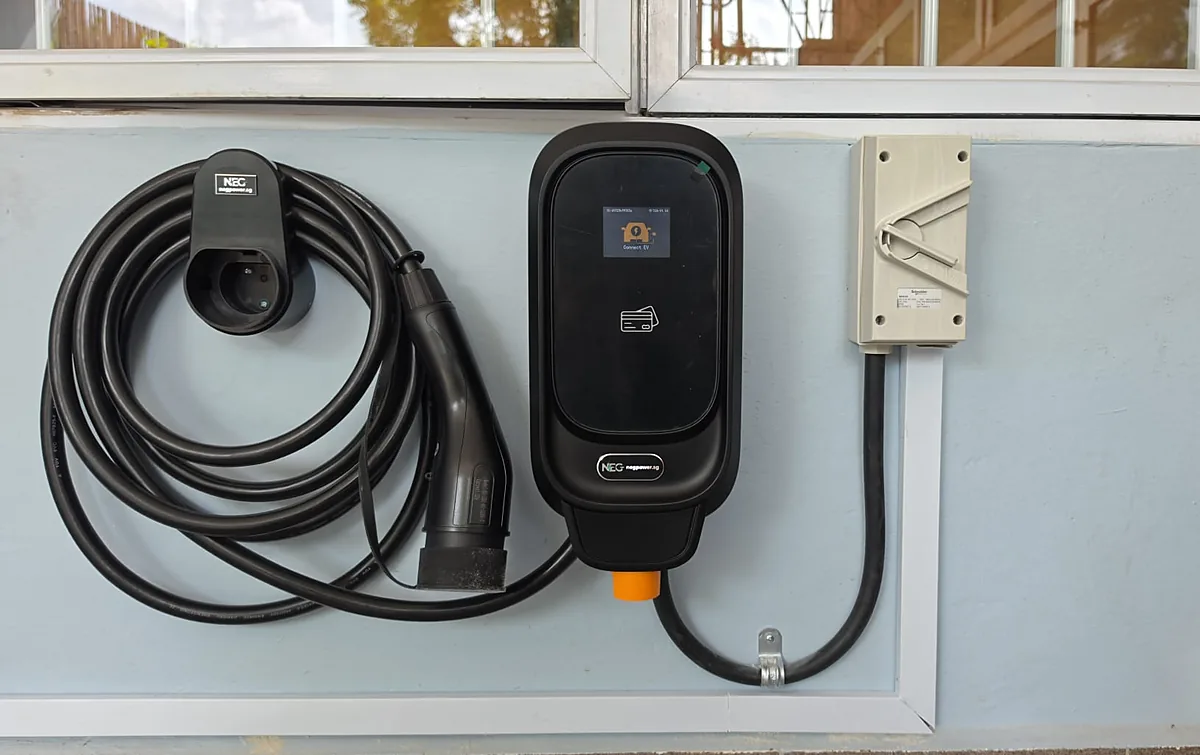
| A Singapore brand with local support | NEG Power |
| Simple charging without app extras | Lite-On, Hici |
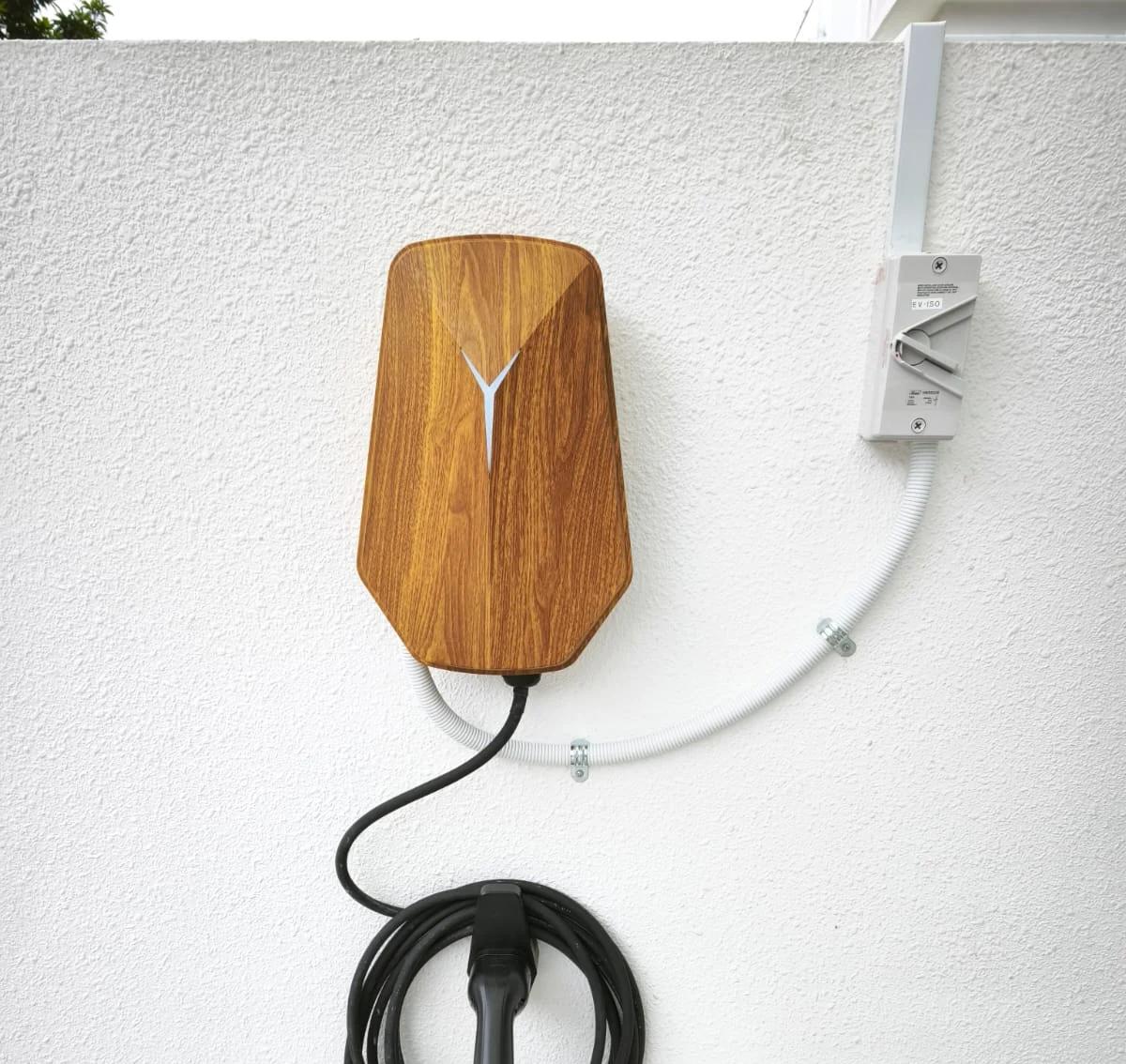
| A distinctive design | Omoda |
| A portable charger for a landed home | QuickCharge Mercury 7 II |
Not every brand makes every size: some offer 7.4kW and 22kW but no 11kW model, so settle the size first and the shortlist follows. Whichever brand you lean towards, check that the model is on LTA's list of type-approved chargers.
Warranty, support and compliance
Warranties on the fixed AC chargers we carry run from two to five years, depending on the brand, and for one brand on the power rating. Ask who handles a fault: the installer, a local distributor or an overseas manufacturer. A charger that stops working is a car that stops charging.
Compliance is not optional, and every part of it is checkable. Under the Electric Vehicles Charging Act, a home charger goes through four stages:
- 1
A type-approved model
Every charger model must be type-approved by LTA before it can be supplied. LTA publishes the list of type-approved models; ask for the model name and check it.
- 2
Installed by a Licensed Electrical Worker
A fixed charger must be installed by a Licensed Electrical Worker (LEW), on a circuit of its own with its own protection.
- 3
Certified by a charger equipment specialist
A charger equipment specialist certifies the charger. The Certificate of Fitness issued after installation and certification is needed to register it.
- 4
Registered with LTA before use
Every charger, home chargers included, must be registered before it is used, and the owner is responsible for it. Your installer can submit the registration; you then confirm the details on OneMotoring. A registration mark must be affixed within 60 days of registration.
Registration carries a mandatory fee paid to LTA, not to the installer. It is the same whichever AC charger you choose, and it does not change the price of your installation. The whole process is set out in our guide to LTA-approved chargers and registration.
What happens at the free site survey?
Everything above comes together at the survey. It is free, and nothing is quoted until it is done.
- 1
Tell us your car
Send your car model, your postcode and where you park. The model tells us what its onboard charger accepts.
- 2
Supply and board check
A technician checks whether your incoming supply is single-phase or three-phase, and how much spare capacity your distribution board has.
- 3
Cable route and mounting spot
We plan the cable route from the board to the charger and agree where the charger goes. Outdoor installations are made weatherproof to IP55.
- 4
A quote with every part listed
You get a written quote listing the charger, the installation and any board work, so you can see what drives the total.
- 5
Installation and registration
A Licensed Electrical Worker installs the charger in about 1–3 hours on site, and you are usually charging within 1–3 days. You register the charger with LTA as its owner; we do not do the registration for you.
Book a free site survey and bring your questions. "Which charger?" is far easier to answer with the car, the board and the parking space in front of us.
Sources
The official pages this guide was checked against.
- Electric Vehicle Guide for Drivers (Land Transport Authority)
- Regulating the safety of EV chargers (Land Transport Authority)
- Registration of EV chargers (Land Transport Authority)
- EV charger registration (OneMotoring, Land Transport Authority)
- How to apply for electricity connection (SP Group, January 2026)
- Charger grants (Land Transport Authority)
- Transitioning to EVs (Land Transport Authority)
- Tender awarded for EV charging points at HDB car parks (Land Transport Authority, 2 November 2022)
Written by Charge N Go's installation team. We supply and install EV chargers for homes and businesses across Singapore, and we update this guide when the rules or the sources above change.