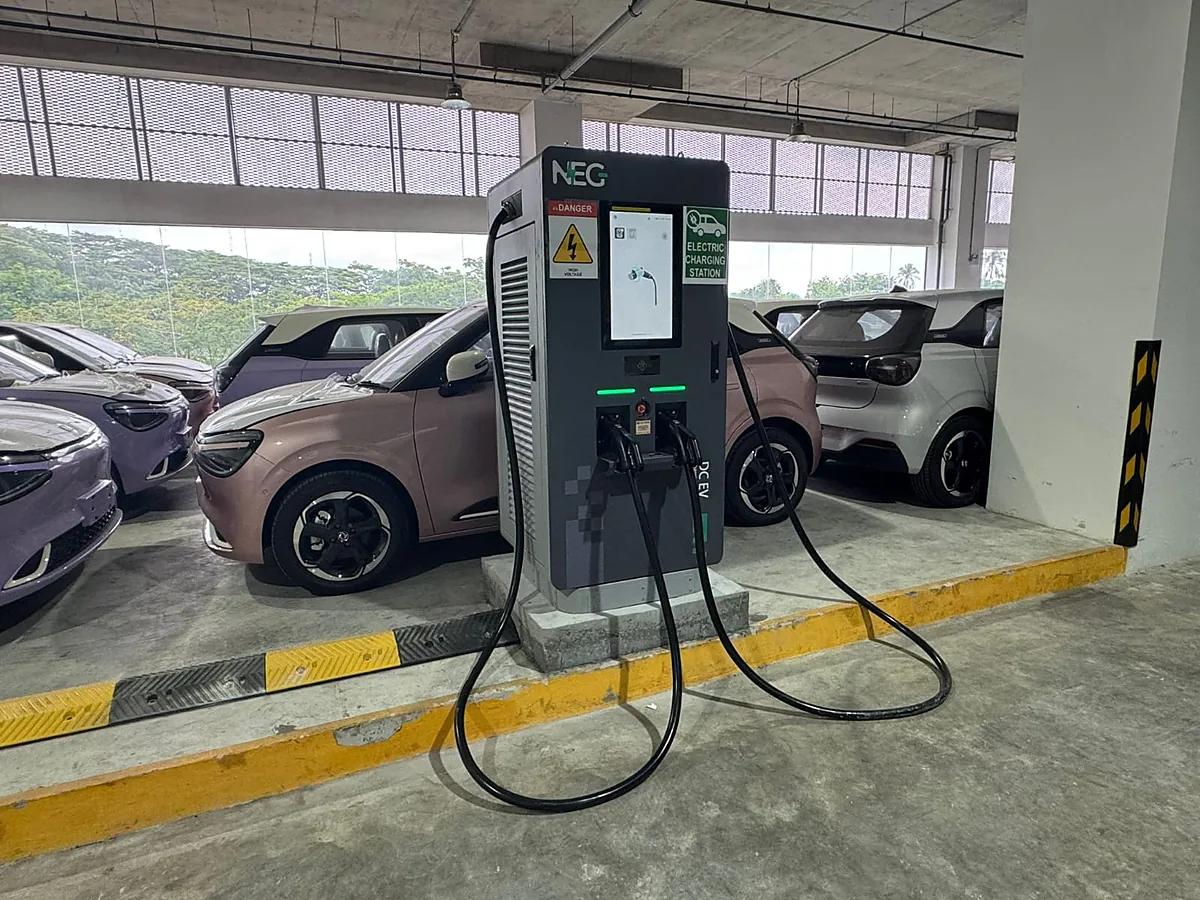
EV charger installation cost in Singapore: what drives your quote
What sets EV charger installation cost and price in Singapore: the charger, cable run, protection, board, supply and grants. Read any quote line by line.
The short answer
What you pay to install an EV charger in Singapore comes down to five things: the charger unit, the cable run from your distribution board, the circuit protection, whether your board or supply needs upgrading, and how the charger is mounted and protected. Landed homes get no grant. A free site survey turns these into a fixed quote.
- Five parts make up every installation quote: the charger, the cable run, the protection, the board and supply, and the mounting.
- A supply upgrade is the big unknown: a Licensed Electrical Worker applies to SP Group, and it can add weeks, not hours.
- The LTA registration fee is mandatory, paid to LTA rather than to your installer, and does not change the installation price.
- Landed homes have no charger grant; condos may have the ECCG until it ends; heavy-vehicle fleets have the EHVCG.
- Running cost is simple arithmetic: the kWh you use multiplied by your tariff, which SP Group revises every quarter.
On this page (8 sections)
Why is there no single price for installing an EV charger?
Two homes can buy the same charger and pay quite different amounts to have it installed. The charger is only one part of the job. The rest depends on where your car parks, where your distribution board is, how much spare capacity the board and supply have, and what the charger will be fixed to. That is why our pricing page explains factors rather than quoting a flat figure: any single number would be right for some homes and wrong for the rest.
Every installation quote, ours included, is built from the same five parts. Once you know them, you can read any quote line by line and spot when one leaves something out.
Board and supply
Spare ways and spare capacity decide whether works are needed first
Protection
A dedicated circuit with its own RCD or RCBO
Cable run
The distance and route from the board to the charger
Mounting
Wall or post, trunking, and any canopy or enclosure
Charger unit
Brand, power and smart features
| Factor | What it covers | What adds to the quote | What keeps it lean |
|---|---|---|---|
| Charger unit | Brand, power rating, smart features and warranty | Power or features your car cannot use | A unit matched to your car's onboard charger and your supply |
| Cable run | The distance and route from the board to the parking spot | A long run, a route through several walls, or cable that must be concealed | A board close to where the car parks, with a clear route between them |
| Protection | A dedicated circuit with its own RCD or RCBO | Nothing optional: every charger needs it | Not a place to save. Check the quote includes it |
| Board and supply | Spare ways in the board, and spare capacity in the supply | A full board, or a supply that SP Group has to modify | A board with a spare way and enough capacity for the charger |
| Mounting and protection | Wall or post, trunking, and any canopy or enclosure | No suitable wall, or a spot exposed to driven rain and sun | A sheltered wall beside the parking spot |
How much does the charger itself affect the cost?
The charger is the part you choose, and the part that is easiest to compare. Three things separate one unit from another.
- Brand and build. Under the EV Charging Act, every charger model must be type-approved by LTA before it can be supplied, so the choice is between approved units. Beyond that, brands differ in build, warranty, app and after-sales support. We install twelve brands, and you can compare them side by side.
- Power rating. A single-phase supply takes a charger of up to 7.4kW; a three-phase supply takes 11kW or 22kW. Extra AC power only helps if your car's onboard charger accepts it. LTA's own example: a car that supports only single-phase charging, plugged into an 11kW three-phase charger, still charges at 3.7kW.
- Smart features. App control, charging schedules, RFID cards and load management (sharing the supply between the charger and the rest of the house) each change what a unit does. Each is worth paying for only if you will use it. Every charger we supply speaks OCPP, the open protocol that lets a charger talk to an app or a back-office system.
Our guide to 7kW, 11kW and 22kW chargers explains how to match the power rating to your car. The short version: find out what your car's onboard charger accepts, let the site survey confirm your supply, and do not pay for power your car cannot take.
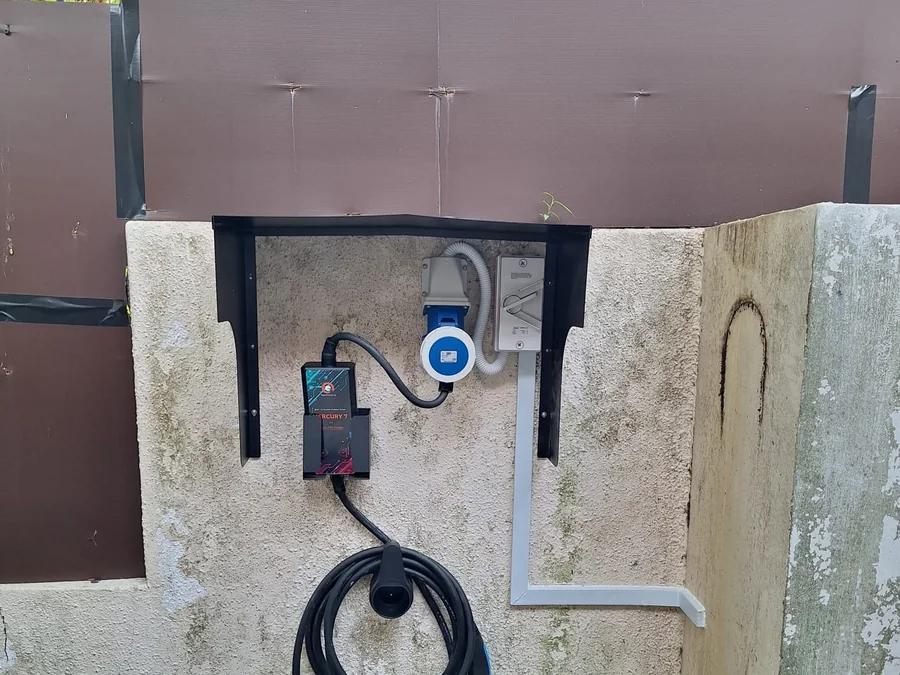
Cable run, protection and mounting
Cable run. This is the distance and route from your distribution board (the box of breakers that feeds your home) to the spot where the charger goes. A charger near the board needs a short run. A car porch at the far end of the house, a route through several walls, or cable that has to be concealed rather than run along the surface all add cable, trunking and labour. The higher the charger's current, the heavier the cable, so the length of the run matters more on a more powerful charger.
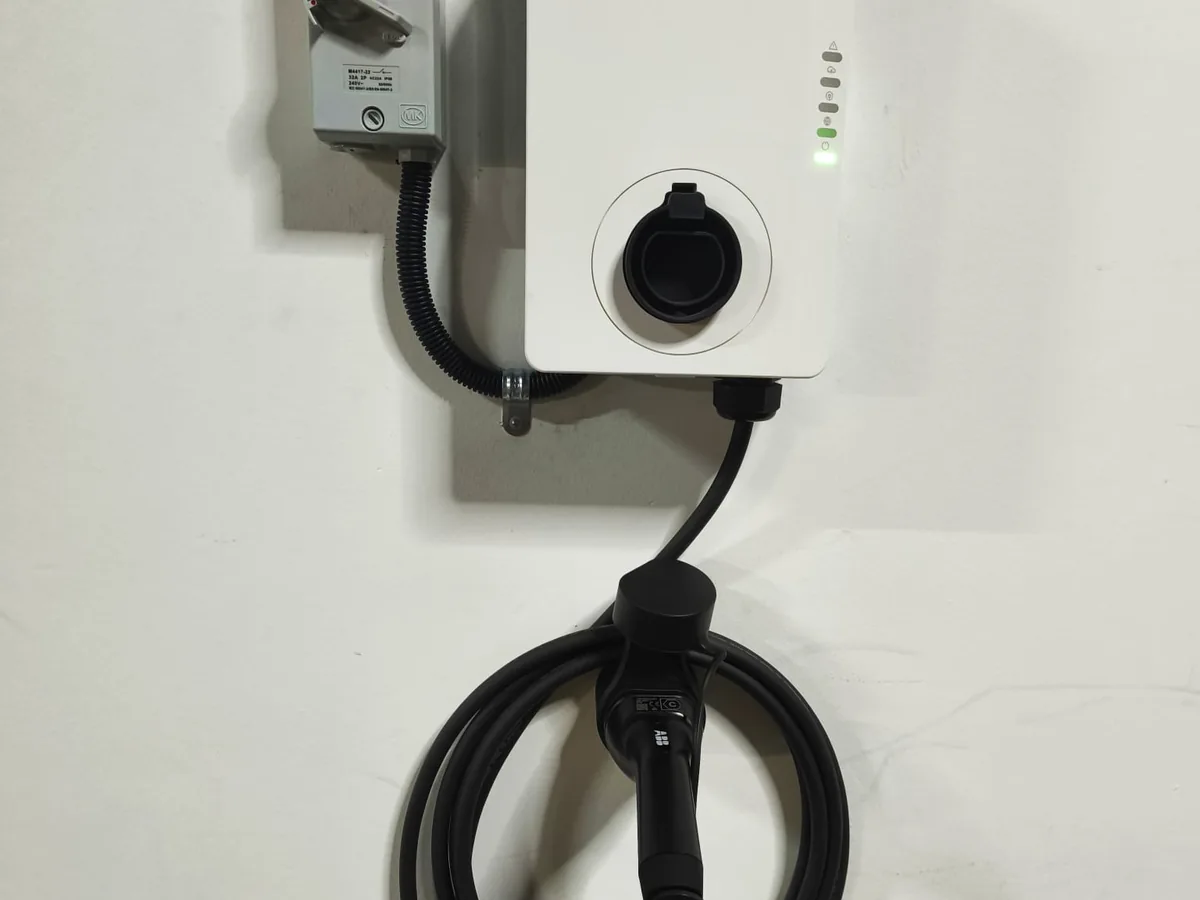
Protection. A charger draws a high current for hours at a time, so it gets its own dedicated circuit with its own residual-current protection: an RCD (residual-current device, which cuts the power if current leaks to earth) or an RCBO (the same protection combined with an overcurrent breaker in one unit). This is not a place to save. If a quote does not say the charger is on its own protected circuit, ask.
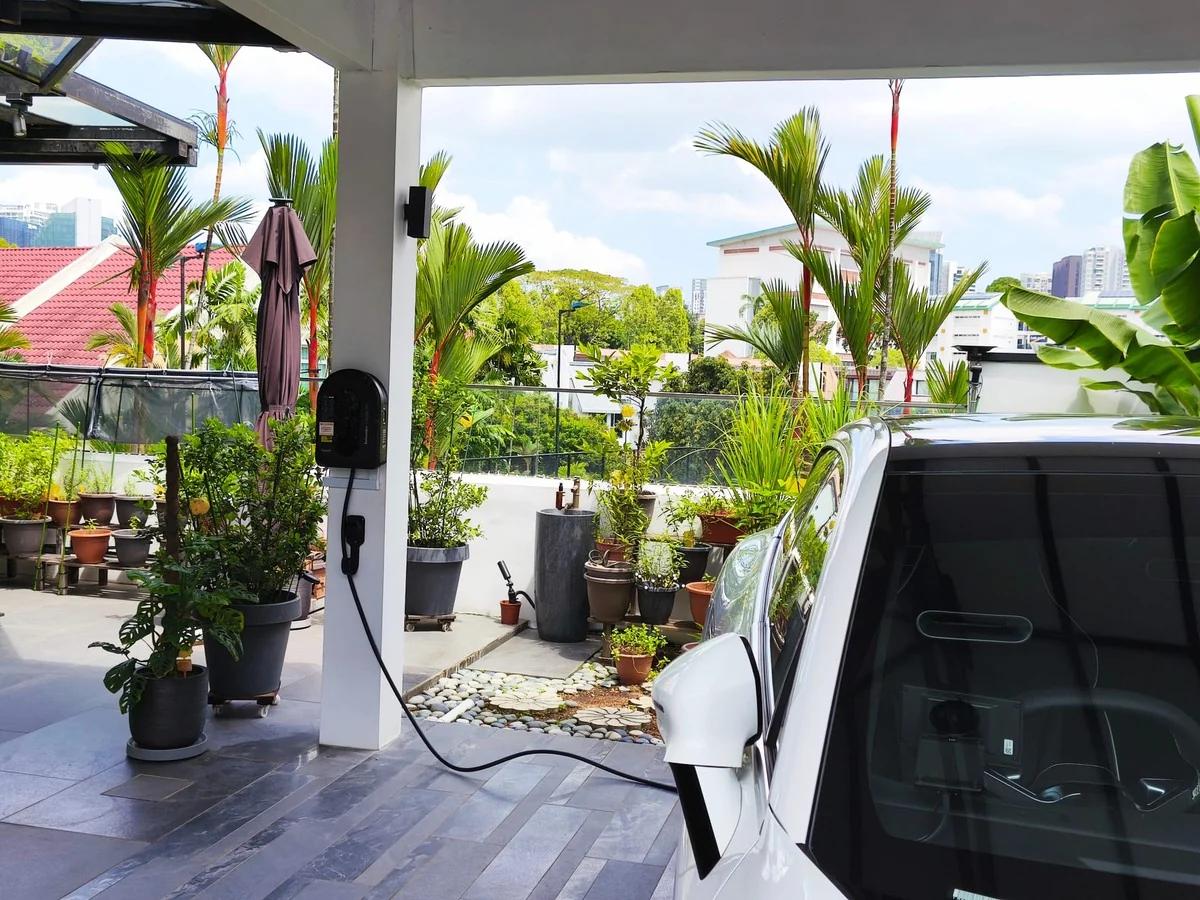
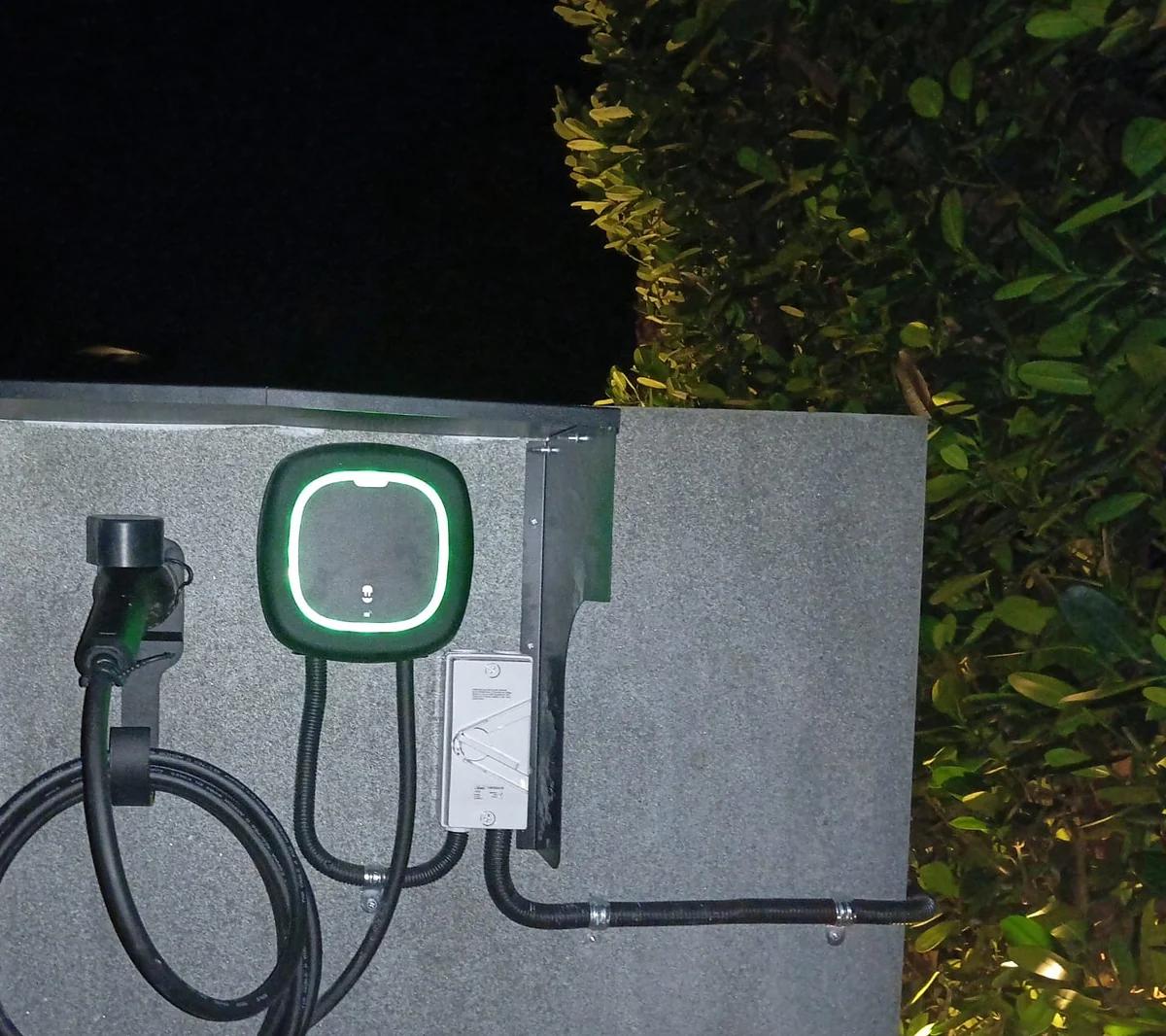
Mounting and outdoor protection. The charger goes on a wall where there is a suitable one beside the parking spot, or on a standalone post where there is not. Trunking keeps the cable tidy and protected along the way. Our outdoor installations are rated IP55, which means protected against dust and water jets; a brand's own datasheet rating is a separate figure. If the charger faces driven rain or full afternoon sun, an optional rain canopy or a lockable enclosure keeps the weather off it. See charger housing and enclosures for the options.
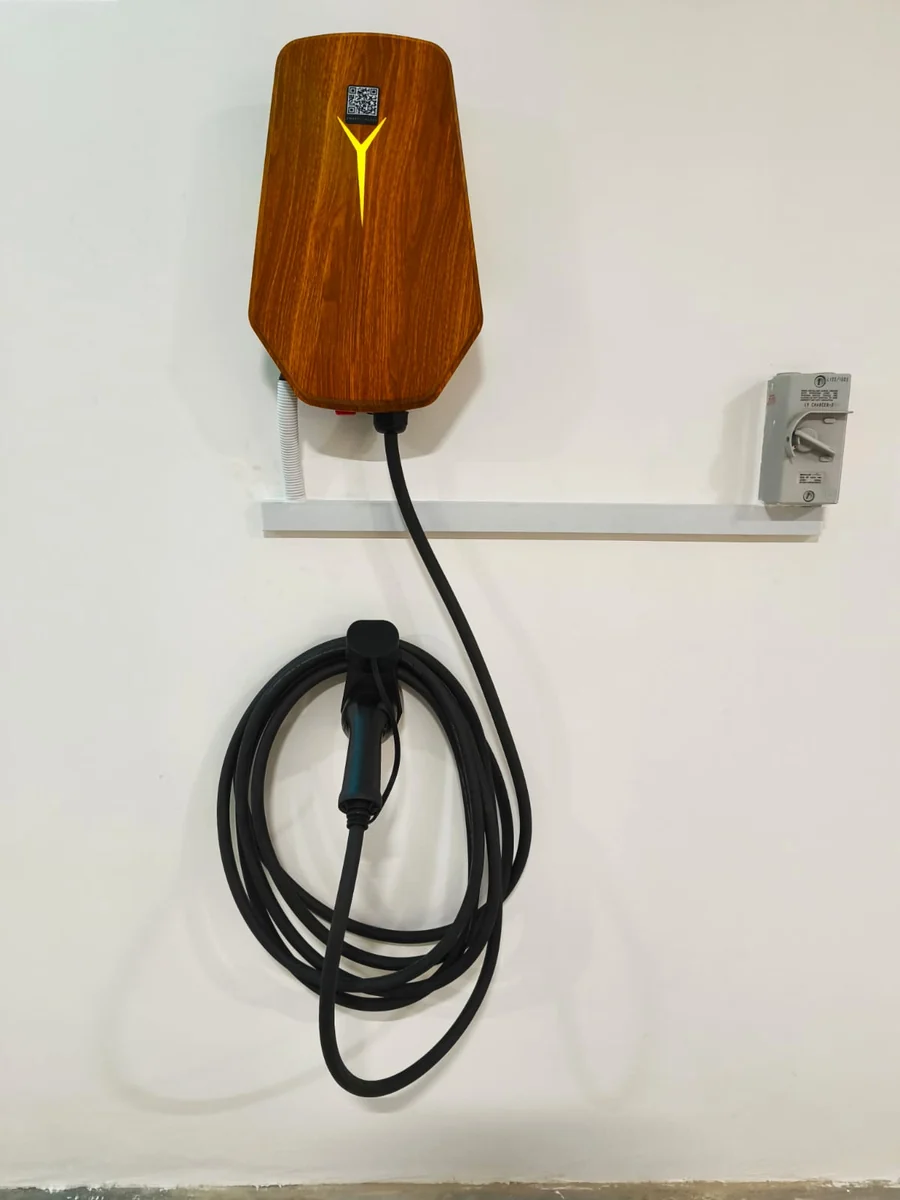
Does my distribution board or supply need upgrading?
This is the factor nobody can judge from a description, and the main reason we visit before we quote. Two questions decide it. Does the board have a spare way (a slot) for the charger's breaker? And does your supply have the capacity to run a charger alongside everything else in the house?
If the answer to both is yes, the charger connects to the existing board and the job stays simple. If the board is full, it may need extra ways or replacing. If the supply itself is the limit, or you want a three-phase charger on a single-phase supply, the supply has to change, and that involves SP Group.
SP Group's low-voltage supplies are 230V single-phase and 400V three-phase. Upgrading the load at an existing home is what SP calls a modification of connection, and the application is made online through SP's eBusiness Portal by a Licensed Electrical Worker (LEW). For a landed home, you engage the LEW, and the sequence runs like this:
- 1
The survey finds the limit
We check the board, the incoming supply and the load already on it before anything is quoted.
- 2
An LEW applies to SP Group
For a modification of connection, the LEW submits the application through SP's eBusiness Portal.
- 3
SP approves and lays the cable
Where a landed home needs a new service cable, SP Group's FAQ says approval typically takes three weeks, and the cable installation about another three weeks after that.
- 4
The charger goes in
Once the supply is ready, installing an AC charger takes 1–3 hours on site.
A supply upgrade changes both the quote and the timeline, which is why we check for it first. See what a landed home installation involves from start to finish. In a condo, the car park's supply belongs to the development, and any charger in a common area goes through the MCST.
Certification, registration and the LTA fee
Every fixed charger goes through the same compliance steps. Installation and certification are part of the job, and a complete quote includes both. A Licensed Electrical Worker installs the charger. A charger equipment specialist then certifies it, and the Certificate of Fitness issued after installation and certification is what the charger is registered with.
Every charger, home chargers included, must be registered with LTA before it is used, and the owner is responsible for making sure it is. The registration asks for the charger's type approval ID and serial number, the installation address, the LEW's name and licence number, the equipment specialist's name and the Certificate of Fitness; photos are not needed for a charger at a landed home. We do not do the registration for you: you make the application as the charger's owner, and the Certificate of Fitness comes to you with the installation. Our guide to LTA approval and registration walks through each step.
Are there grants that lower the cost?
That depends entirely on where the charger goes.
- Landed homes: there is no government grant for a charger at a landed home. You pay the full installation cost.
- Condominiums and other non-landed private residences: the ECCG co-funds 50% of each cost component of shared smart chargers in a common area, subject to caps. It is available until 31 December 2026, or until 3,500 chargers have been co-funded, whichever is earlier, and the charger must not be installed before LTA's letter of offer.
- Businesses registering new electric heavy vehicles: the EHVCG co-funds up to 50% of the installation cost of a smart charger rated at least 50kW, capped at S$30,000 per charger.
The full conditions for both, and why a 30kW DC charger does not qualify for the EHVCG, are in our guide to EV charger grants.
One more for businesses, though it is our programme rather than a grant: if you run an SME or commercial site and are moving from an AC charger to a 30kW DC unit, our trade-in programme gives an allowance of up to $2,000 against a DC30.
What does it cost to charge at home?
Once the charger is in, the running cost is your electricity. Energy is measured in kilowatt-hours (kWh): a charger drawing 10kW for one hour uses 10kWh. What you pay for charging is the kWh the charger uses multiplied by your tariff.
If you buy electricity from SP Group, the tariff is regulated by the Energy Market Authority (EMA) and revised every quarter to reflect the actual cost of electricity, so it moves through the year. SP publishes the current rate on its tariff information page. If your electricity comes from another retailer, use the rate on your own bill. Today's tariff, and what public chargers cost by comparison, are in our guide to EV charging rates in Singapore.
To work out a cost per kilometre, you need two numbers: how much energy your car uses, and what you pay for it.
- 1
Find your car's energy use
In kWh per 100km, from the car's trip computer or the manufacturer's figures. Your own driving gives the truest number.
- 2
Multiply by your tariff
kWh per 100km × your tariff per kWh = your cost per 100km.
- 3
Divide by 100
That gives your cost per kilometre, which you can set against what you pay to drive the same distance today.
A little energy is lost as heat while charging, so the meter reads slightly more than the battery receives. For comparing options, the method above is close enough.
Why we quote after a free site survey
Every factor above is something we can see in person and can only guess at from a description: the length and route of the cable run, the state of the board, the supply, and the wall or post the charger will sit on. So we survey first, free, and quote second. The quote that follows is fixed, with nothing hidden.
- 1
Free site survey
We check the parking spot, the board, the supply and the route between them. See what the site survey covers.
- 2
A fixed quote
Built from the five parts above, with installation and certification included. LTA registration and its fee are not in it.
- 3
Installation
An AC charger takes 1–3 hours on site, and the usual lead time to your first charge is 1–3 days, unless the supply has to be upgraded first.
- 4
Certified, then registered by you
The charger is certified. You then register it with LTA, as its owner, before you use it.
If you are comparing quotes, check that each one includes the same things: a type-approved charger, a dedicated protected circuit, licensed installation and certification. A cheaper quote that leaves one of them out is not cheaper. LTA registration is not in our quote: you register the charger as its owner, and the fee is paid to LTA.
Sources
The official pages this guide was checked against.
- Regulating the safety of EV chargers (Land Transport Authority)
- Registration of EV chargers (Land Transport Authority)
- Guidelines for the Registration of EV Chargers (Land Transport Authority, as of 3 November 2025)
- Electric Vehicle Guide for Drivers (Land Transport Authority)
- Charger grants (ECCG and EHVCG) (Land Transport Authority, last updated 4 September 2026)
- How to apply for electricity connection (SP Group, January 2026)
- FAQs on electricity supply connection for landed residential premises (SP Group)
- Tariff information (SP Group)
Written by Charge N Go's installation team. We supply and install EV chargers for homes and businesses across Singapore, and we update this guide when the rules or the sources above change.