
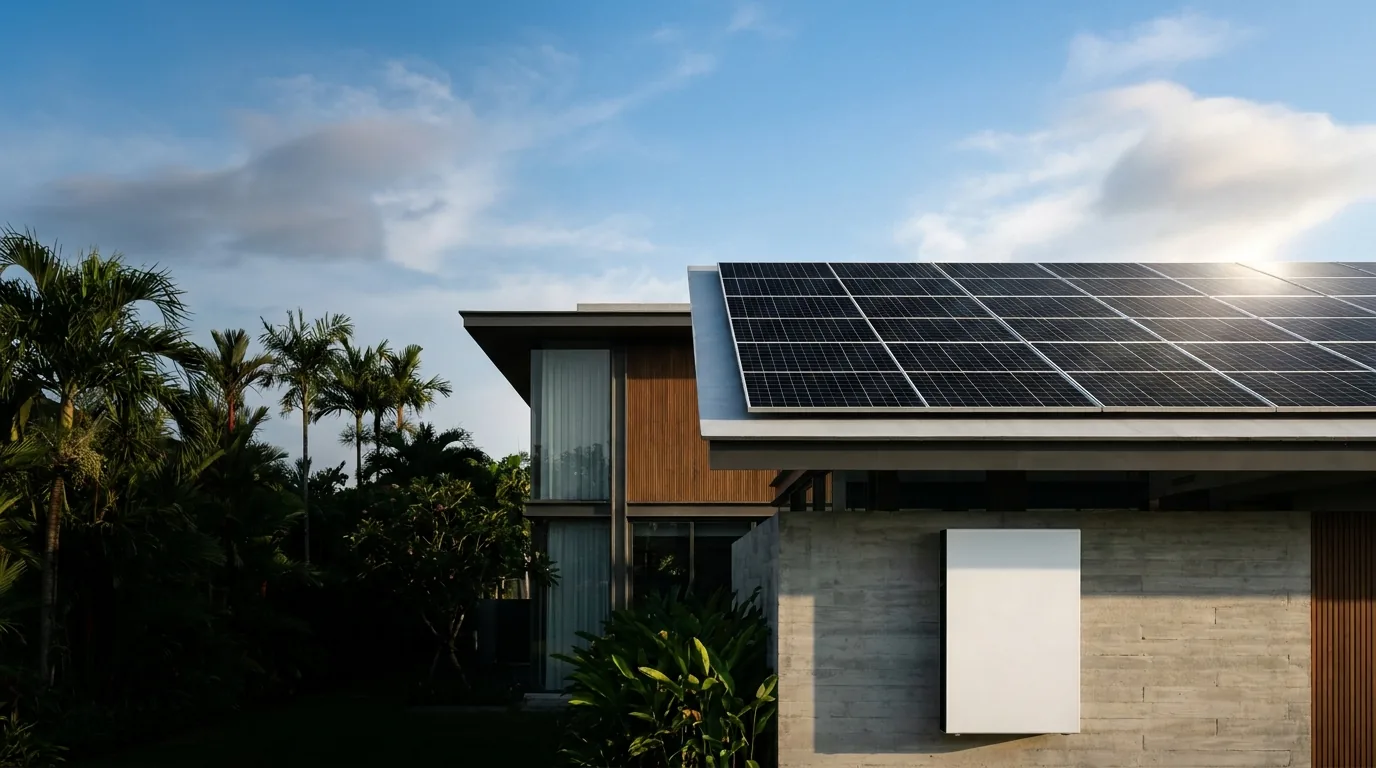
Store your solar. Power your evenings. Back up your home.
A battery energy storage system, or BESS, stores the solar you do not use during the day so you can use it at night, including for charging your EV. It also keeps essential circuits running during a power cut.
- Store daytime solar for evening use
- Charge your EV off stored solar
- Backup power during outages
- Sized to your home & usage
A home battery, sized to your home
A BESS is a wall- or floor-mounted unit that stores electricity, usually the solar you did not use, for when you actually need it: evening EV charging, household use, and backup during a power cut.
We size the battery to how much energy you use each day and how much backup you want. Then we join it up with your solar and your EV charger as one system, so you never pay for capacity you will never use.
- Modern LFP chemistry — safe & long-life
- Modular — start small, expand later
- Integrates with solar + EV charger
- Backup for your essential circuits
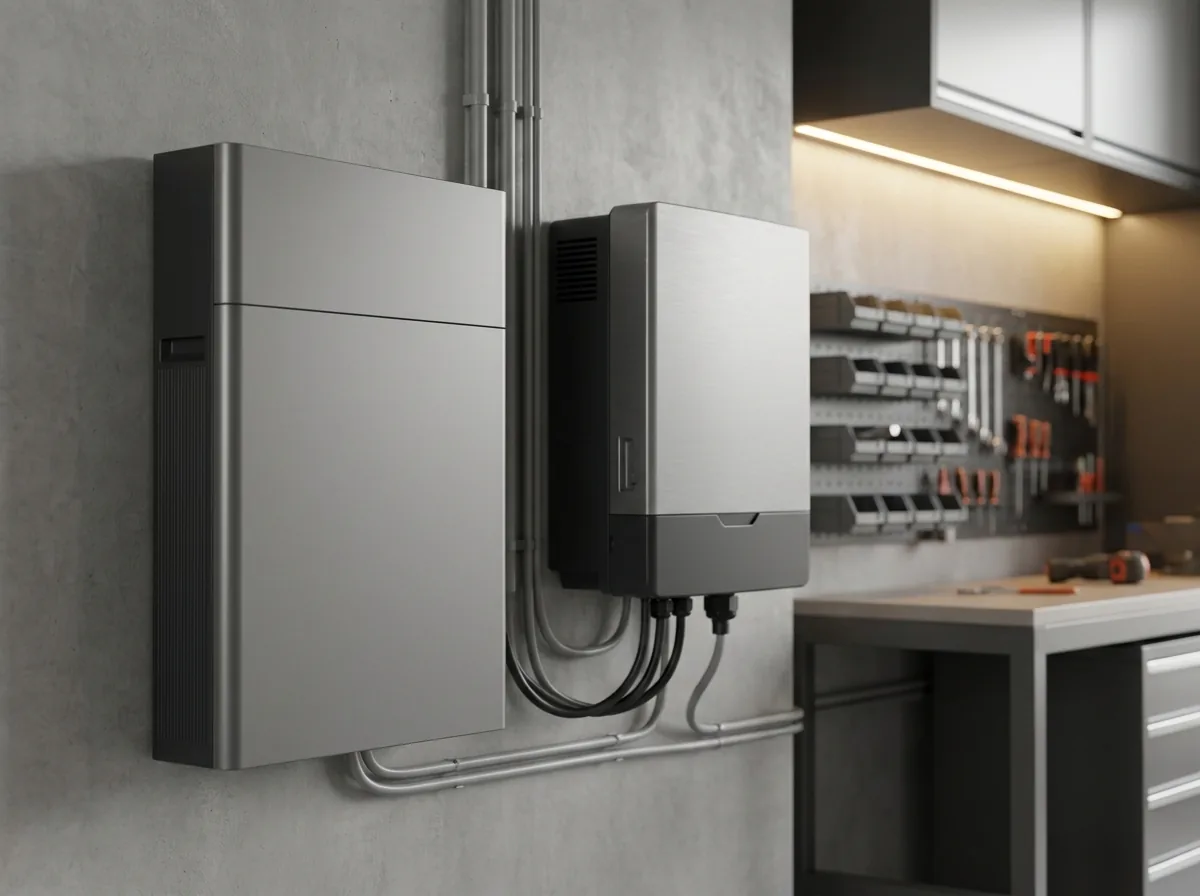
Battery sizing guide
| Capacity | Typical backup for essentials* | Best for |
|---|---|---|
| 5 kWh | ~8–12 hours | Smaller homes; evening top-up + basic backup |
| 10 kWh | ~16–24 hours | Most landed homes; nightly EV top-up + solid backup |
| 15 kWh+ | 1 day+ | Larger homes; maximum self-use & independence |
*Essentials means lights, fridge, wifi and fans — not whole-home air-conditioning. Actual runtime depends on your load; we model it precisely in a site visit.
What a home battery actually does
Store daytime solar
Capture the solar you generate at midday and use it in the evening, instead of exporting it cheaply.
Outage backup
Keep lights, fridge, wifi and fans running through a power cut — automatically.
Lower evening bills
Run your home and EV charger on stored solar instead of peak-rate grid electricity.
Scalable & modular
Start with the capacity you need and add modules later as your usage grows.
Frequently asked questions
How many kWh of battery do I need?
It depends on how much surplus solar you want to store and how much backup you want — most homes land around 5–15 kWh. We model your daily profile in a site visit and recommend a size, rather than overselling capacity you won't cycle.
How long will backup last?
For essential circuits — lights, fridge, wifi and fans — a 10 kWh battery can typically run most of a day; whole-home use with air-conditioning drains far faster. We'll confirm which circuits you want backed up and size accordingly.
What's the lifespan and warranty?
Modern home batteries use LFP (lithium iron phosphate) cells rated for roughly 6,000+ charge cycles and typically warrantied around 10 years — about a decade of useful life under normal daily solar cycling.
Is a home battery allowed in Singapore?
Yes. Home battery storage is permitted; installation follows electrical safety requirements and the relevant approvals, which we handle as part of a certified install by a Licensed Electrical Worker.
What does a home battery cost, and what's the payback?
Cost scales with capacity and whether it's installed alongside solar. Payback depends on your solar generation and tariff, so we give you honest numbers for your specific home during the site visit rather than a generic figure.
Does a battery work without solar?
Yes — a battery can store cheaper off-peak grid power for peak-time use and provide outage backup. But it pays back fastest paired with solar, where it stores energy you generate for free.