HDB EV charging, condo chargers and landed homes: what is possible where
HDB EV charging is run by LTA-appointed operators, condos share MCST-approved chargers and landed homes install their own. What is possible where you live.
The short answer
Where you live decides how you charge. In HDB carparks, chargers are deployed and operated by LTA-appointed EV charging operators, and more than 90% of HDB carparks had them by December 2025. Condos install shared chargers in common areas with MCST approval and a licensed operator. Landed homeowners can install their own charger, registered with LTA.
- Landed homes can have their own charger, fixed or type-approved portable; portables are allowed nowhere else. There is no grant.
- Condos install shared chargers in common areas, approved by the MCST and run by a licensed EV charging operator.
- The ECCG co-funds condo chargers until 31 December 2026, or until 3,500 chargers are funded, whichever is earlier.
- HDB carpark chargers are deployed and operated by LTA-appointed operators, who set their own prices.
- If your HDB carpark has no chargers, you can transfer your season parking to a nearby carpark that has them.
On this page (6 sections)
Where you live decides how you charge
In Singapore, the first question is not which charger to buy but who is allowed to put one where you park. A landed home has its own parking and its own electricity supply, so the owner can install a charger. A condominium's carpark is common property, so chargers are a decision for the management corporation (MCST). HDB carparks are public car parks, and the chargers in them come from a national roll-out run through LTA.
| At a glance | Landed home | Condominium | HDB flat |
|---|---|---|---|
| Who puts the charger in | You, through an installer | The MCST, after a vote at a general meeting | LTA-appointed EV charging operators |
| Where it goes | Your garage or designated parking space | A common area, shared among residents | Lots in the HDB carpark |
| Who runs it | You; no licensed operator is needed | A licensed EV charging operator | The appointed operator, who also sets the price |
| Grant | None | ECCG, until 31 Dec 2026 or 3,500 chargers, whichever is earlier | None for residents; the operators deploy the chargers |
| Portable charger | Allowed if type-approved and registered, on a dedicated switched socket with its own RCD | Not allowed | Not allowed: portable chargers are for landed homes only |
Landed homes: your own charger
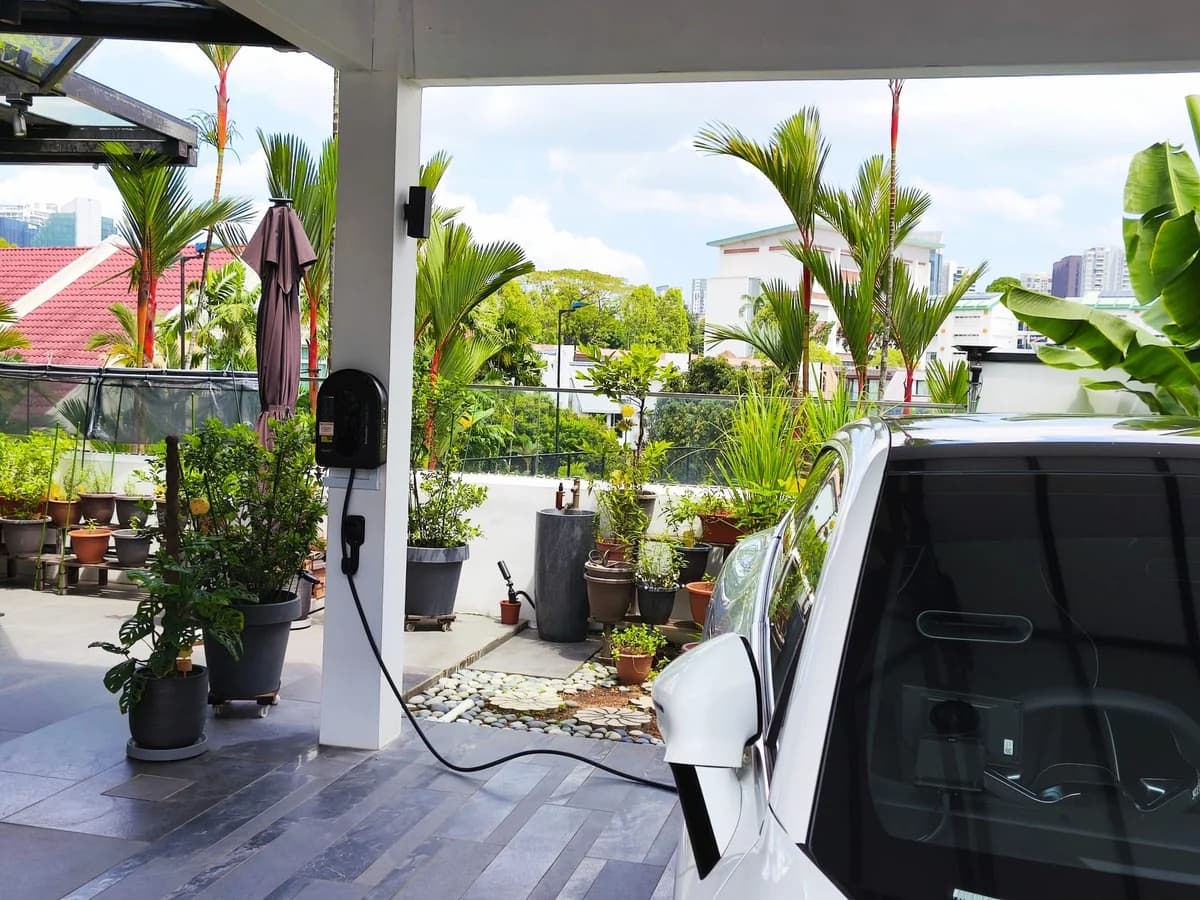
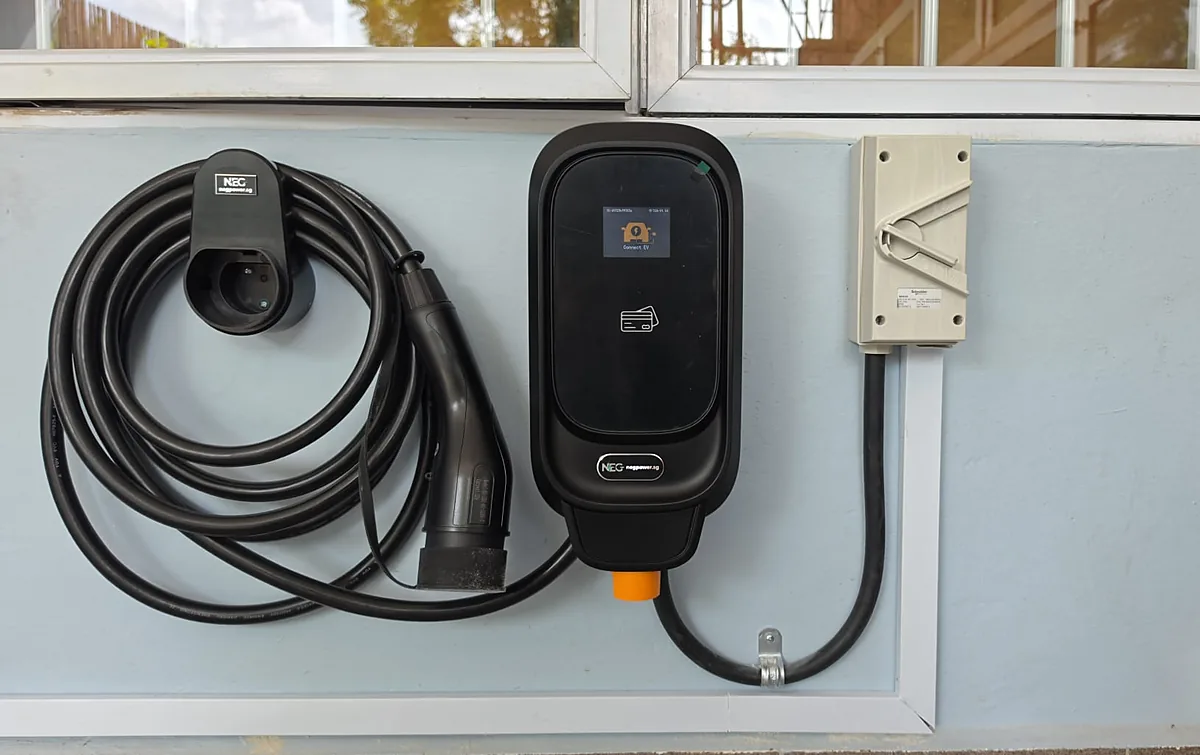
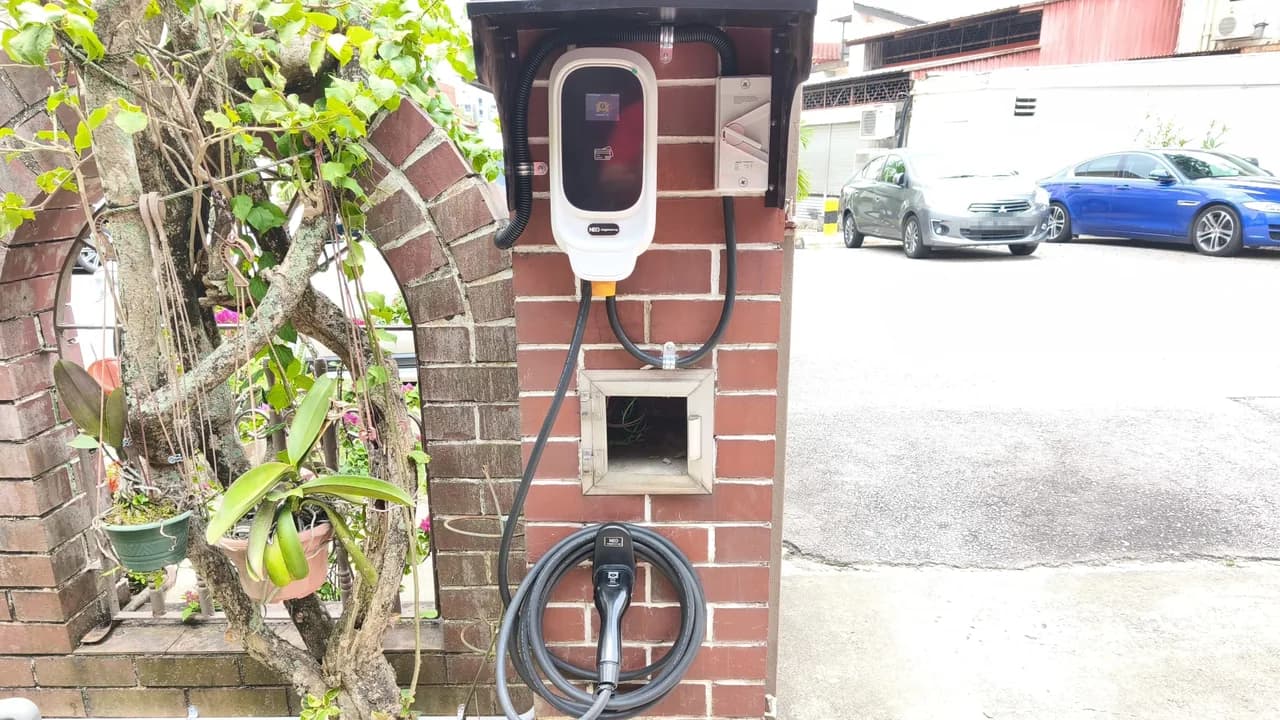
A landed home is the simplest case. The EV Charging Act treats a parking space within, or adjoining, a landed house as a restricted access location, and LTA allows chargers at residential premises in garages or designated carparks. You choose the charger, a Licensed Electrical Worker installs it, a charger equipment specialist certifies it, and it is registered with LTA before use. You do not need a licensed charging operator: LTA's guide for drivers says one is not mandatory at private landed residences.
How fast it charges depends on your supply and your car. A single-phase supply takes a charger of up to 7.4kW; three-phase takes 11kW or 22kW, and the extra speed only helps if your car's onboard charger accepts it. Our guide to 7kW vs 22kW home chargers explains the choice, and the free site survey checks both your supply and your car. The whole process is set out in how to install an EV charger at home, and the service itself is on our landed home installation page.
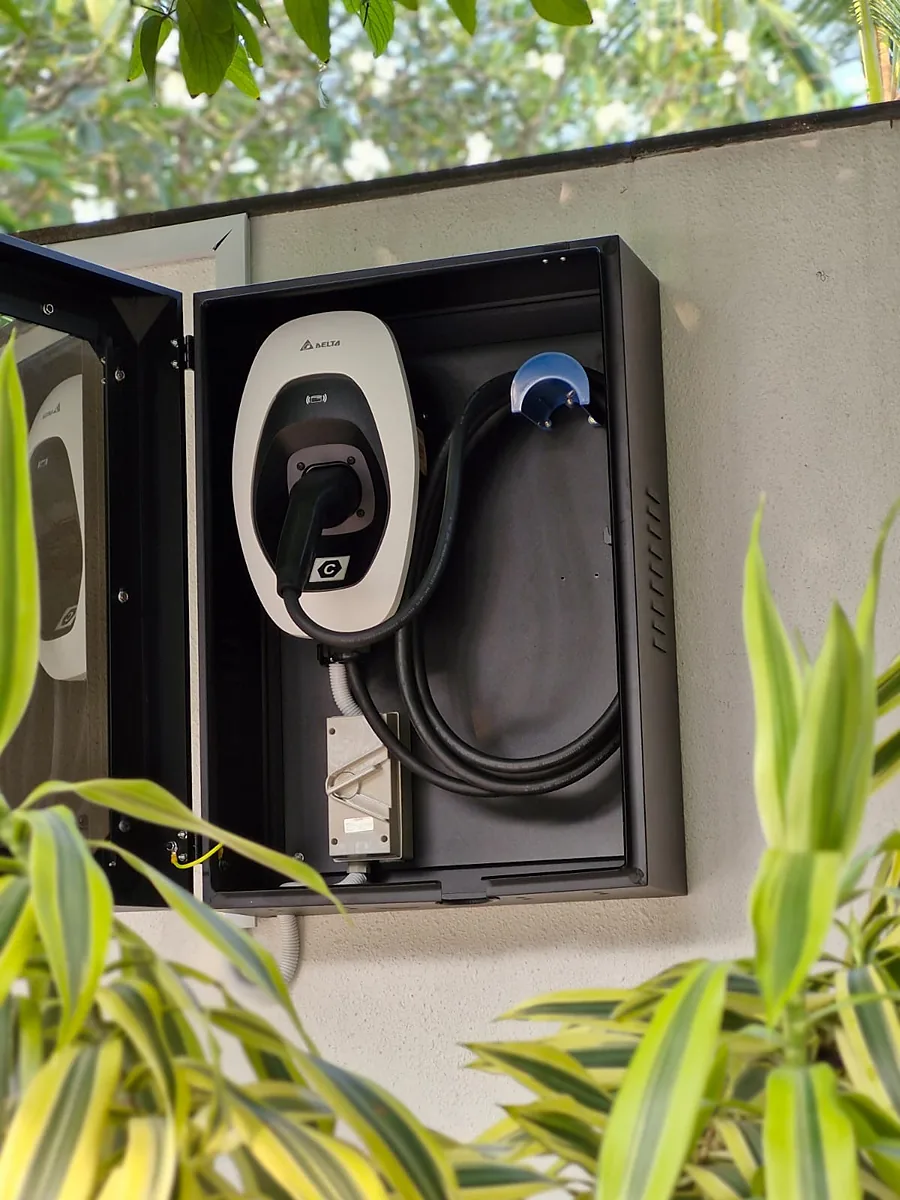
A landed home is also the only place a portable charger is allowed. LTA permits non-fixed chargers only at landed private residences, and only if the charger is type-approved and registered, and used on a dedicated switched socket with its own residual-current device. The QuickCharge Mercury 7 II is the only portable charger with LTA type approval. For charging every night in the same place, a fixed wall charger is still the better everyday choice.
Condos: shared chargers in common areas
In a condominium the carpark is common property, so charging is planned for the whole development rather than for one unit. The model the government grant funds is a set of shared chargers in a common area that all residents can reach. LTA's licensing of EV charging operators covers chargers in condominiums that residents or visitors use, so those chargers must be run by a licensed operator. Portable chargers are not allowed in condos at all.
Getting chargers approved has become easier. LTA's guide for MCSTs explains that amendments to the Building Maintenance and Strata Management Act, in force since 8 December 2023, let an MCST approve an EV charger installation by ordinary resolution, a simple majority of votes at a general meeting. Two conditions apply: the lease with the EV charging operator does not exceed 10 years, and the proposal does not draw on MCST funds. By-laws on the use of lots for EV charging, such as reserving charging lots for EVs, come under the same lower threshold.
- 1
Site and load study
An installer surveys the carpark and the building's supply, and proposes how many chargers, where, and at what power.
- 2
Proposal to residents
The MCST puts the proposal, including the arrangement with the charging operator, to an AGM or EOGM.
- 3
Ordinary resolution
Residents vote. Where both conditions above are met, a simple majority is enough. Keep the minutes: a grant application needs them.
- 4
Grant application, if the grant is still open
The MCST applies for the ECCG and waits for LTA's Letter of Offer. Chargers must not be installed before it arrives.
- 5
Installation, certification and registration
A Licensed Electrical Worker installs the chargers, a charger equipment specialist certifies them, and they are registered with LTA before use.
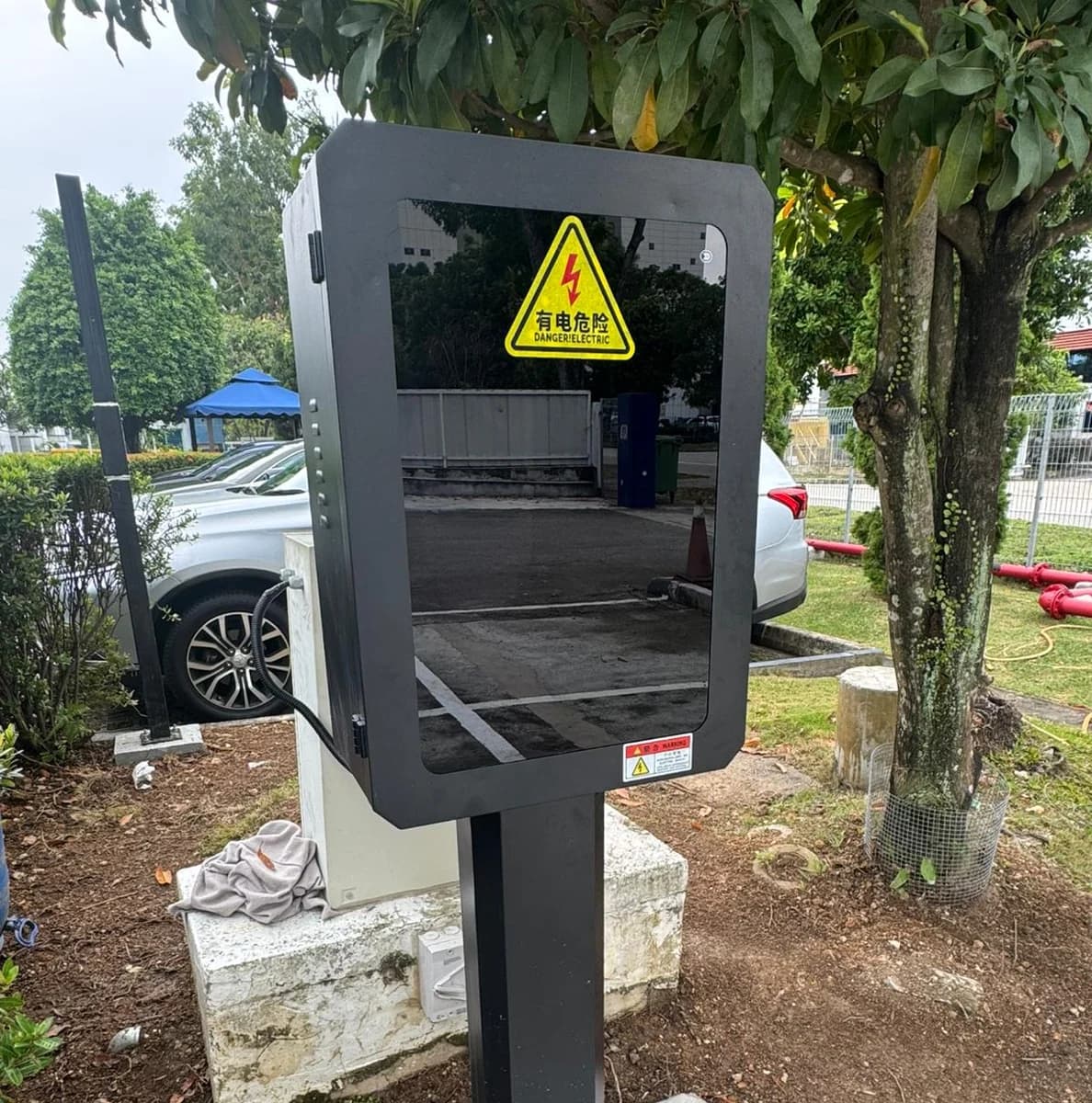
We work with management councils from the load study to the registration; see our commercial and MCST installation page for how a condo roll-out runs.
HDB EV charging: chargers run by LTA-appointed operators
HDB EV charging is a government-led roll-out. In 2022, LTA awarded a tender to five operators to deploy charging points across nearly 2,000 HDB carparks, with at least 12,000 charging points to be installed by the end of 2025. The carparks were grouped into regions: each region went to two operators, and each operator to two regions.
The roll-out is close to complete. The Ministry of Transport says that as of December 2025, all HDB towns are EV-ready and more than 90% of HDB carparks have charging points. It also plans for every HDB town to have at least one fast-charging hub by the end of 2027.
Some carparks are still without chargers. As of March 2026, MOT counted 139 HDB carparks, 7% of the total, without EV chargers because of technical constraints. If you park in one of them, you can transfer your season parking to a nearby HDB carpark with chargers, at the same season parking rate.
HDB EV charging rates are set by the operators, not the Government. MOT has said that the Government does not intervene in the prices operators set, and that it ensures users have options from a range of operators where feasible. For current rates, check with the operator that runs the chargers in your carpark.
The rules that apply wherever you live
Whatever your home, the same safety regime sits underneath. Under the EV Charging Act, every charger model must be type-approved by LTA before it can be supplied, and every charger must be registered with LTA before it is used. A fixed charger is installed by a Licensed Electrical Worker and certified by a charger equipment specialist. Our guide to LTA-approved chargers and registration shows how to check a model.
The plugs are standard too. Fixed chargers in publicly accessible places, HDB carparks included, must have Type 2 AC and/or CCS2 DC connectors, and LTA's guide for drivers says EVs in Singapore are fitted with those two inlets, which are found at all public chargers. The car you charge at home plugs into the chargers in an HDB carpark too.
What to do next, by home type
Landed home
- Book a free site survey to check your supply, board and cable route.
- Choose a type-approved charger sized to your supply and your car.
- Have it installed, certified and registered. There is no grant to wait for.
Start with a survey through our landed home installation page.
Condominium
- Raise charging with your MCST or managing agent.
- Ask for a site and load study, and a proposal for the next general meeting.
- If the grant matters, apply and wait for the Letter of Offer before anything is installed.
Move early if the grant matters: it ends on 31 December 2026, or sooner.
HDB flat
- Find out which operator runs the chargers in your carpark, and what it charges.
- If your carpark has no chargers, ask about transferring your season parking to one that does.
- Look out for your town's fast-charging hub: MOT plans one in every HDB town by the end of 2027.
Your charging comes from the carpark's operator, not from a home installation.
Sources
The official pages this guide was checked against.
- Award of the tender for EV charging points at HDB car parks (news release) (Land Transport Authority, 2 November 2022)
- Electric vehicles (Ministry of Transport)
- Data on HDB carparks without EV chargers and access to alternative chargers (written reply) (Ministry of Transport, 5 May 2026)
- Ensuring affordable public EV charging at HDB carparks (written reply) (Ministry of Transport, 5 May 2026)
- Charger grants (Land Transport Authority)
- Electric vehicle guide for MCSTs (Land Transport Authority, July 2025)
- Transitioning to EVs (Land Transport Authority)
- Regulating the safety of EV chargers (Land Transport Authority)
- Electric vehicle guide for drivers (Land Transport Authority, 2024)
- Guidelines for the registration of EV chargers (Land Transport Authority, as of 3 November 2025)
Written by Charge N Go's installation team. We supply and install EV chargers for homes and businesses across Singapore, and we update this guide when the rules or the sources above change.