EV charger grants in Singapore: ECCG for condos, EHVCG for heavy vehicles
The ECCG grant co-funds shared condo EV chargers until 31 Dec 2026 or 3,500 chargers. Who qualifies, the caps, the EHVCG, and why landed homes get none.
The short answer
Singapore has two EV charger grants. The ECCG co-funds 50% of the cost of shared smart chargers in condominiums and other non-landed private residences, subject to caps, until 31 December 2026 or 3,500 chargers, whichever is earlier. The EHVCG co-funds chargers of 50kW or more for new electric heavy vehicles. Landed homes have no charger grant.
- The ECCG is for shared chargers in condos and other non-landed private residences only.
- It pays 50% of each cost component, capped at S$4,000 per charger for the first 2,000 chargers and S$3,000 for the next 1,500.
- It is available until 31 December 2026, or until 3,500 chargers are co-funded, whichever is earlier, and it is first-come, first-served.
- The EHVCG co-funds up to 50%, capped at S$30,000 per charger, for 50kW-plus chargers serving new electric heavy vehicles.
- Landed homes have no charger grant, and the EEAI is a car rebate, not a charger grant.
On this page (7 sections)
Which EV charger grant applies to you?
Charger grants in Singapore follow the type of property or the type of vehicle, not the charger. The ECCG is for shared chargers in condominiums. The EHVCG is for businesses registering new electric heavy vehicles. Landed homes are covered by neither. If you are not sure which group your home falls into, our guide to charging at HDB, condo and landed homes sorts it out first.
| ECCG | EHVCG | Landed home | |
|---|---|---|---|
| Who it is for | Condominiums and other non-landed private residences | Businesses registering a new electric heavy vehicle | Landed homeowners |
| Which chargers | Shared smart chargers in a common area, for up to 1% of residential car park lots | Smart chargers rated 50kW or more, at a lorry or coach lot, up to three per site | Any charger at your home |
| Co-funding | 50% of each cost component, capped at S$4,000 per charger for the first 2,000 chargers and S$3,000 for the next 1,500 | Up to 50% of installation cost, capped at S$30,000 per charger | None |
| Available until | 31 December 2026, or until 3,500 chargers are co-funded, whichever is earlier | 31 December 2028, or until 500 chargers are approved, whichever is earlier | No grant to run out |
| Install before the letter of offer? | No | No | Not applicable |
What does the ECCG cover?
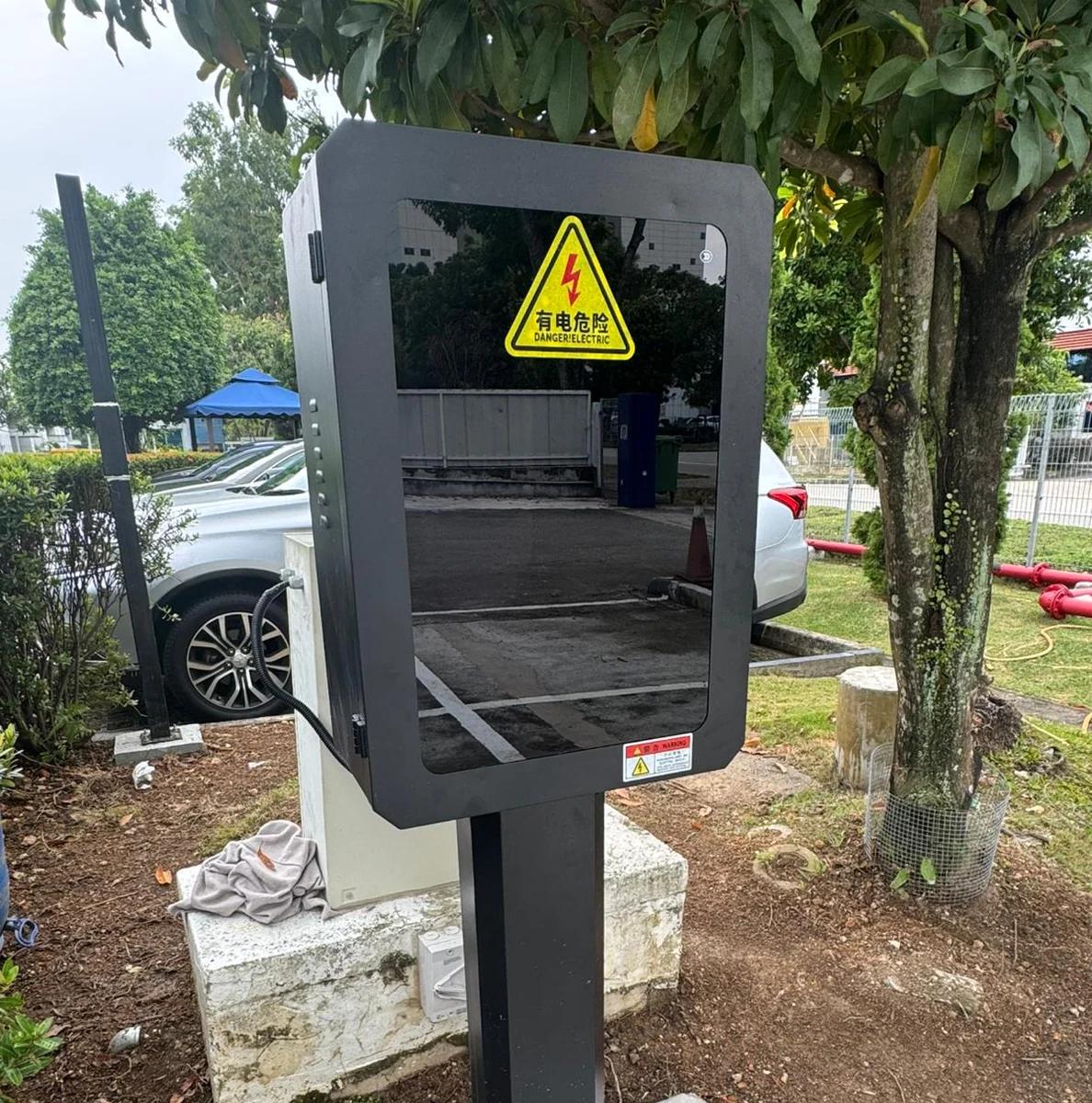
The Electric Vehicle Common Charger Grant (ECCG) helps condominiums put in chargers that residents share. It is for non-landed private residences: in LTA's definition, private developments with residential units, except landed properties, shophouses, hotels, hostels, serviced apartments and workers' dormitories. Its conditions:
- Shared, in a common area. The chargers must be installed in a common area that residents can reach, and shared among them. It is not a grant for one resident's private charger.
- Up to 1% of residential lots. The ECCG can co-fund smart chargers for up to 1% of the development's residential car park lots, rounded up to the nearest whole number. A development with 150 residential lots, for example, could have up to two co-funded chargers.
- Smart chargers, capped at 22kW. Co-funding is capped at 22kW, in line with LTA's approach of slow overnight charging.
- Half of each cost component. The grant co-funds 50% of each of three cost components: the charging system, the Licensed Electrical Worker's fees, and cabling and installation, which has its own sub-cap.
- An overall cap per charger. The first 2,000 chargers co-funded under the scheme are capped at S$4,000 each, and the next 1,500 at S$3,000 each.
The caps limit what LTA contributes. They are not the price of a charger, and the other half of each cost component is not co-funded. Our guide to what drives installation cost explains how those components are built up.
How does a condo get the ECCG?
The MCST, the management corporation that runs the development, has to approve the chargers first. Since 8 December 2023, amendments to the Building Maintenance and Strata Management Act have lowered the threshold for an EV charger proposal to an ordinary resolution, a simple majority of votes at a general meeting, as long as two conditions hold: the lease between the MCST and the EV charging operator does not exceed 10 years, and the proposal does not draw on MCST funds. The same lower threshold covers by-laws for charging lots, such as reserving them for EVs.
If either condition is not met, the lower threshold does not apply, so check with your managing agent which resolution your proposal needs. Chargers in a condo that residents or visitors use also need a licensed EV charging operator, which is why the conditions refer to the MCST's lease with an operator.
- 1
Pass the resolution
At an AGM or EOGM (annual or extraordinary general meeting). Keep the minutes: the ECCG application needs meeting minutes showing the residents passed a resolution to install the chargers.
- 2
Apply to LTA
Applications are assessed on a first-come, first-served basis.
- 3
Wait for the letter of offer
LTA will not co-fund a charger installed before the applicant received its letter of offer.
- 4
Install, certify and register
A Licensed Electrical Worker installs each charger, a charger equipment specialist certifies it, and it is registered with LTA before residents use it.
We survey and install shared chargers for MCSTs and managing agents; see condo and commercial installations for how a roll-out runs.
When does the ECCG end?
LTA's wording is exact: the ECCG is available until 31 December 2026, or until 3,500 chargers have been supported by co-funding, whichever is earlier. Applications opened on 29 July 2021, and in March 2025 LTA extended the grant by another year to its current end date. At that point it had co-funded about 1,700 chargers in more than 500 developments.
LTA does not publish a running count, so nobody outside LTA can say how many places are left. Because applications are first-come, first-served, the practical advice for an MCST still considering chargers is simple: pass the resolution and apply now, and install only once the letter of offer is in hand.
After the ECCG ends, condos can still install shared chargers. They will simply not be co-funded by it.
Is there a grant for an EV charger at a landed home?
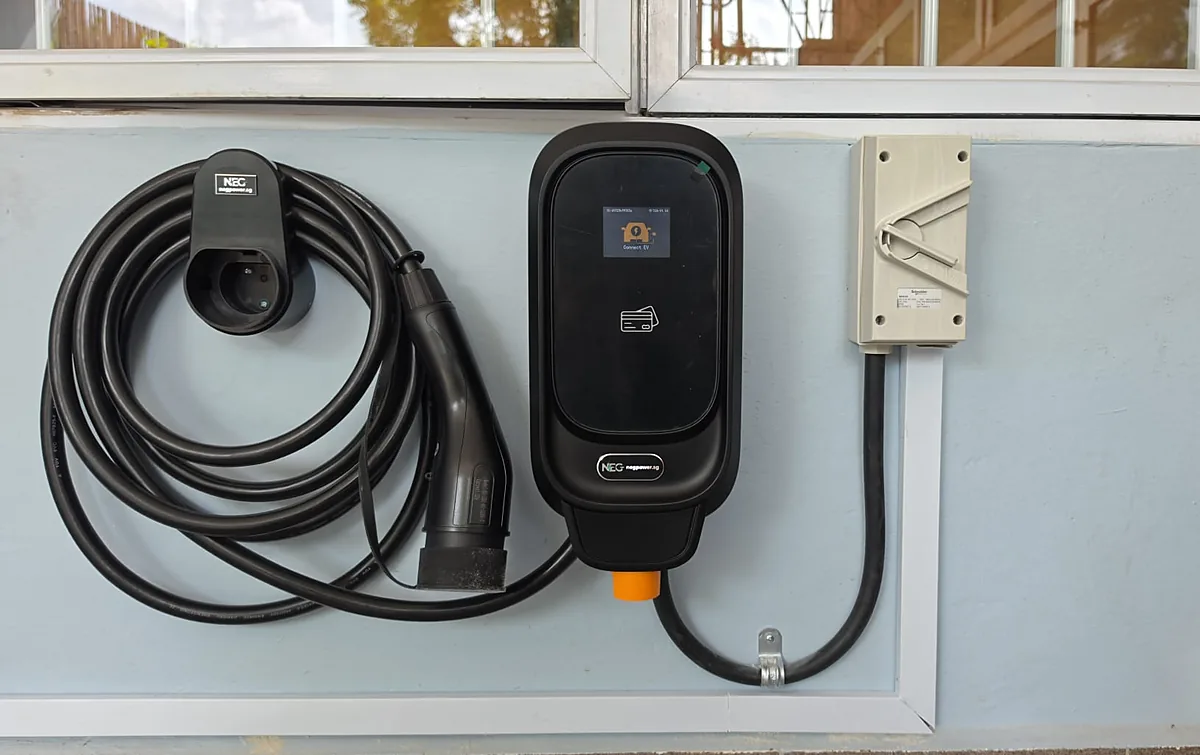
No. There is no government grant for a charger at a landed home. The ECCG excludes landed properties by definition, and the EHVCG is for chargers serving electric heavy vehicles. If you own a landed house, you pay the full cost of your installation.
The upside is simplicity. LTA does not require a landed home to engage a licensed EV charging operator, and with no grant there is no letter of offer to wait for: once the free site survey is done, installing an AC charger takes 1–3 hours on site, and the usual lead time to your first charge is 1–3 days. See how a landed home installation runs from start to finish.
The EHVCG: grants for electric heavy vehicle chargers
The Electric Heavy Vehicle Charger Grant (EHVCG) is for businesses moving heavy vehicles to electric. It is available from 1 January 2026 to 31 December 2028, or until 500 chargers have been approved for co-funding, whichever is earlier. Applications opened a month early, in December 2025.
The point to hold on to is that the grant follows the vehicle, not the site. Each co-funded charger is tied to a new electric heavy vehicle that you register.
Will you register a new electric heavy vehicle (over 3,500kg) between 1 Jan 2026 and 31 Dec 2028?
No: The EHVCG does not apply: the grant follows the vehicle, not the site.
Is the charger rated 50kW or more?
No: Not eligible. 30kW DC units and AC wallboxes fall below LTA's minimum.
Apply through the Business Grant Portal
With the vehicle purchase order or deposit receipt, and itemised quotations
Wait for the Letter of Offer
Do not install the charger before it arrives
Install within one year, and claim
50% of eligible costs, up to S$30,000 per charger, up to three chargers per site
- A new electric heavy vehicle, over 3,500kg, registered between 1 January 2026 and 31 December 2028, one for each co-funded charger. Restricted Use vehicles do not qualify.
- A smart charger rated at least 50kW.
- At a lorry or coach lot at your place of business, serving heavy vehicles.
- Up to three chargers per site for each applicant.
- Up to 50% of the installation cost, capped at S$30,000 per charger. LTA also applies caps to individual cost components, based on established cost norms.
- Apply through the Business Grant Portal. You can order the vehicle and pay its deposit before approval; the application asks for the purchase order or deposit receipt.
- Install only after the letter of offer, and within one year of it. The charger then has to be kept working for three years from the letter of offer.
Our EHVCG page covers the application in detail, including the quotations LTA asks for and how we plan invoices around the approval date.
Which DC chargers qualify for the EHVCG?
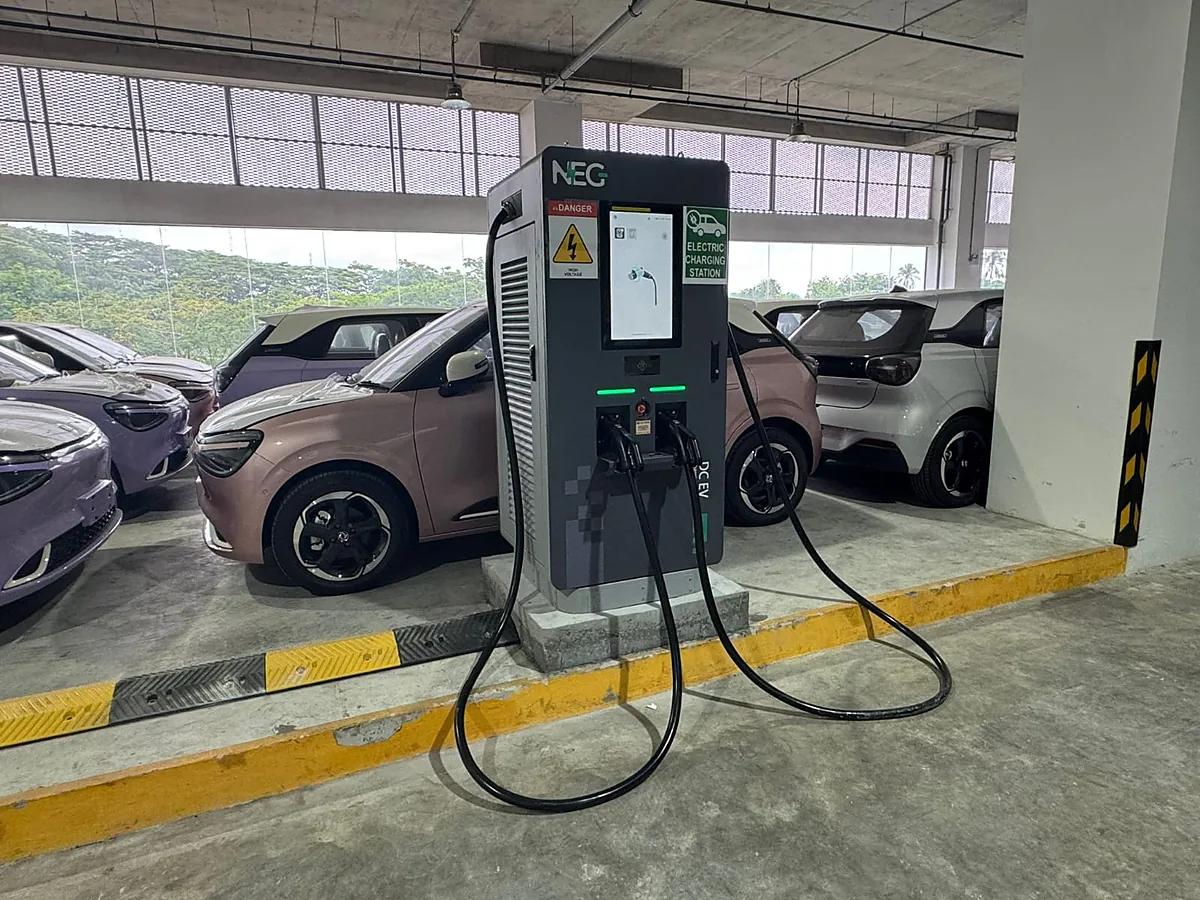
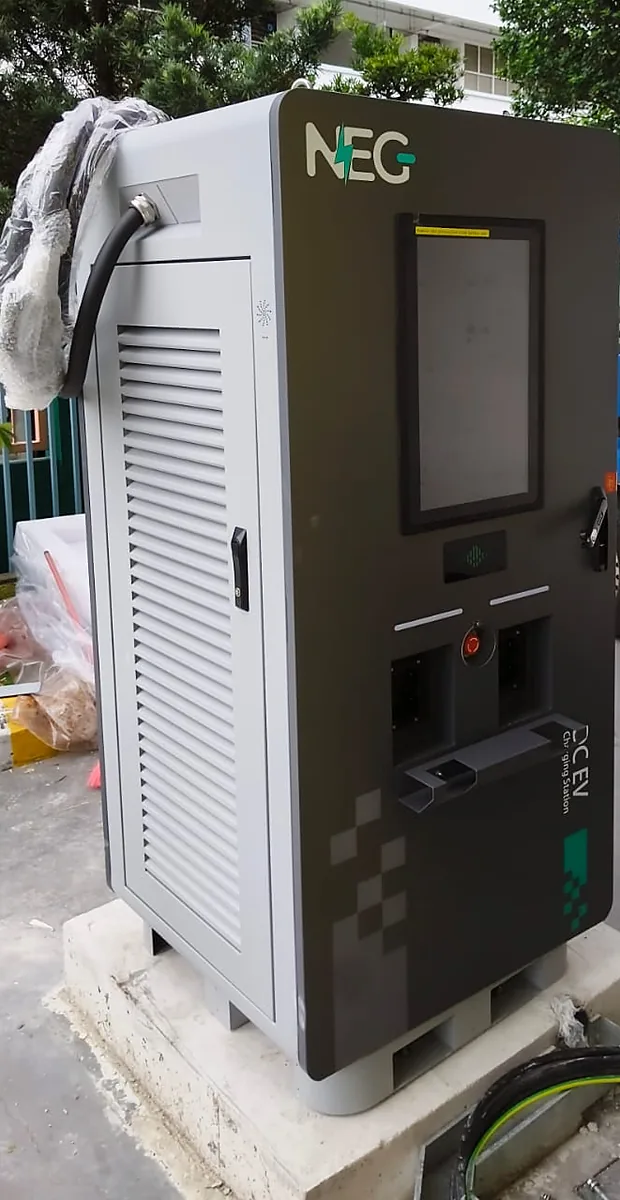
Only chargers rated 50kW or more. In our range, that means the 60–240kW DC fast chargers. A 30kW DC charger is below LTA's minimum, as is every AC wallbox, so neither is eligible however it is used.
30kW DC (DC30)
- About 28 minutes per 100km of range.
- Same-day installation, about 5 hours on site.
- Not eligible for the EHVCG: below the 50kW minimum.
Suits vehicles that stop for an hour or more, such as over lunch or between jobs.
60kW to 240kW DC
- More power per bay, if the vehicle accepts it.
- Eligible for the EHVCG when the vehicle conditions are met.
- An installation programme set at the survey, and often more supply capacity.
Suits heavier vehicles, larger fleets and shorter stops.
Many fleets use both. If the grant does not matter to you, because you are not registering a new electric heavy vehicle, a 30kW unit may still be the better buy for vehicles that stop long enough. If you are registering one, plan the 50kW-plus chargers around the letter of offer.
Sources
The official pages this guide was checked against.
- Charger grants (ECCG and EHVCG) (Land Transport Authority, last updated 4 September 2026)
- Transitioning to EVs: incentives and grants (Land Transport Authority, last updated 17 September 2026)
- Electric Vehicle Guide for MCSTs (Land Transport Authority, July 2025)
- Strengthening Singapore's EV ecosystem (Land Transport Authority, 5 March 2025)
- Electric Vehicle Guide for Drivers (Land Transport Authority)
- Regulating the safety of EV chargers (Land Transport Authority)
Written by Charge N Go's installation team. We supply and install EV chargers for homes and businesses across Singapore, and we update this guide when the rules or the sources above change.