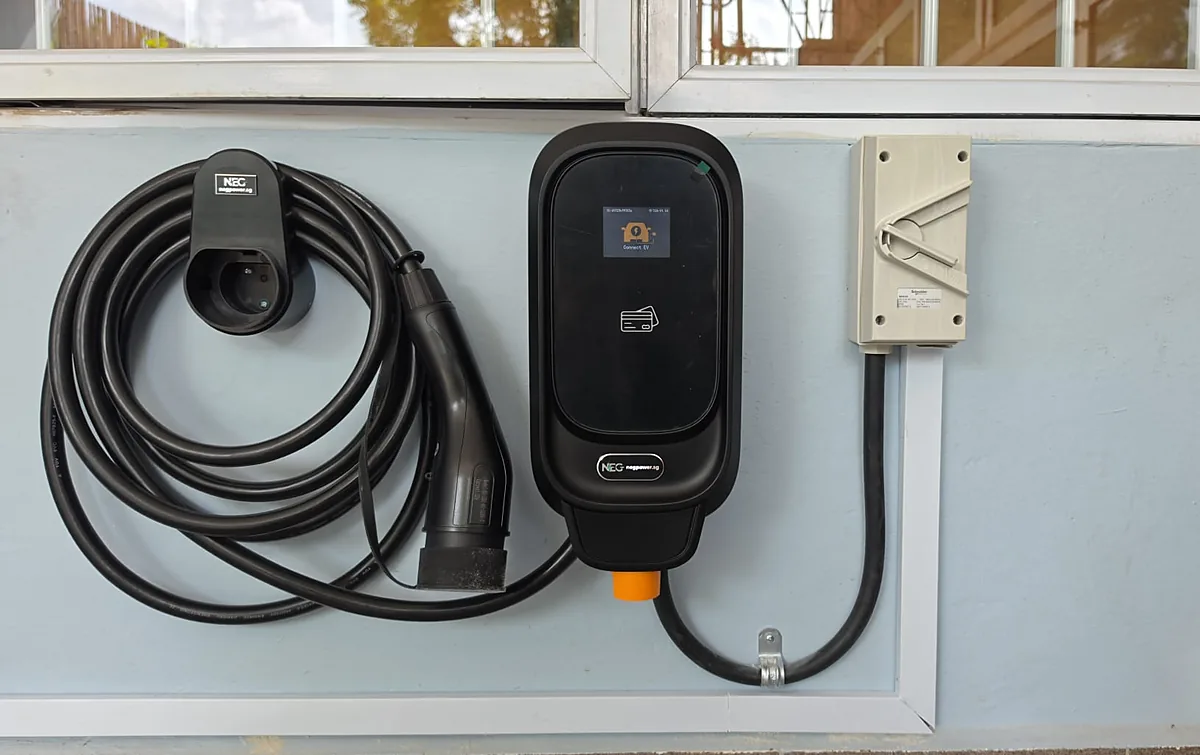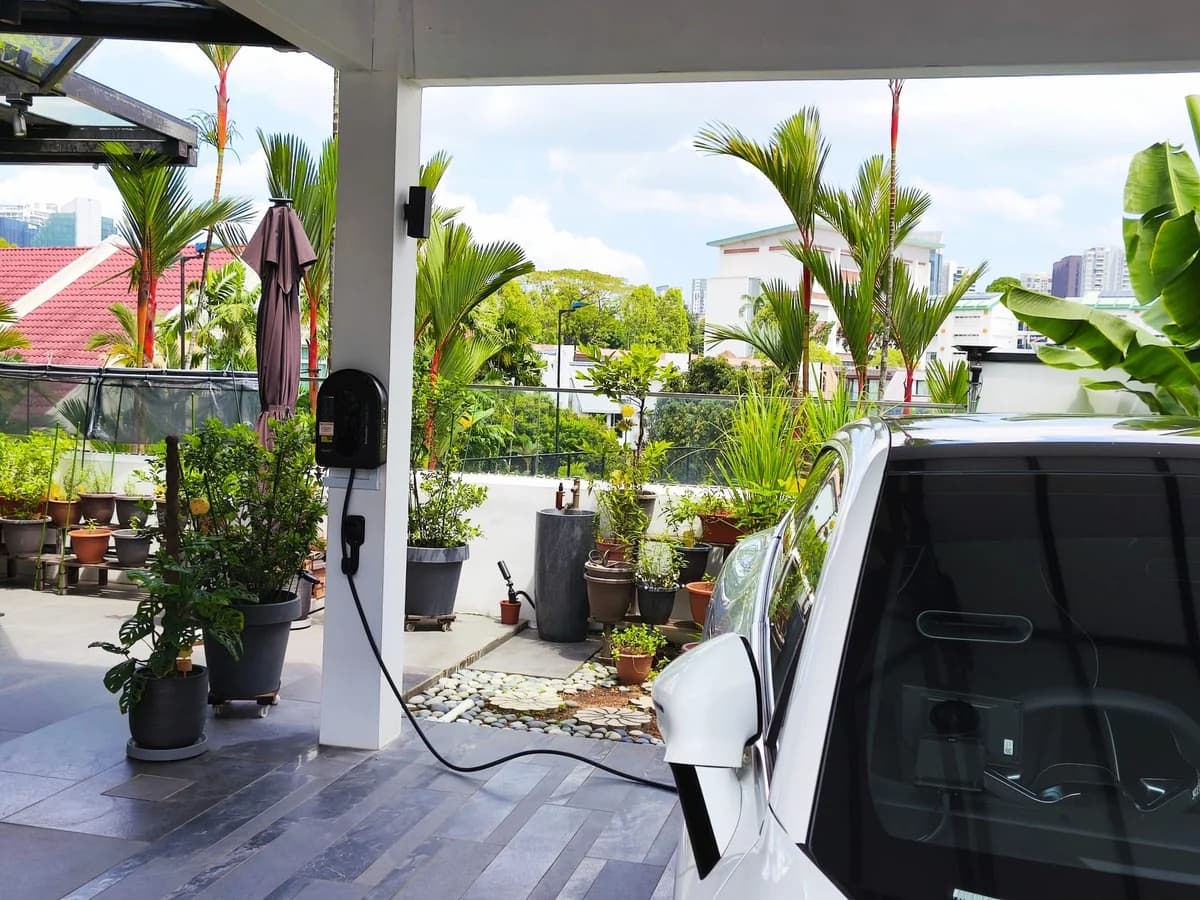
7kW vs 22kW EV charger: single-phase, three-phase and what your car accepts
A 22kW EV charger needs three-phase power and a car that accepts 22kW on AC. How 7.4kW, 11kW and 22kW compare, and when the faster charger is worth it.
The short answer
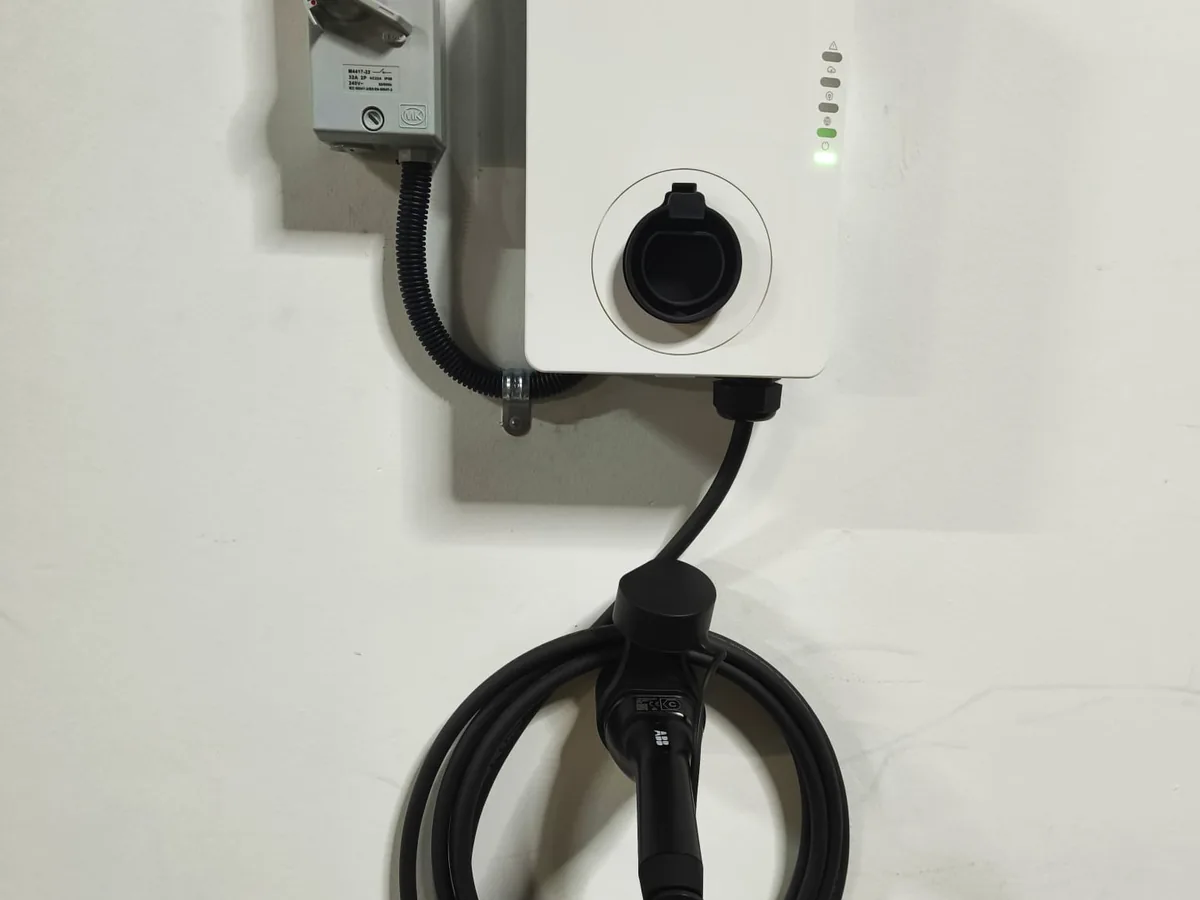
A 22kW EV charger needs a three-phase 400V supply and a car whose onboard charger accepts 22kW on AC. A 7.4kW charger runs on single-phase 230V, and three-phase also allows 11kW. A bigger charger only charges faster if the car accepts the power, so your car and your supply decide, and a site survey checks both.
- kW is the rate of charging; kWh is the energy that ends up in the battery.
- 7.4kW is 32A on single-phase 230V; 11kW and 22kW are 16A and 32A per phase on three-phase 400V.
- The car's onboard charger caps AC speed: in LTA's example, a single-phase-only car on an 11kW charger still charges at 3.7kW.
- Moving to three-phase is a change to your supply, applied for through SP Group by a Licensed Electrical Worker.
- 22kW comes into its own when cars share a charger, stops are short, or the next car accepts more.
On this page (7 sections)
What does kW mean on an EV charger?
A charger's rating in kilowatts (kW) is the rate at which it can deliver power. The energy that ends up in the battery is measured in kilowatt-hours (kWh). One hour at 7.4kW delivers up to 7.4kWh; one hour at 22kW delivers up to 22kWh. A 22kW charger can therefore put about three times as much energy into a car each hour as a 7.4kW one, provided the car accepts it.
Range is easier to picture than kWh. The chart converts each rating into range added per hour, for a car that uses 14kWh per 100km. Your car's real figure will differ, but the proportions hold.
Range added per hour of charging
At 14 kWh per 100 km. AC figures assume the car's onboard charger accepts that power.
- 7.4kW ACsingle-phase
- ~53 km
- 11kW ACthree-phase
- ~79 km
- 22kW ACthree-phase
- ~157 km
- 30kW DCcommercial
- ~214 km
Speed is only half of it. The other half is how long the car is parked. Over a long overnight stop, any of the three AC sizes has hours to work. Over a short stop between trips, or when a second car is waiting for the charger, the faster charger is the one that adds meaningful range.
Single-phase and three-phase supply, explained
Homes and buildings take their low-voltage supply from SP Group in one of two forms. Single-phase is 230V, up to a maximum of 23kVA (100A). Three-phase is 400V, delivered as what SP's handbook calls a "3-phase, 4-wire system": three live phases and a neutral.
Single-phase
230V on one phase
32A × 230V ≈ 7.4kW at most
Three-phase
400V across three phases
16A per phase ≈ 11kW · 32A per phase ≈ 22kW
For charging, the difference is simple. A single-phase supply carries a charger of up to 7.4kW. A three-phase supply shares the load across three phases, which is how a charger reaches 11kW or 22kW without drawing more than 32A on any one of them.
We do not guess which supply a home has. The free site survey confirms whether yours is single-phase or three-phase, and how much spare capacity your distribution board has, before any charger is recommended.
The arithmetic: 7.4kW, 11kW and 22kW
Each rating is voltage multiplied by current. Here is where the three numbers come from.
| Charger | Supply | Arithmetic | Time to add 100km* |
|---|---|---|---|
| 7.4kW | Single-phase, 230V | 32A × 230V ≈ 7.4kW | Just under 2 hours |
| 11kW | Three-phase, 400V | 3 phases × 16A × 230V ≈ 11kW | About 1¼ hours |
| 22kW | Three-phase, 400V | 3 phases × 32A × 230V ≈ 22kW | Under 40 minutes |
Two things follow. A 22kW charger draws the same 32A on each phase that a 7.4kW charger draws on its single phase: it gets three times the power by using three phases. And an 11kW charger is a three-phase charger at half that current, a match for cars whose onboard charger accepts 11kW.
Why your car's onboard charger caps the speed
On AC, the charger on the wall does not charge the battery directly. It supplies AC power to the car, and the car's onboard charger converts it to DC for the battery. LTA's guide for drivers is direct about the consequence: "Rate of AC charging is limited by the onboard charger."
LTA lists the common levels. A car supports single-phase AC charging at up to 3.7kW or 7.4kW, or three-phase at up to 11kW, 22kW or 43kW. A wall charger rated above your car's figure will not make this car charge faster; the extra capability is for a second car, or the next one.
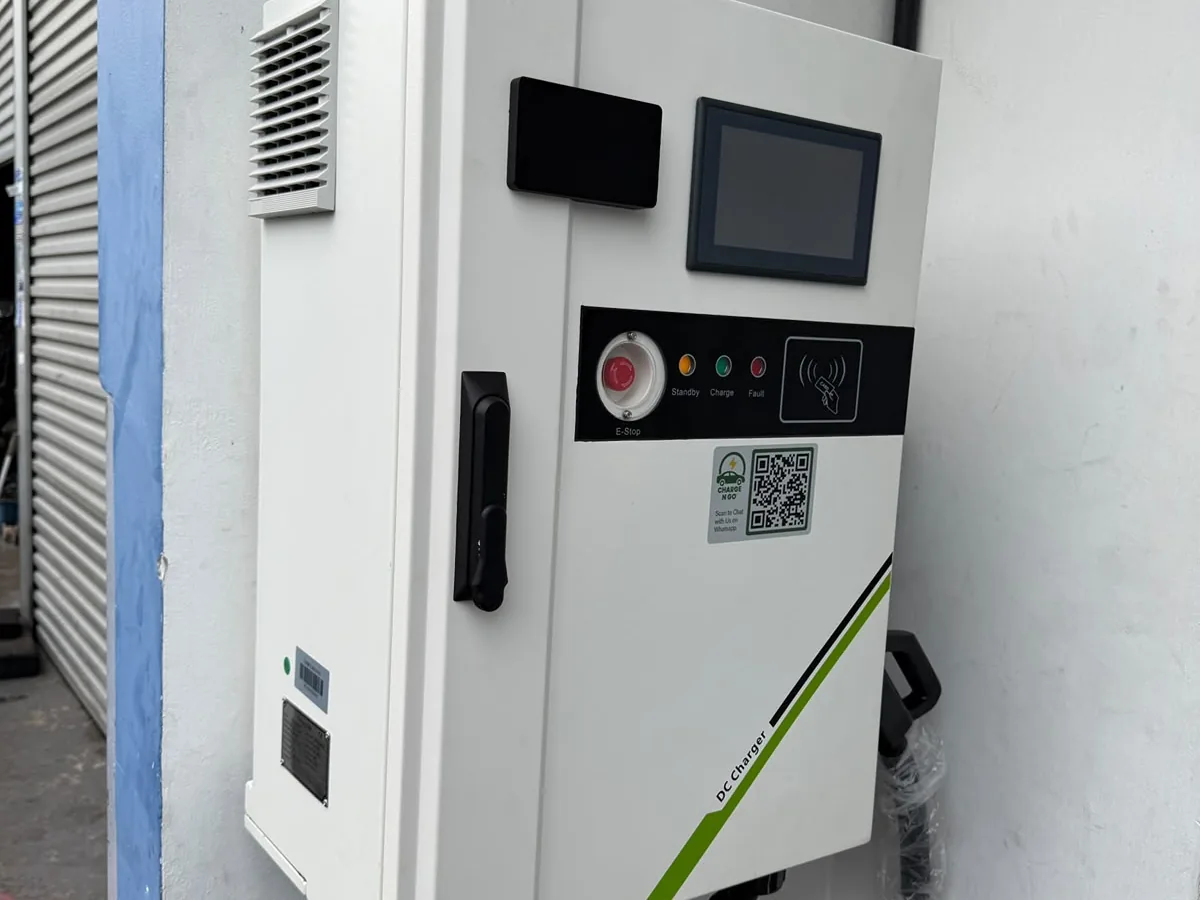
DC chargers work differently: they convert the power inside the charger, so the onboard charger is not the limit. That is how a 30kW DC unit adds range faster than any home AC charger. Our guide to AC and DC charging explains the two routes.
How do I find my car's AC charging limit?
You do not need to guess. Your car's AC limit is in its documentation; you just need to look in the right place.
- Open the owner's manual or the manufacturer's specification sheet and look for AC charging, onboard charger or maximum AC charging power.
- Note the figure in kW, and whether it says single-phase (1-phase) or three-phase (3-phase).
- Ignore the DC fast-charging figure. It describes a different route into the battery.
- Check the figure for your exact model and variant, not for the range as a whole.
- If it is unclear, ask the dealer, or send us the model and we will check it before the survey.
Then compare it with the charger you have in mind. A car that accepts 7.4kW charges at its full AC speed on a 7.4kW charger. A car that accepts 11kW or 22kW on three-phase reaches that speed on a matching three-phase charger, provided your supply is three-phase. Our guide to choosing a home EV charger covers the rest of the decision: features, brand and warranty.
What does a three-phase supply or upgrade involve?
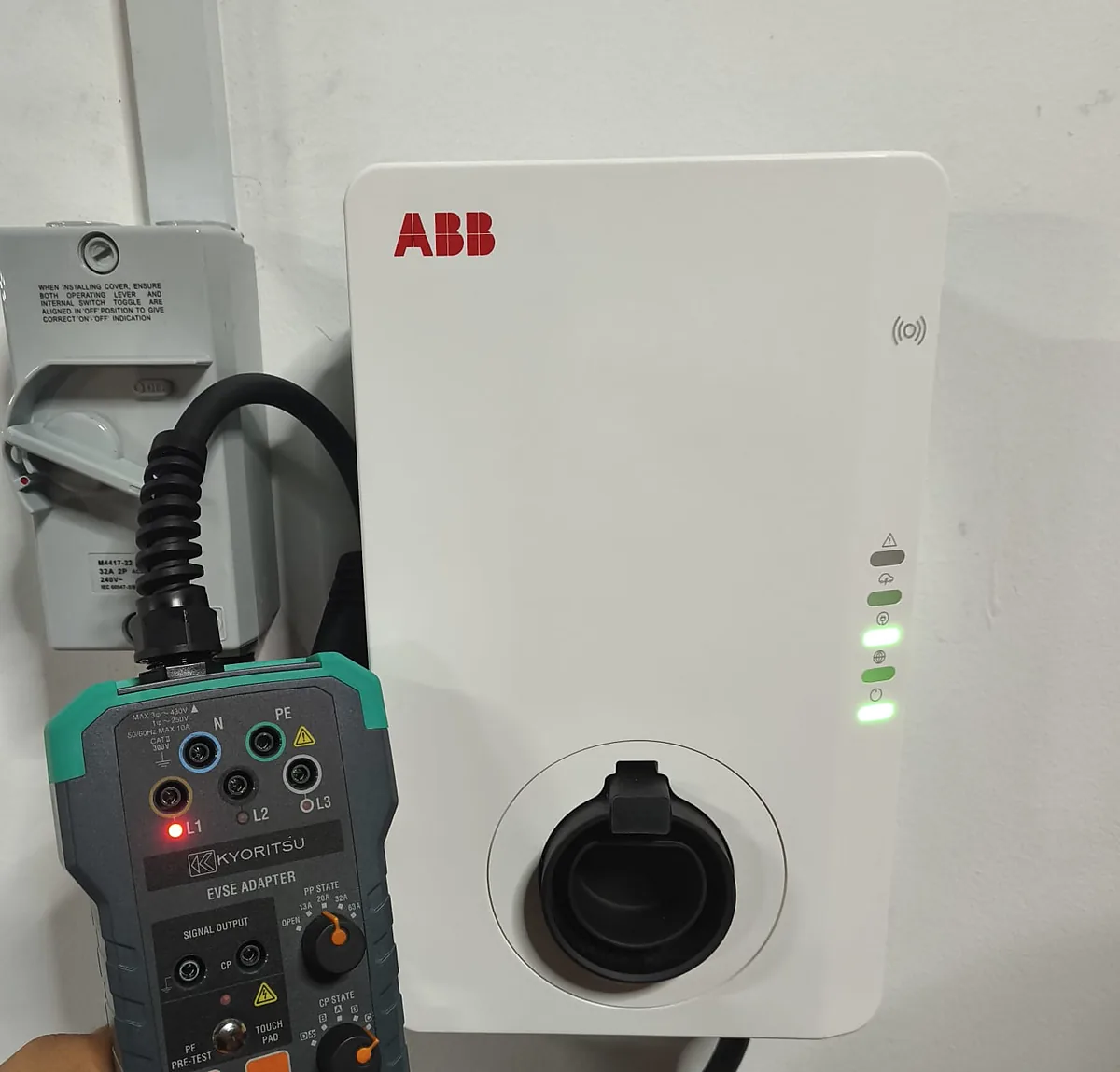
If your home already has a three-phase supply with spare capacity, an 11kW or 22kW charger is a normal installation on a circuit of its own. If it is single-phase, three-phase charging needs a change to the supply first. SP Group treats upgrading the load at an existing premises as a modification of connection.
- 1
Survey and load check
We check your incoming supply, your distribution board and what the house already draws, and tell you whether the charger you want needs an upgrade at all.
- 2
A Licensed Electrical Worker applies to SP
Applications for new or modified connections are submitted by a Licensed Electrical Worker (LEW) through SP Group's eBusiness Portal. For landed homes, SP's advice is to engage an LEW for a new connection or an upgrade.
- 3
Approval and supply works
Where a landed home needs a new service cable, SP's FAQ says the process typically takes three weeks, and about another three weeks after approval for the cable installation.
- 4
Charger installation
Once the supply is in place, an LEW installs the charger in about 1–3 hours on site. It is then certified and registered with LTA before it is used.
We do not publish costs for supply upgrades, because they depend on what is already there: the incoming supply, the board, and the distance to the parking space. The survey tells you whether you need one; our cost guide explains what drives a quote, and installing a charger at home walks through every step.
When is a 22kW charger worth it?
A 22kW charger is the most powerful AC charger we install, and there are good reasons to choose one. There are also good reasons a 7.4kW charger is the right fit. Here is the honest comparison.
22kW on three-phase
- Adds the most range per hour of any AC charger we install, when the car accepts 22kW.
- Suits two or more EVs sharing one charger, one after the other.
- Suits short stops between trips, when there is not all night to charge.
- Ready for a next car whose onboard charger accepts more than this one.
Worth it when your supply is three-phase and you will use the speed: several cars, short stops, or a car that accepts 22kW.
7.4kW on single-phase
- Runs on a single-phase supply, with no change to the supply if the board has capacity.
- Charges a car with a single-phase onboard charger at its full AC speed.
- Adds about 53km of range per hour at 14kWh per 100km, when the car accepts 7.4kW.
- Over a long overnight stop, it has hours to work.
Right when your supply is single-phase, or your car charges on one phase, and the car is parked for long stretches.
11kW sits between the two: three-phase, at half the current per phase of 22kW, and a match for cars whose onboard charger accepts 11kW. Not every brand makes an 11kW model; the AC chargers page and the brand comparison show which sizes each brand offers.
For a condo or a workplace, the same reasoning applies to each charger, multiplied by the number of cars. Shared condo chargers co-funded under the ECCG grant, which is available until 31 December 2026 or until 3,500 chargers are co-funded, are capped at 22kW. Our commercial installation page covers sites with several chargers.
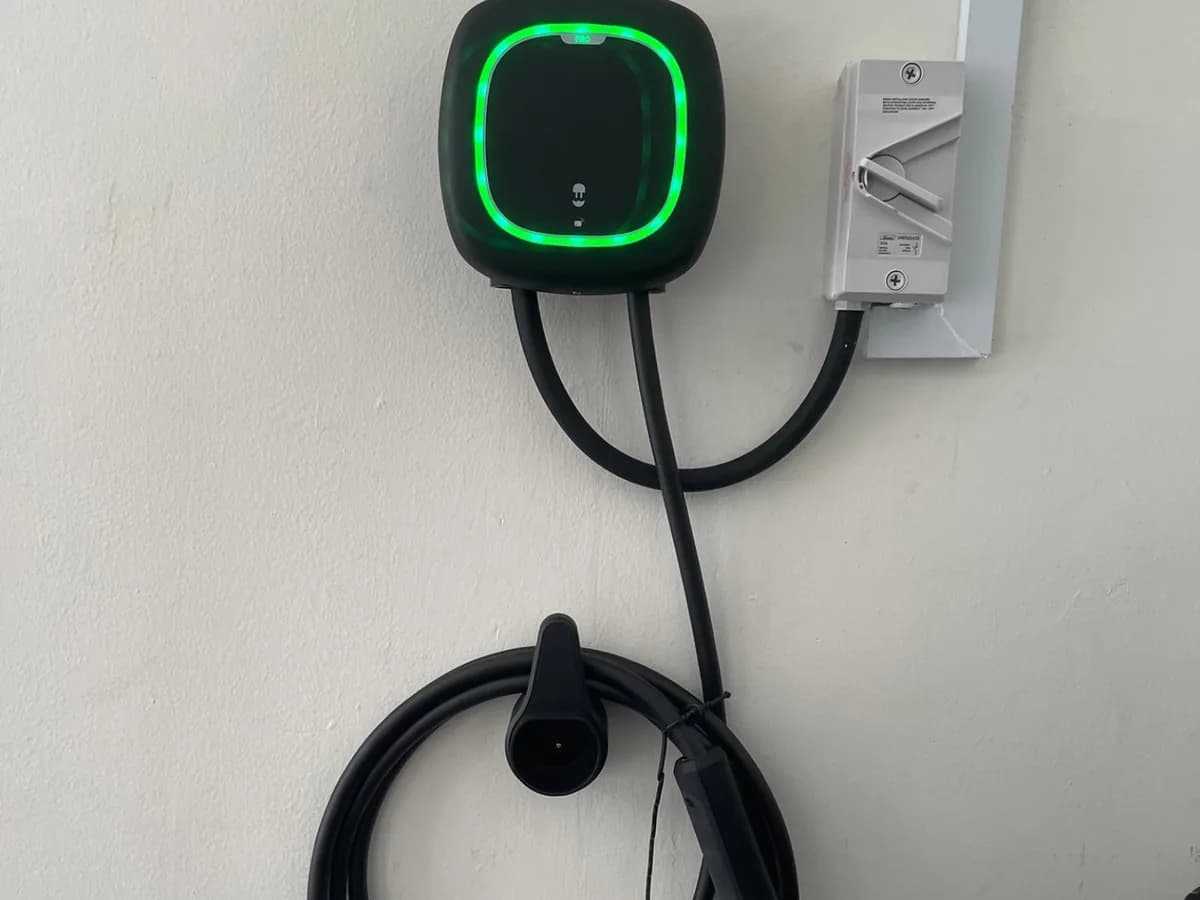
Which one is right for your home is not something we decide from a brochure. The survey checks the car, the supply and the board, and our landed home installation page shows what happens after it.
Sources
The official pages this guide was checked against.
- Electric Vehicle Guide for Drivers (Land Transport Authority)
- How to apply for electricity connection (SP Group, January 2026)
- FAQs on electricity supply connection for landed residential premises (SP Group)
- Regulating the safety of EV chargers (Land Transport Authority)
- Charger grants (Land Transport Authority)
Written by Charge N Go's installation team. We supply and install EV chargers for homes and businesses across Singapore, and we update this guide when the rules or the sources above change.