LTA approved EV charger list: type approval and registration explained
Where to find LTA's approved EV charger list, how to check a charger's approval label, and how registration works under the EV Charging Act.
The short answer
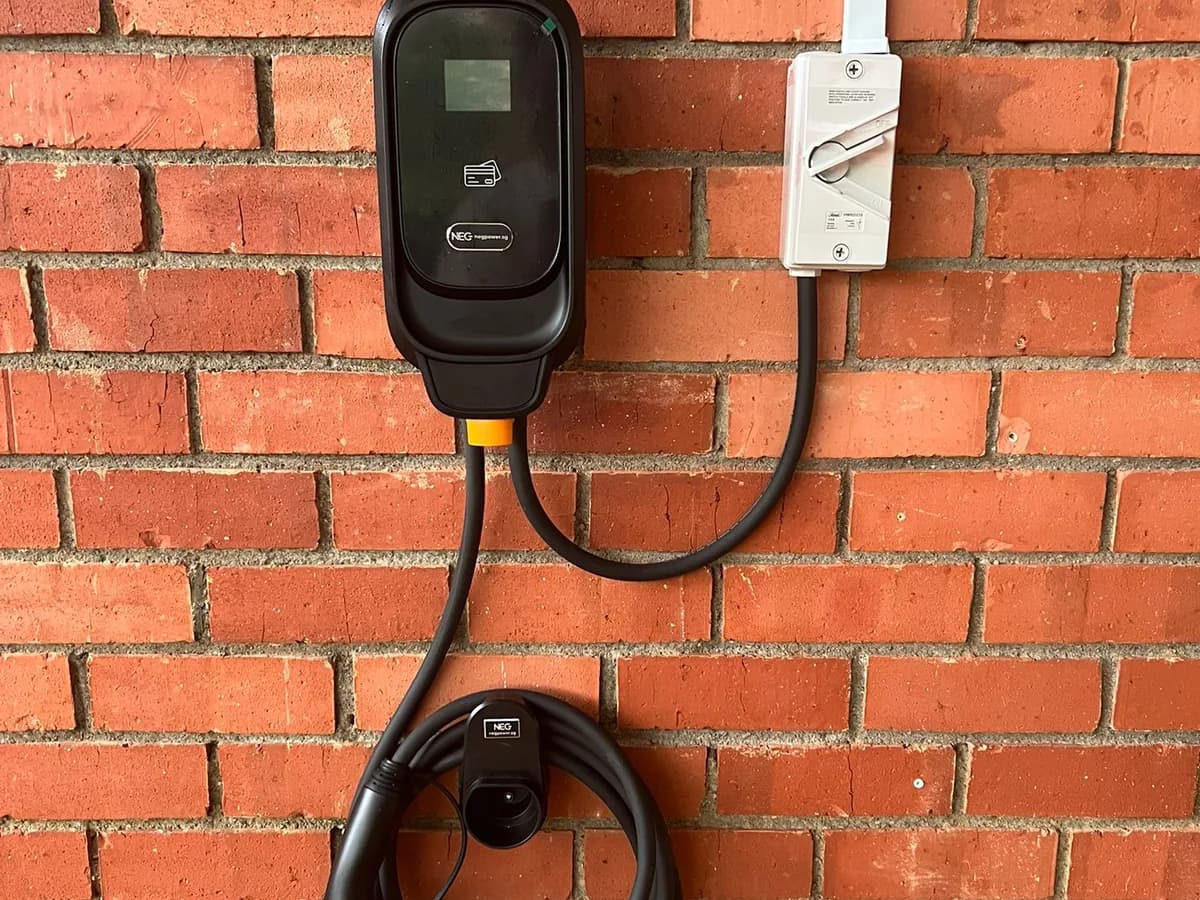
LTA publishes its approved EV charger list as a PDF on its "Regulating the safety of EV chargers" page. Under the EV Charging Act, every charger model must be type-approved before it is supplied. A Licensed Electrical Worker installs it, a charger equipment specialist certifies it, and the owner must register it with LTA before it is first used.
- LTA's approved EV charger list is a dated PDF on its "Regulating the safety of EV chargers" page. Always open the current one.
- Since 8 June 2024 it has been an offence to supply a charger model that is not type-approved.
- A Licensed Electrical Worker installs a fixed charger, and a charger equipment specialist certifies it.
- Every charger, home chargers included, must be registered with LTA before use, and the owner is responsible.
- Portable (Mode 2) chargers are allowed only at landed homes, on a dedicated switched socket. 13A household sockets are prohibited.
On this page (8 sections)
What the EV Charging Act requires
The Electric Vehicles Charging Act 2022, usually shortened to the EV Charging Act or EVCA, is the law that governs the safety of EV chargers in Singapore. It commenced on 8 December 2023. LTA describes it as a comprehensive regulatory regime, and it runs from the charger models that may be sold all the way to each individual charger that is installed and used.
For a homeowner or a business, it comes down to three things. The charger model must be type-approved by LTA. The charger must be installed and certified by the right people. And it must be registered with LTA before anyone plugs a car into it. This guide takes each in turn, then covers portable chargers, which have rules of their own.
The first of those is not a grey area. Since 8 June 2024 it has been an offence to supply a charger model that is not type-approved. If you are offered a charger that is not on LTA's list, walk away, however good the price looks.
Where to find LTA's approved EV charger list
LTA publishes the list of charger models issued with type approval as a PDF, linked from its Regulating the safety of EV chargers page. The list is dated and LTA replaces it when it updates it; the version current as we write is dated 10 September 2026. So do not rely on a copy someone saved or forwarded months ago. Open it fresh from LTA's page and search it for the exact model name on your quote.
Look for the model, not just the brand. Type approval is granted to charger models, so one model from a brand can be on the list while another model from the same brand is not. A brand name on a box tells you nothing until you have matched the model.
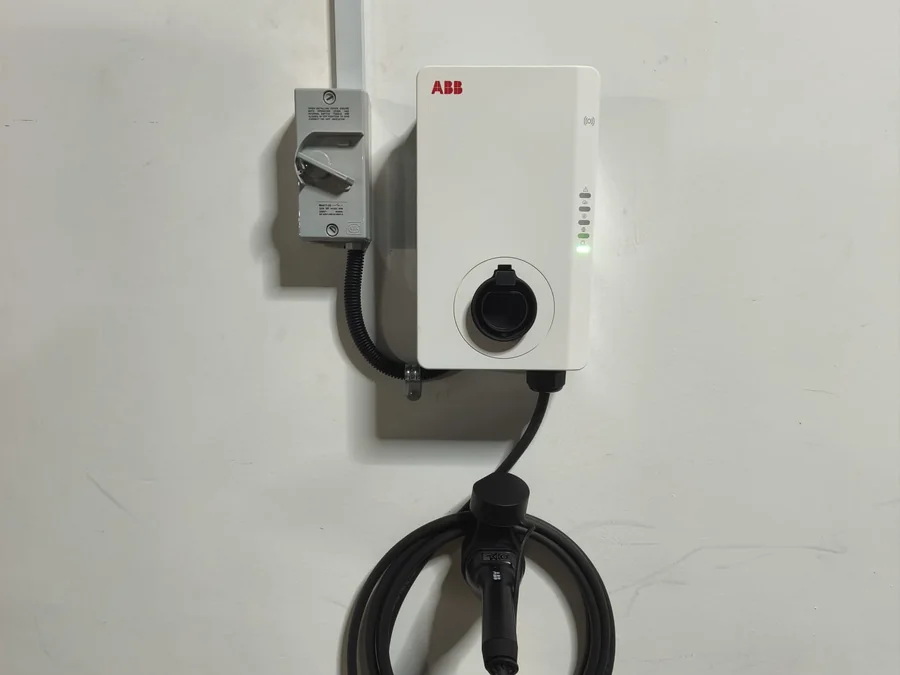
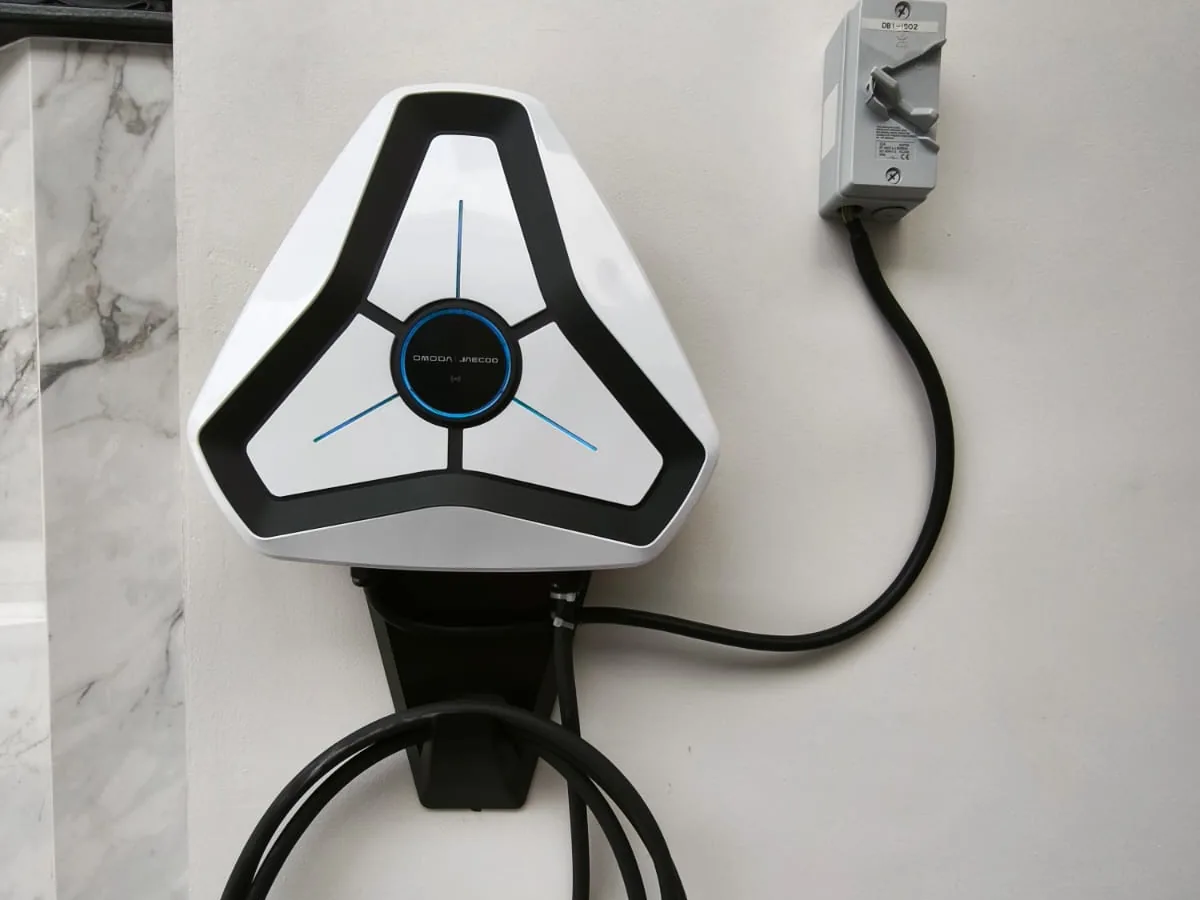
Check the approval label. Approved chargers must carry an approval label before they can be supplied, installed or certified. The label shows a type approval ID, and you can check the label is valid by entering that ID on OneMotoring. If a charger has no label, or the ID does not check out, it should not be installed.
Which standard is it approved against? LTA type-approves chargers against Singapore's national standard for EV charging. That was Technical Reference TR 25, which became Singapore Standard SS 722 on 1 April 2026. LTA still accepts TR 25 test reports during the transition, and a charger already approved against TR 25 does not need re-certifying. Our TR 25 and SS 722 guide explains the change.
Every charger we supply is a type-approved model, across the twelve brands we install. Ask us for the model name and check it against LTA's list yourself; it takes a minute.
From approval to registration, step by step
LTA sets the order: a new charger must be type-approved before it can be installed, certified and registered. That gives every installation the same sequence.
- 1
The model is type-approved
LTA approves the charger model, and the charger carries its approval label. A model without approval cannot legally be supplied, so this step happens before the charger ever reaches you.
- 2
A Licensed Electrical Worker installs it
A fixed charger must be installed by a Licensed Electrical Worker (LEW), the licensed electrician responsible for the electrical work from your distribution board to the charger.
- 3
A charger equipment specialist certifies it
Certification is a separate role, and LTA requires it to be carried out by a charger equipment specialist. A Certificate of Fitness is issued after installation and certification.
- 4
The owner registers it with LTA
The charger must be registered before it is used, and the Certificate of Fitness is part of the application. The owner is responsible for registration, though an installer can submit it on the owner's behalf.
- 5
The registration mark goes on
Once registered, the charger must be affixed with a registration mark within 60 days of the date of registration.
Who does what
Several people touch a charger between the factory and your first charge, and each has a defined part. This is who is responsible for what.
| Who | Their part | What it means for you |
|---|---|---|
| LTA | Type-approves charger models and publishes the list. Registers each installed charger. | LTA's list and OneMotoring are where you check a model and its approval label. |
| Supplier | May only supply type-approved models, carrying their approval labels. | Ask for the exact model name before you buy, and check it. |
| Licensed Electrical Worker (LEW) | Installs a fixed charger. | Ask for the LEW's name and licence number. The registration needs both. |
| Charger equipment specialist | Certifies the charger. A Certificate of Fitness is issued after installation and certification. | No Certificate of Fitness, no registration. |
| Owner (you) | Makes sure the charger is registered before it is used. Tells LTA about any transfer, relocation or deregistration. | Even if your installer submits the paperwork, the duty is yours. |
| Installer (us) | Supplies the charger, arranges installation and certification, and can submit the registration as a third party. | You log in to OneMotoring to verify the details we submitted. |
One more role applies only to some properties. At a landed home you do not need a licensed EV charging operator to run your charger. Condo chargers used by residents or visitors are a different case and do need one; our guide to charging at HDB, condo and landed homes explains what is possible where.
How LTA EV charger registration works
Every EV charger in Singapore must be registered with LTA before it can be used. That includes home chargers, and it includes a charger that replaces an existing one. The owner is responsible for making sure it happens.
Registration is done online through OneMotoring, and the fee is paid as part of the application. LTA's registration guidelines list what an application needs:
- The charger's type approval ID, from its approval label
- The manufacturer's serial number
- The installation address
- The name and licence number of the LEW responsible for the installation
- The name of the charger equipment specialist
- The Certificate of Fitness
- Photographs of the charger, except for chargers installed at landed homes, where photos are not required
Your installer can submit it for you. LTA lets a charger owner appoint a third party, such as the charger installer, to submit the registration. You then log in to OneMotoring to verify the details that were submitted, so look out for it after installation day.
There is a registration fee. It is a mandatory fee payable to LTA, not to your installer, and it is separate from your installation quote. LTA has said registration fees will remain unchanged until 31 March 2027, and it publishes the fee table on its registration page. For what does move an installation quote, see EV charger pricing.
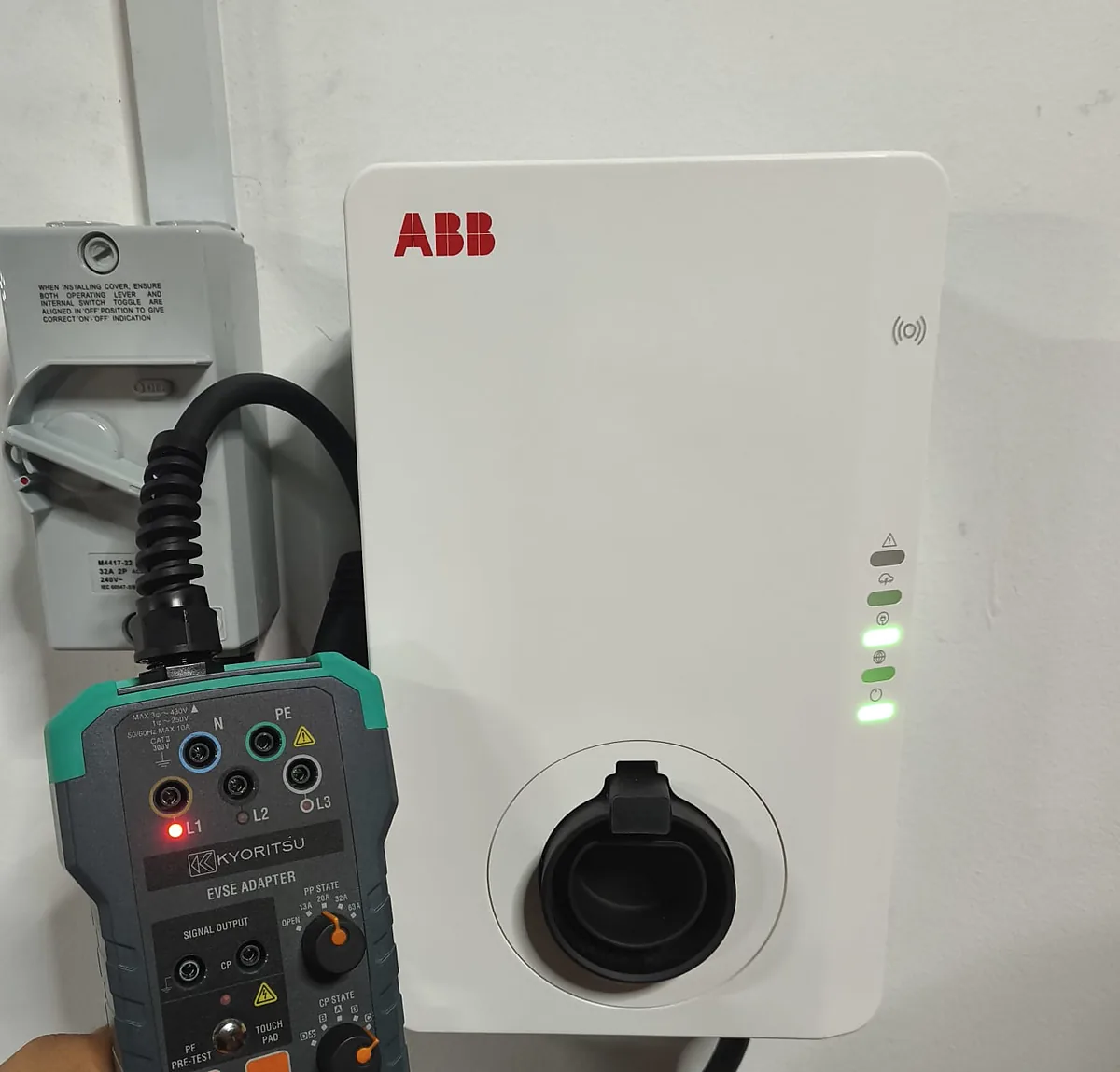
After registration. The charger must carry its registration mark within 60 days of the date of registration. From then on, you must tell LTA if you transfer the charger to someone else, relocate it, or deregister it, for example when you sell your home with the charger in place, move it, or take it out of service. Transfer and relocation applications carry a fee; deregistration does not.
Chargers installed before the Act commenced on 8 December 2023 follow a separate provisional-ID route, which LTA's registration page explains.
Are portable EV chargers LTA approved?
A portable charger can be type-approved, but the rules around it are stricter than for a wall charger. LTA's guidelines class a portable AC charger with an in-cable control and protection device (IC-CPD), rated between 3.6kW and 22kW, as a Mode 2 charger, and list it as restricted. In practice that means:
- Landed homes only. Non-fixed chargers are only permitted at landed private residences. They are not allowed at condominiums or other non-landed private property.
- Type-approved and registered. A portable charger needs LTA type approval like any other, and it must be registered before it is used.
- A dedicated switched socket with its own RCD. It may only be used with a compatible, dedicated switched socket outlet protected by its own residual-current device (RCD), and never through an extension cord, an adaptor or a portable socket outlet.
- 13A household sockets are prohibited. LTA states that they are not designed for EV batteries, and that using them is prohibited under the EV Charging Act.
The only portable charger carrying LTA type approval is the QuickCharge Mercury 7 II. We supply it, and we can install the dedicated socket circuit it needs. Our portable EV charger page covers how it works and where it suits.
If you charge in the same place every night, a fixed wall charger is the simpler everyday choice; a portable makes sense for a second property or as a backup. Either way, a landed home installation starts with a free site survey of your supply and your parking.
What counts as improper use?
The Act makes it an offence to use an EV charger improperly, or to allow one to be used improperly. The second half matters if family, tenants or staff use your charger: allowing misuse is covered, not only doing it yourself.
LTA's guidance gives two plain examples of improper use:
- Using an adaptor with an EV charger.
- Using an extension cord with a non-fixed (portable) charger.
Two related rules sit alongside them. Charging from a 13A household socket is prohibited under the Act, and a non-fixed charger is only permitted at a landed home. None of this is about catching people out: LTA's own warning is that adaptors and extension cords are not built for EV charging, and that using them could lead to electrocution or fire.
How we handle approval and registration for you
You should not need to read the Act to get a charger on your wall. On every installation, the compliance side runs like this:
- A type-approved model. Every charger we supply is a type-approved model. Ask us for the model name and check it on LTA's list.
- Installed by a Licensed Electrical Worker, on its own protected circuit.
- Certified, so you have the Certificate of Fitness that registration needs.
- Registration submitted for you. We can submit the registration to LTA as a third party. You log in to OneMotoring to verify the details, and the charger is ready to use once it is registered.
It starts with a free site survey, where we check your supply and your parking before anything is quoted. Read how our installation works, or our step-by-step guide to installing an EV charger at home.
Sources
The official pages this guide was checked against.
- Regulating the safety of EV chargers (Land Transport Authority)
- Registration of EV chargers (Land Transport Authority)
- Factsheet: Commencement of Electric Vehicles Charging Act 2022 on 8 December 2023 (Land Transport Authority, 7 December 2023)
- EV charger registration (OneMotoring (Land Transport Authority))
- EV charger type approval (OneMotoring (Land Transport Authority))
- Guidelines for the Registration of EV Chargers (Land Transport Authority, as of 3 November 2025)
- Guidelines for the Supply of EV Chargers (Land Transport Authority, as of 15 October 2025)
- Electric Vehicle Guide for Drivers (Land Transport Authority)
Written by Charge N Go's installation team. We supply and install EV chargers for homes and businesses across Singapore, and we update this guide when the rules or the sources above change.