Where to charge an EV in Singapore: public chargers, home and work
Where to charge an electric car in Singapore: public AC and DC chargers, HDB carparks, malls, work and home, and how to choose between them.
The short answer
To find a public EV charger in Singapore, start with MyTransport.SG, which LTA identifies as a way to locate publicly accessible charging stations and check charging-point availability. Confirm the connector, access conditions and current session terms with the operator before travelling. Home, condo and workplace charging are alternatives when you have permission to use or install a bay.
- Public charging is a mix of AC wall units and DC fast chargers, in HDB carparks, malls, workplaces and some petrol stations.
- In MOT's 5 May 2026 reply, 139 HDB carparks, or 7%, lacked EV chargers as of March 2026; check a finder for the current position at your carpark.
- Check the operator's current session terms, any idle fee and the separate carpark charges before you start; this guide does not quote charging prices.
- A home or condo charger is for overnight parking. Public DC is for a top-up when you are already out.
- If you park at a landed home or a condo, a free site survey is how to see whether a charger can go in.
On this page (6 sections)
The kinds of public chargers you will find
Public chargers in Singapore are either AC or DC. On AC, the car's onboard charger converts the power and caps the speed. On DC, the charger converts the power itself and feeds the battery directly, which is why a public fast charger is almost always a DC unit. Our AC vs DC guide explains that difference; the short version is enough here.
AC charging: the car converts the power
Grid supply
Your home or building
AC wall charger
7.4kW to 22kW
Car's onboard charger
Converts AC to DC, and caps the speed
Battery
DC charging: the charger converts the power
Grid supply
Usually a commercial supply
DC charger
Converts AC to DC inside the unit, 30kW and up
Onboard charger
Bypassed
Battery
| Where | Typical charger | Typical use |
|---|---|---|
| HDB carparks | Public AC, with some DC at selected carparks | A longer stay or a daytime top-up, subject to that charging bay's parking and idle rules |
| Malls and private commercial carparks | A mix of AC and DC, set by the operator and the landlord | A session while you shop or work, including a faster DC top-up |
| Petrol stations and dedicated DC sites | DC fast chargers | A shorter stop when you need a lot of range back |
| Workplaces and business car parks | Usually AC for staff or visitors who park for hours; DC where vehicles must turn around | Charging during the working day, on a bay the employer or landlord provides |
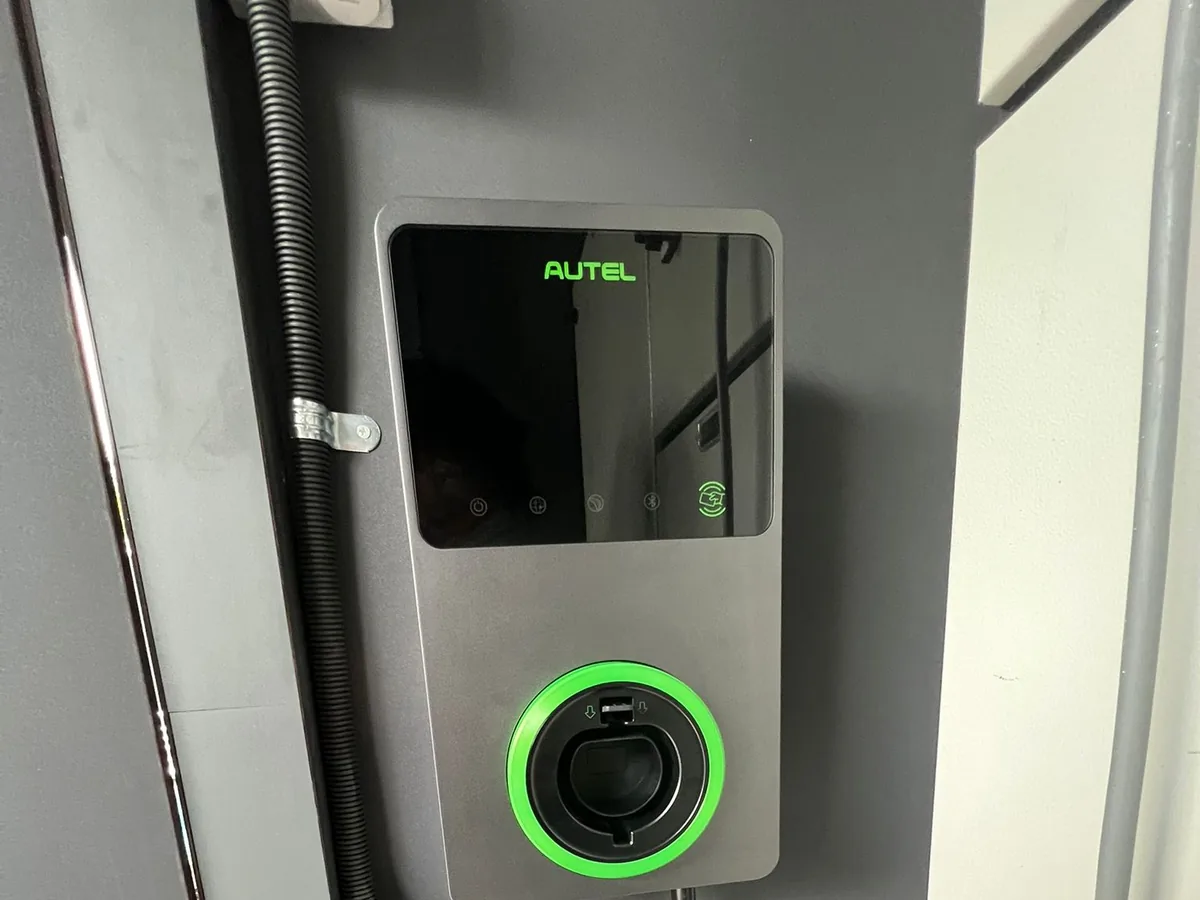
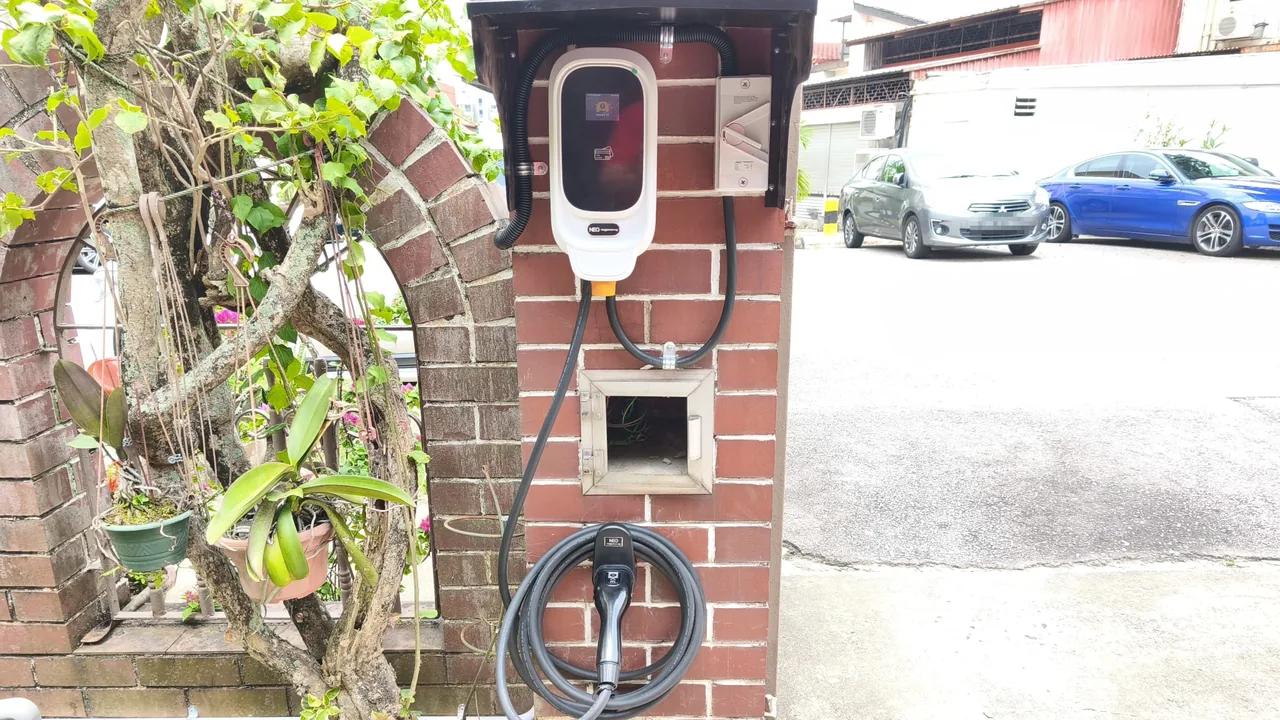
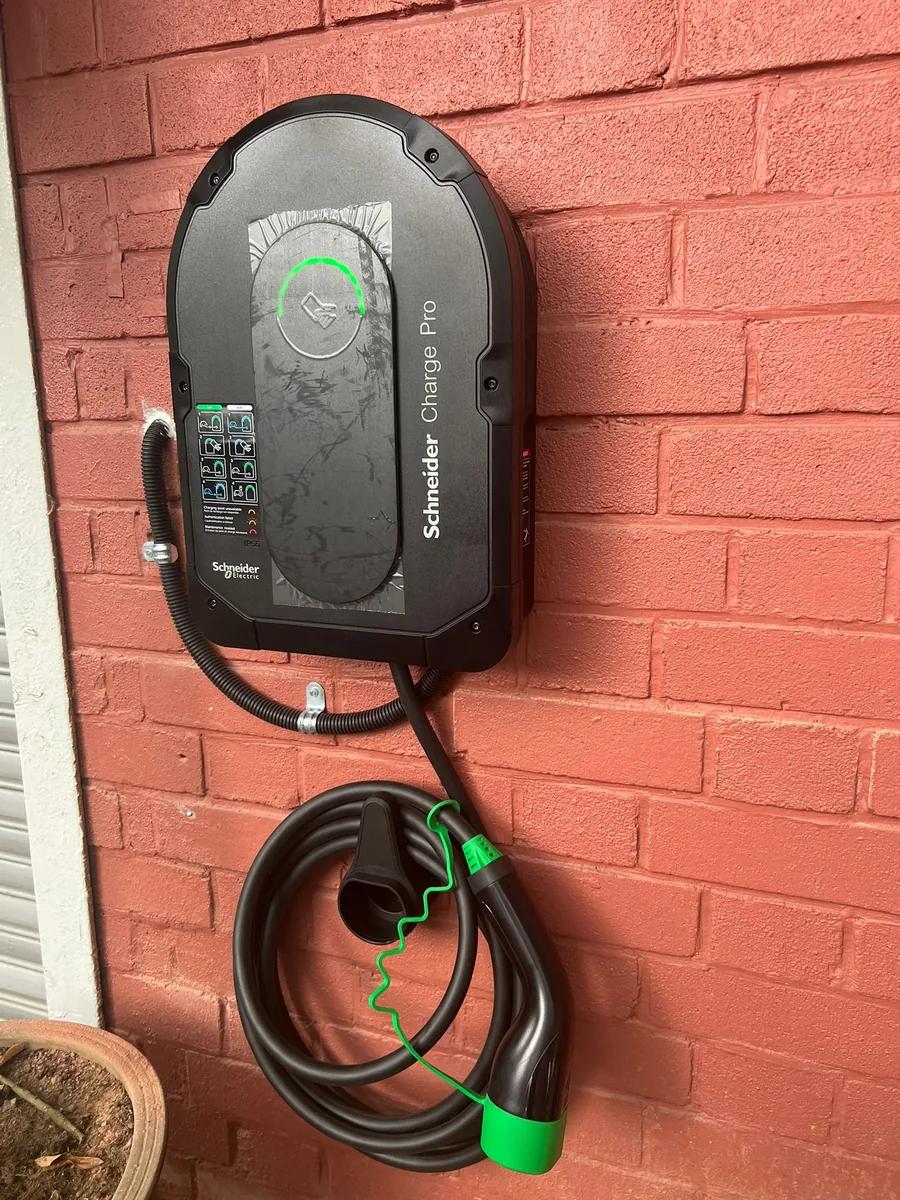
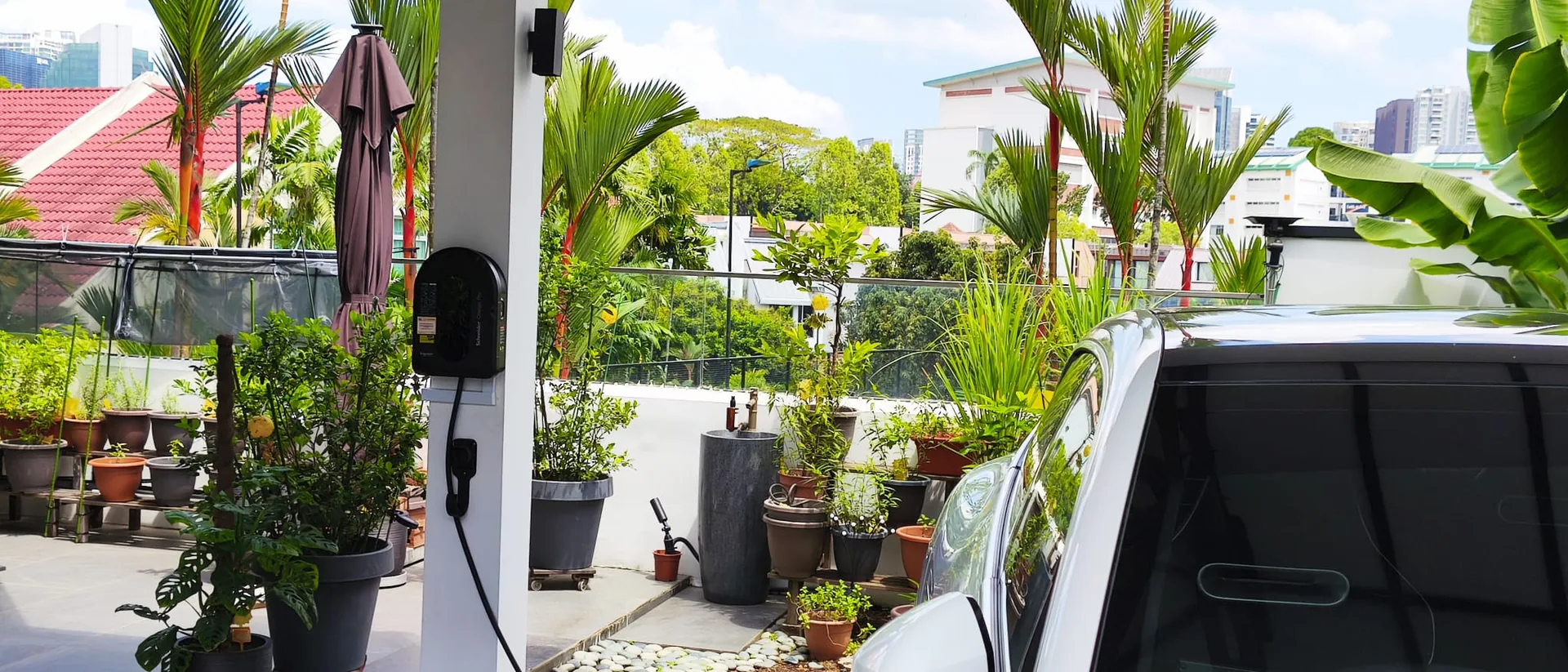
| Landed homes | A private AC charger matched to the car and available supply | Charging while parked at home, without relying on a public bay |
| Condominiums | Shared AC chargers in the common car park, run by a licensed operator | Overnight or regular parking on a condo bay |
At publicly accessible sites, LTA requires fixed chargers with Type 2 AC and/or CCS2 (Combo 2) DC connectors. CHAdeMO may be offered in addition. Match the bay to your car's inlet and charging capability; not every car supports DC charging. Do not use an adaptor between the charger's vehicle connector and the car.
Charging at HDB carparks
In HDB carparks, chargers are deployed and operated by LTA-appointed EV charging operators, not by individual residents. MOT reported that 139 HDB carparks, or 7%, lacked EV chargers as of March 2026. Operators set their own prices, and the Government does not fix a single public rate.
You cannot put a private wall charger on an HDB carpark lot. A type-approved portable charger is also not a substitute there: portables of that kind are for landed homes, as our guide to charging where you live sets out. If your carpark does not yet have chargers, that MOT written reply also notes that you can transfer your season parking to a nearby carpark that has them.
An HDB bay is still a public charger. You use the operator's app or access method, you pay the operator's rate, and you move the car when the session is done. Some operators charge an idle fee if the car stays in the lot after it has finished charging and a grace period has passed. Check that operator's current session terms to see whether an idle fee applies and how it works; the app or posted instructions may direct you to them. This page does not quote those figures.
How to find a charger near you
Start with LTA's public-charger information and MyTransport.SG download links. LTA says the app provides information on publicly accessible stations, including real-time charging-point availability. Find a site near where you plan to park, identify its operator and check whether your car uses the connector offered. Reported availability is not a reservation or a guarantee that a bay will remain free.
Before travelling, confirm the operator, AC or DC connector, reported availability, carpark access and opening hours, and whether you need your own Type 2 cable. Check the operator's current session terms, any idle fee and the separate parking rules. Choose a backup site if the stop is essential. Do not assume a mall, HDB or workplace bay is available to every driver at every hour.
- Confirm the operator named for that site, and that you are allowed to start a session there.
- Confirm the connector on the bay matches your car, and whether you need to bring your own Type 2 cable.
- Check reported availability, carpark access and opening hours; a listed charger is not a reserved bay.
- Read the operator's current session terms, including any idle fee, and the carpark's own parking rules.
- Note a nearby compatible backup site if the stop is essential.
- 1
Find a site, then confirm its operator
Use MyTransport.SG to locate a public site, then check the operator's current information for the connector, reported status, access rules and session terms. Keep a nearby backup in mind.
- 2
Park, plug in and start the session in the app
The bay itself usually has a short instruction. If the session does not start, do not force a connector that does not fit; match Type 2, CCS2 or any additional CHAdeMO inlet to the car, and use your own cable only when the bay requires it. A mismatch means the wrong bay or the wrong cable.
- 3
Leave when you have enough
LTA's advice at a public charger is that 80% is good to go. Move the car so the next driver can charge, especially in a busy HDB or mall carpark.
MyTransport.SG is the official starting point, but it does not replace the operator at the site you choose. Once you have a location, note the operator name shown for that station and open that operator's current information, usually an app, account or posted instruction at the bay. Access can differ even between neighbouring sites: some bays are open to any driver who can start a session, some sit behind a carpark barrier or require a season-parking or tenant arrangement, and workplace or condo visitor bays may be limited to authorised users. The carpark's opening hours are separate from whether the charger itself is reported as available.
Check the connector and the cable arrangement before you rely on a site. A fixed public charger must offer Type 2 for AC, CCS2 for DC, or both; CHAdeMO may also be present as an additional DC option. Not every car can use DC, and a CHAdeMO inlet will not accept a CCS2 plug. Some AC bays are socket-only, so you need your own Type 2 cable; many DC bays have a tethered cable. Do not use an adaptor between the charger's vehicle connector and the car. If the connector or cable does not match, move to a compatible bay or to your backup site rather than forcing a fit.
A bay reported as available can be taken, offline or otherwise unusable by the time you arrive. If the stop is essential, pick at least one nearby alternative of a compatible type before you leave, and allow time to reach it. Once you are connected, follow the bay instructions to start and end the session. On a shared public or HDB bay, move the car when you have enough energy for the rest of the trip; sitting on a busy charger up to a full battery delays the next driver. Idle or overstay charges, where an operator applies them, and the carpark's own parking rules are separate from the charging session itself and should be read in the operator's current terms.
In-car navigation and third-party maps can help you spot a site, but they can lag behind the operator's own status. If a journey depends on a top-up, treat the operator's current information as the source you confirm against, not a screenshot from earlier in the week. A public session is also not a substitute for checking the car's own charge limit: a DC bay will not charge faster than the car will accept, which the charging-time guide explains.
What a public charge costs
Public charging prices vary by operator, location and the charger's power rating. They are commercial decisions, not a government tariff. Before starting, check the operator's current session terms and any idle fee, as well as the car park's separate parking charges. If the applicable terms are unclear, confirm them with the operator first.
Home charging, where you can install a charger, sits on a different footing: you pay the electricity tariff on your household bill. The comparison, and the official median public figures the Ministry of Transport has published, live in our EV charging rates guide. This page does not repeat those numbers, because that guide is where they are kept current.
When a home or condo charger makes more sense
For regular charging, compare the places you already park: home, a shared condo bay, a public carpark or work. Check access, how long you can stay and whether the bay is available when you need it. The HDB, condo and landed guide explains the different installation and approval routes.
A landed-home charger or shared condo installation is an option only where the property and supply support it and the relevant approvals are obtained. A free site survey can assess those locations; individual households cannot use that route to install a private charger on an HDB carpark lot.
Charging at work, and businesses offering charging
A workplace charger can suit a driver who parks for several hours, but first check whether staff or visitors may use it and how access is authorised. Fixed chargers need installation by a Licensed Electrical Worker and certification by a charger equipment specialist. LTA's licensing rules also cover operators providing charging for staff or visitors; this is separate from the installer's electrical licence.
If your workplace has no charging, ask the employer or building manager whether it is planned and whether staff may use it. Businesses considering new bays can use the commercial installation route; the driver-facing task here is to find a bay you are already allowed to use.
Sources
The official pages this guide was checked against.
- Transitioning to EVs: public charger finder and operator licensing (Land Transport Authority)
- Data on HDB carparks without EV chargers and access to alternative chargers (written reply) (Ministry of Transport, 5 May 2026)
- Electric vehicles (Ministry of Transport)
- Electric Vehicle Guide for Drivers (Land Transport Authority, 2024)
- Written reply to Parliamentary Question on electric vehicle charging rates at HDB and private car parks (Ministry of Transport, 22 September 2025)
- EV charging terms and conditions (SP Mobility)
- Charger grants (Land Transport Authority)
- Regulating the safety of EV chargers: connectors and permitted use (Land Transport Authority)
Written by Charge N Go's installation team. We supply and install EV chargers for homes and businesses across Singapore, and we update this guide when the rules or the sources above change.