Fleet EV charging in Singapore: how to plan chargers for a depot
Plan depot EV charging in Singapore around dwell time and shifts first, then power and hardware. Covers AC vs DC, how many bays, and when EHVCG applies.
The short answer
Plan depot charging around how long each vehicle sits and the shift pattern first, then the incoming power, then the hardware. Overnight parking is usually a job for AC wall chargers; a short turnaround between shifts is when DC charging earns its place. The Electric Heavy Vehicle Charger Grant only applies to qualifying heavy vehicles and 50kW-or-above smart chargers, not to ordinary company cars.
- Start with the vehicles, daily kilometres and dwell time at the depot, not with a charger catalogue.
- AC wall chargers suit long dwell; DC, from a 30kW wall unit up, suits short windows between shifts.
- Incoming supply and the switchboard cap how many bays can run at once; load management is how you share that power.
- A charger-to-vehicle ratio is a planning method, not a promise: it follows the schedule, not a fixed rule.
- EHVCG co-funds qualifying heavy-vehicle chargers only. Company cars and vans under the heavy-vehicle threshold do not qualify.
- A commercial site survey is the right first step, before any hardware is ordered.
On this page (7 sections)
Start with your vehicles and shifts
A depot charges well when the chargers match the day the vehicles actually work, not a generic 'fleet' layout. The useful questions are simple: how far each vehicle travels in a day, how large the battery is, how long it stands at the depot, and whether it must leave again on the same shift.
Overnight parking, with eight or more hours on the bay, is a different problem from a two-hour window between runs. The first can usually be done on AC charging. The second often cannot, unless the battery only needs a top-up. Mixing both on the same yard is common: some vehicles sleep at the depot, others turn around in the middle of the day.
| Input | What to collect | What it decides |
|---|---|---|
| Vehicles and duty cycle | How many, what they do, whether they return every day | Whether charging is overnight, between shifts, or both |
| Daily kilometres | A typical working day, not a best case | How much energy must be put back before the next run |
| Battery size and AC or DC limit | The maker's figures for usable kWh and the onboard charger or DC acceptance | The fastest charge the vehicle can actually take |
| Dwell time at the depot | Hours parked on a working day, and overnight if they stay | Whether AC is enough, or a shorter DC window is required |
| Arrival and departure pattern | Shift change times, and whether arrivals are staggered | How many bays must run at once, and whether they can share power |
If the fleet will grow, plan the first bays so later ones can be added without reopening finished floors or ceilings. That usually means leaving space in the board, and a conduit route, even if you only energise two bays in the first month.
AC or DC at a depot?
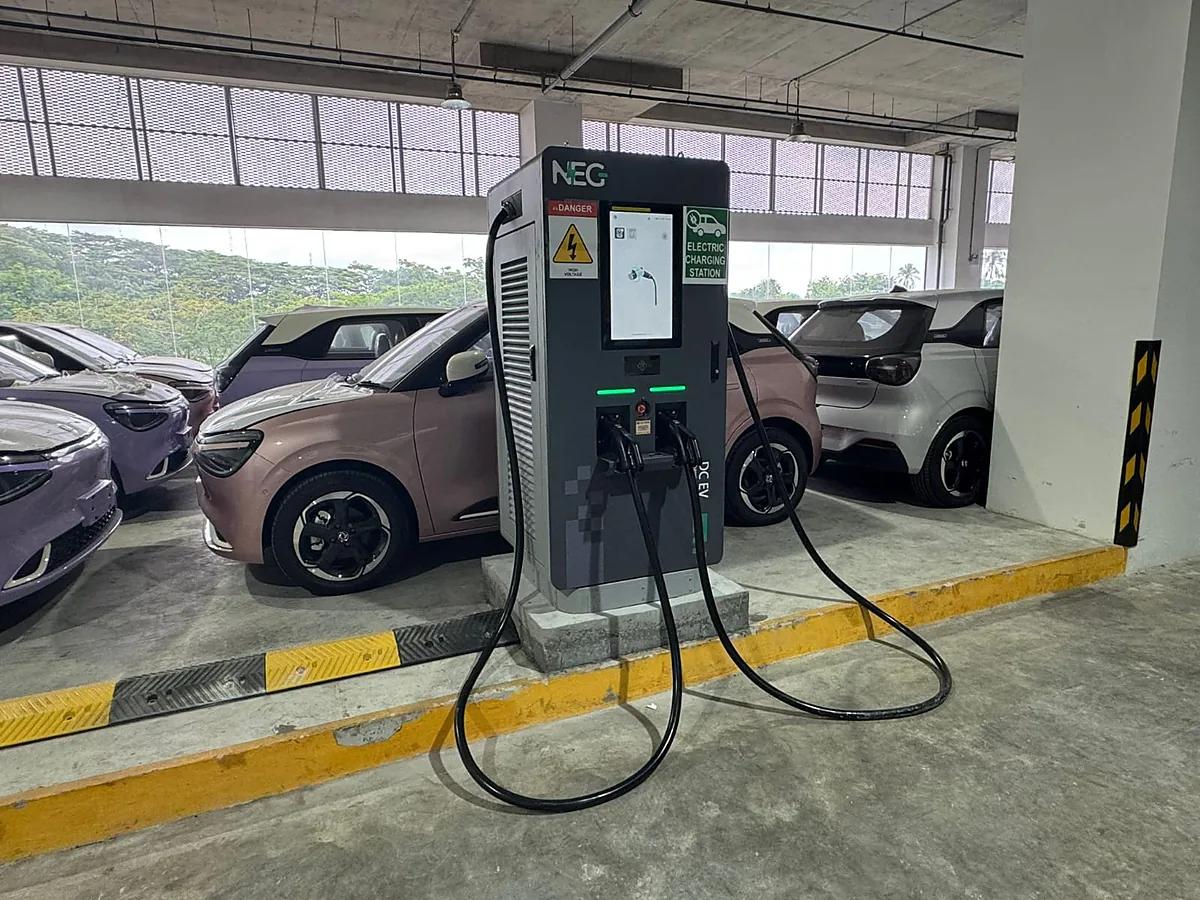
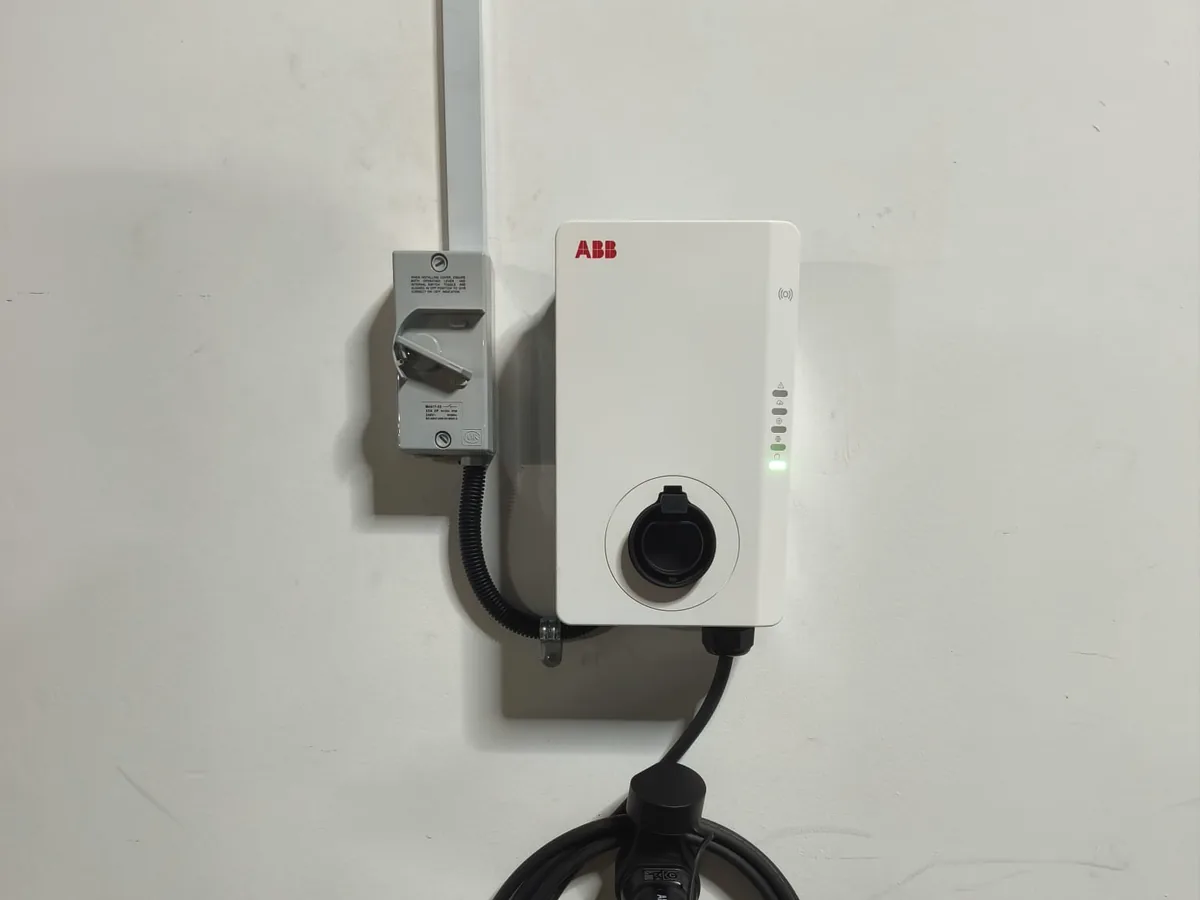
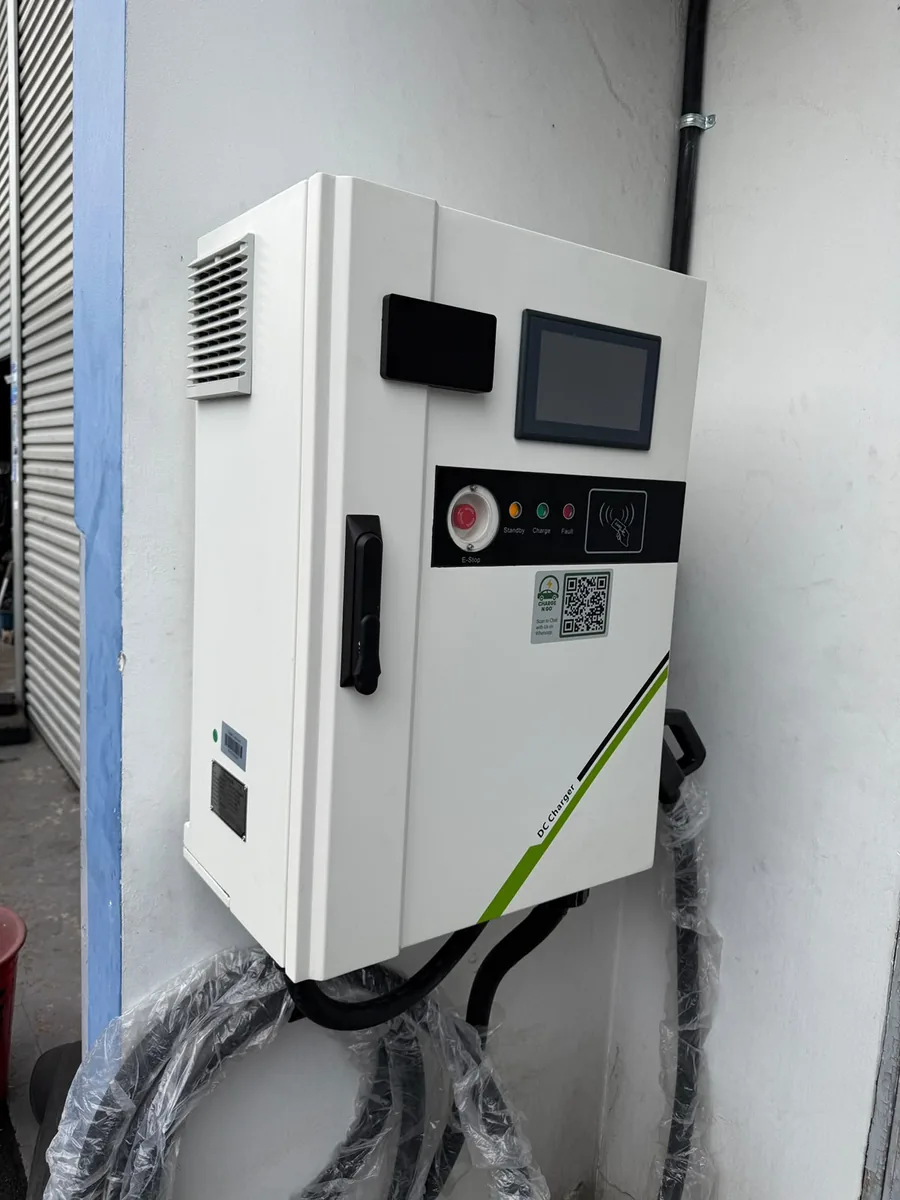
The difference is where the power is converted. On AC, the vehicle's onboard charger does the conversion and caps the speed: in Singapore that is typically a 7.4kW, 11kW or 22kW wall charger. On DC, the charger converts the power itself and feeds the battery directly. Our DC range runs from a 30kW wall unit up to 240kW cabinets.
For a depot, the practical test is the charge window. If a van or car is parked all night, AC is usually enough. If a lorry or coach must leave again in a short gap, or several vehicles share a bay through the day, DC is the tool that fits that window. Many depots use both: AC for the vehicles that sleep on site, DC for the ones that only stop.
| AC wall chargers | DC (30kW wall unit and up) | |
|---|---|---|
| Charge window | Hours, typically overnight or a long layover | Minutes to a couple of hours, depending on the vehicle and the rating |
| Typical use | Company cars, vans and any vehicle that parks for a full shift or night | Vehicles that must turn around between runs, or heavy vehicles that need a large top-up |
| Supply impact | Each bay draws a modest, steady load; several can share a board with load management | A much larger draw per bay; the incoming supply and the switchboard have to be sized for it |
| When to choose it | When dwell time is long enough for the onboard charger to do the work | When the energy needed and available charging window require DC, subject to the vehicle and site limits |
Speed still has a ceiling: the vehicle. A car that only accepts 7.4kW on AC will not charge faster on a 22kW wall unit, and a vehicle's DC acceptance caps what a cabinet can deliver. Our AC vs DC guide walks through that limit in more detail.
How much power the site can supply
The incoming supply and the switchboard decide how many chargers can run at once. A neat row of bays on a drawing means little if the board cannot feed them together at the end of a shift. That is why the electrical picture comes before a hardware shortlist.
A commercial site survey looks at the incoming capacity, spare ways and load on the board, the route from the board to the bays, and whether the chargers will share power. If the existing supply cannot support the first phase, a supply upgrade is an application to SP Group, made by a Licensed Electrical Worker. How long that takes depends on the site; we do not publish a standard timeline, because SP Group sets the process for each application.
Load management is how a depot stays within the supply it has. In a static setup, each charger is given a fixed cap so the row cannot exceed a limit. In a dynamic setup, the available power is shared across the bays that are actually in use: if only two vehicles are plugged in, they can take more; if ten arrive at once, each takes a smaller share. That is often the difference between installing the bays you need now and waiting on a supply upgrade.
Some sites will still need more capacity, especially for DC cabinets. The survey should say so plainly, and separate 'what we can run on the board today' from 'what we can add after a supply change'. Until that is written down, a charger count is only a wish list.
How many chargers, and how to share them
A charger-to-vehicle ratio is a way to think, not a number we can promise. A fleet that parks overnight and leaves at the same hour may need something close to one AC bay per vehicle. A fleet that returns in a trickle, or that can move vehicles onto a bay after the first ones have finished, can share fewer bays. A short midday window works the other way: you may need more power per bay, not more bays.
Start from the schedule. How many vehicles are on site, and plugged in, at the busiest moment? How long can each stay? If they cannot all sit on a charger for the full window, you either add bays, raise the power on each bay, or change how vehicles are staged. Load management sits in the middle of that choice: it will not invent energy the supply does not have, but it can stop idle bays from reserving power that a waiting vehicle could use.
Shared bays also need a simple rule for who starts a charge and how you see the session afterwards. On a depot, that is usually RFID, a site account, or a back-office system talking to the chargers over OCPP, the open protocol most networked chargers use. OCPP matters when you want to change software later without replacing the hardware, and when more than one person needs a live view of the bays. Who holds the session data is a site decision, agreed with whatever backend you choose; the protocol itself does not award ownership.
Grants: when EHVCG applies
Singapore's charger grant for depots is the Electric Heavy Vehicle Charger Grant (EHVCG). It is not a general fleet grant. Ordinary company cars, and other vehicles that are not electric heavy vehicles, do not qualify. The full conditions live on LTA's charger-grants page and in our grants guide; the points below are only the gates that most often decide a depot job.
- The charger must be rated at least 50kW and must be a smart charger.
- The applicant must register a new electric heavy vehicle between 1 January 2026 and 31 December 2028 for each co-funded charger; the same vehicle cannot support a second charger claim. Heavy vehicles have a maximum laden weight above 3,500kg. Check all vehicle eligibility conditions in LTA's current guidelines, including the exclusion of Restricted Use vehicles.
- The charger is to be installed at a designated lorry or coach lot.
- EHVCG co-funds up to 50% of eligible charger-installation costs, capped at S$30,000 per charger and subject to component limits. It is available until 31 December 2028 or until 500 chargers have been approved, whichever is earlier, with up to three chargers per site for each applicant.
- Do not install a grant-funded charger before LTA issues the Letter of Offer. Receipts for claimable charger-installation costs must be dated after approval. The application can include a purchase order or deposit receipt for the electric heavy vehicle; that is not blanket permission to claim charger costs paid before approval.
Will you register a new electric heavy vehicle (over 3,500kg) between 1 Jan 2026 and 31 Dec 2028?
No: The EHVCG does not apply: the grant follows the vehicle, not the site.
Is the charger rated 50kW or more?
No: Not eligible. 30kW DC units and AC wallboxes fall below LTA's minimum.
Apply through the Business Grant Portal
With the vehicle purchase order or deposit receipt, and itemised quotations
Wait for the Letter of Offer
Do not install the charger before it arrives
Install within one year, and claim
50% of eligible costs, up to S$30,000 per charger, up to three chargers per site
A 30kW wall unit sits below the 50kW gate, so it does not meet this grant's charger rating even when it is the right tool for a short turnaround. That is another reason many mixed fleets separate 'what the duty cycle needs' from 'what a heavy-vehicle grant can support'.
A phased roll-out
Most depots should not try to electrify every bay in one weekend. A short sequence keeps the first vehicles charging while the supply, the schedule and the drivers' habits are still being learned.
- 1
Survey the site
Walk the yard, the board and the parking pattern. Record dwell times and the incoming supply. A free commercial site survey is how we do this.
- 2
Pilot a small number of bays
Energise enough chargers to cover a real slice of the duty cycle, with the cable route and board space already allowed for later bays.
- 3
Scale against what the pilot shows
Add AC or DC bays once you can see how long vehicles actually sit, and whether the supply needs to change. If EHVCG applies, keep the grant's Letter of Offer ahead of any install it covers.
- 4
Monitor and maintain
Networked chargers should be watched: failed sessions, offline units and uneven use show up early. Plan ongoing maintenance rather than waiting for a bay to go dark.
Time on site depends on the hardware. A 30kW DC wall unit is typically about five hours on site; a typical AC install is one to three hours on site and one to three days to the first charge, after the usual approvals. Cabinet DC is set at the survey. None of those figures is a promise for a whole depot, because cable runs, civil work and supply upgrades sit outside them.
What the site survey checks at a depot
The survey is where the plan becomes a layout. It is also where we stop guessing about the board.
- The incoming supply, spare capacity and the switchboard: how much can run at once, and whether a supply application to SP Group is needed.
- The parking layout, traffic flow and where a vehicle's charge port sits when it is parked as drivers actually park it.
- Cable routes, trenching or containment, and how later bays can be added.
- Whether AC, DC or a mix fits the dwell times you recorded, including any 50kW-or-above bays if EHVCG is in play.
- Load management, networking and access control (RFID, accounts, OCPP).
- Who will own day-to-day operation, and how maintenance will be handled once the bays are live.
Bring a vehicle list, a typical week's timetable and the maker's battery and charging-limit figures. Record who will operate the chargers: fleet owners charging only their own fleet do not need an EV charging operator licence, but operators running chargers on their behalf do, and public or staff/visitor charging can bring licensing requirements. The site plan should distinguish those uses before bays are commissioned.
Sources
The official pages this guide was checked against.
- Charger grants (ECCG and EHVCG) (Land Transport Authority, last updated 4 September 2026)
- Strengthening Singapore's EV ecosystem (Land Transport Authority, 5 March 2025)
- Regulating the safety of EV chargers (Land Transport Authority)
- Electric Vehicle Guide for Drivers (Land Transport Authority, 2024)
- How to apply for electricity connection (SP Group, January 2026)
- Transitioning to EVs: incentives and grants (Land Transport Authority, last updated 17 September 2026)
- Open Charge Point Protocol (OCPP) (Open Charge Alliance)
Written by Charge N Go's installation team. We supply and install EV chargers for homes and businesses across Singapore, and we update this guide when the rules or the sources above change.