Renovating or rebuilding? How to plan an EV charger into your landed home
Plan an EV charger during a Singapore home renovation or rebuild: the circuit, conduit, supply and charger position, even if you are not buying a car yet.
The short answer
Plan the EV charger circuit while the renovation is still on the drawings, before walls, ceilings or paving are closed. Allow for the circuit, conduit route, isolator and mounting position even if the charger will be fitted later. A free site survey can check the proposed route and supply before the electrical design is finalised.
- Build in the circuit, conduit, isolator position and mounting wall while the fabric is open; fitting the charger can wait.
- Decide single-phase or three-phase before the electrical works, not after the plaster.
- Place the charger for cable reach, weather and a second car, not only for how the porch looks on paper.
- LTA type-approves charger models; a fixed charger is installed by a Licensed Electrical Worker and certified by a charger equipment specialist before registration and use.
- There is no government grant for a charger at a landed home. Book the survey at the drawing stage.
On this page (7 sections)
Why plan the charger during a renovation?
A retrofit may be possible later, subject to the site and supply, and our home installation guide covers that path. A renovation or a rebuild is different because cable-route work can be simpler when the distribution board is being altered and the route to the porch is still accessible. Chasing a finished wall, lifting a new driveway or opening a completed ceiling to add a circuit is the expensive version of the same job.
You do not need to be buying an EV this year for that to be worth doing. A dedicated circuit and a conduit to the parking spot are small items in a larger set of electrical drawings. They are awkward after the house is handed back. The charger itself can be specified later, as long as the route, the isolation and the space on the board have been left for it.
This is also the moment to think about the supply. If you want the option of an 11kW or 22kW charger, and the house is still single-phase, a supply change is a much larger conversation once the renovation is finished. Our 7kW vs 22kW guide explains what each supply can take. What that work costs is a matter for the cost guide and a site survey, not for a figure on this page.
What to build in now
Think of this as a short list for the electrical and architectural drawings, not as a shopping list for a particular brand.
- A dedicated circuit and spare space in the distribution board, with its own protection, reserved for the charger.
- A conduit route from the board to the parking spot, sized so a later cable can be pulled without opening finished surfaces.
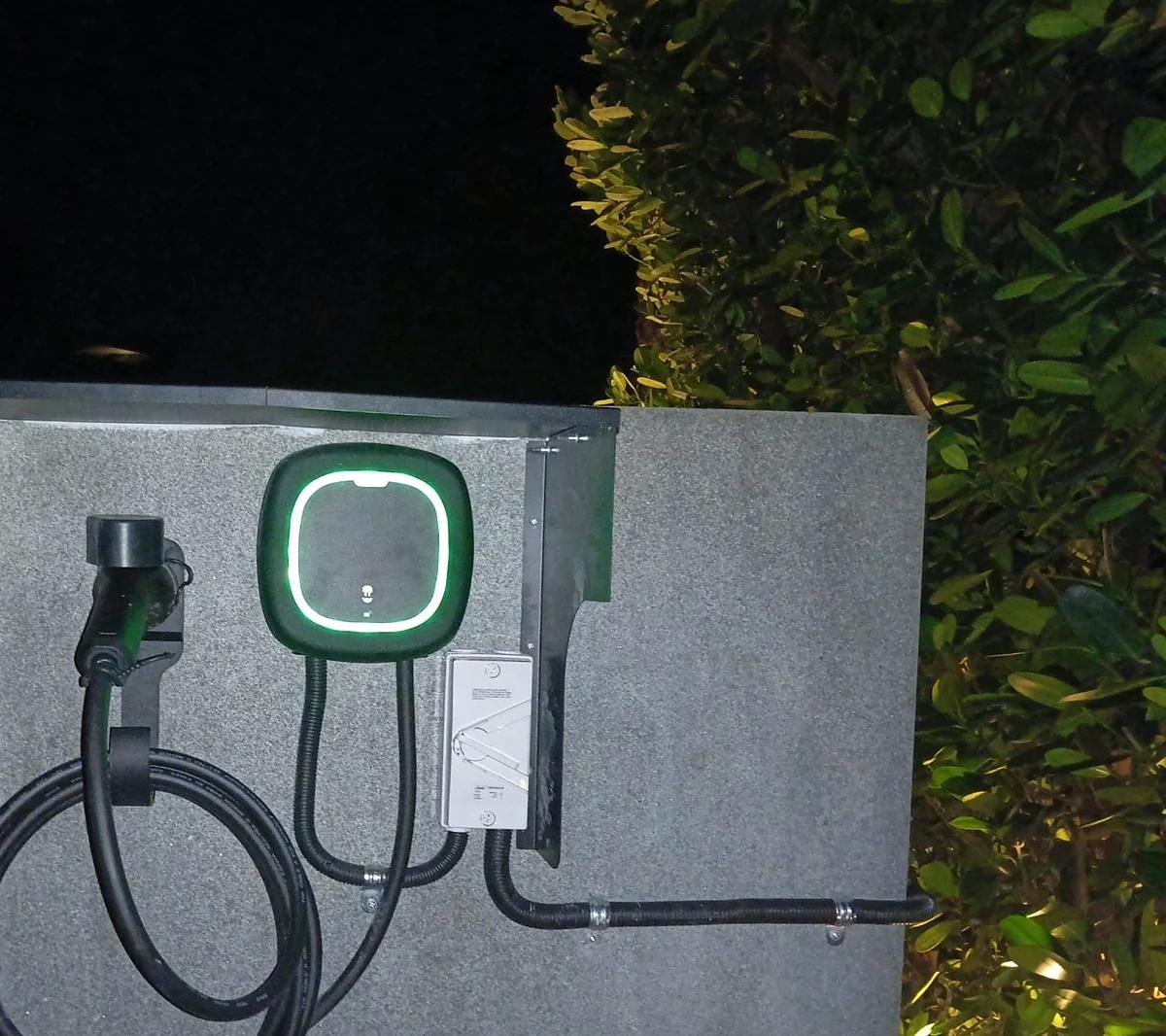
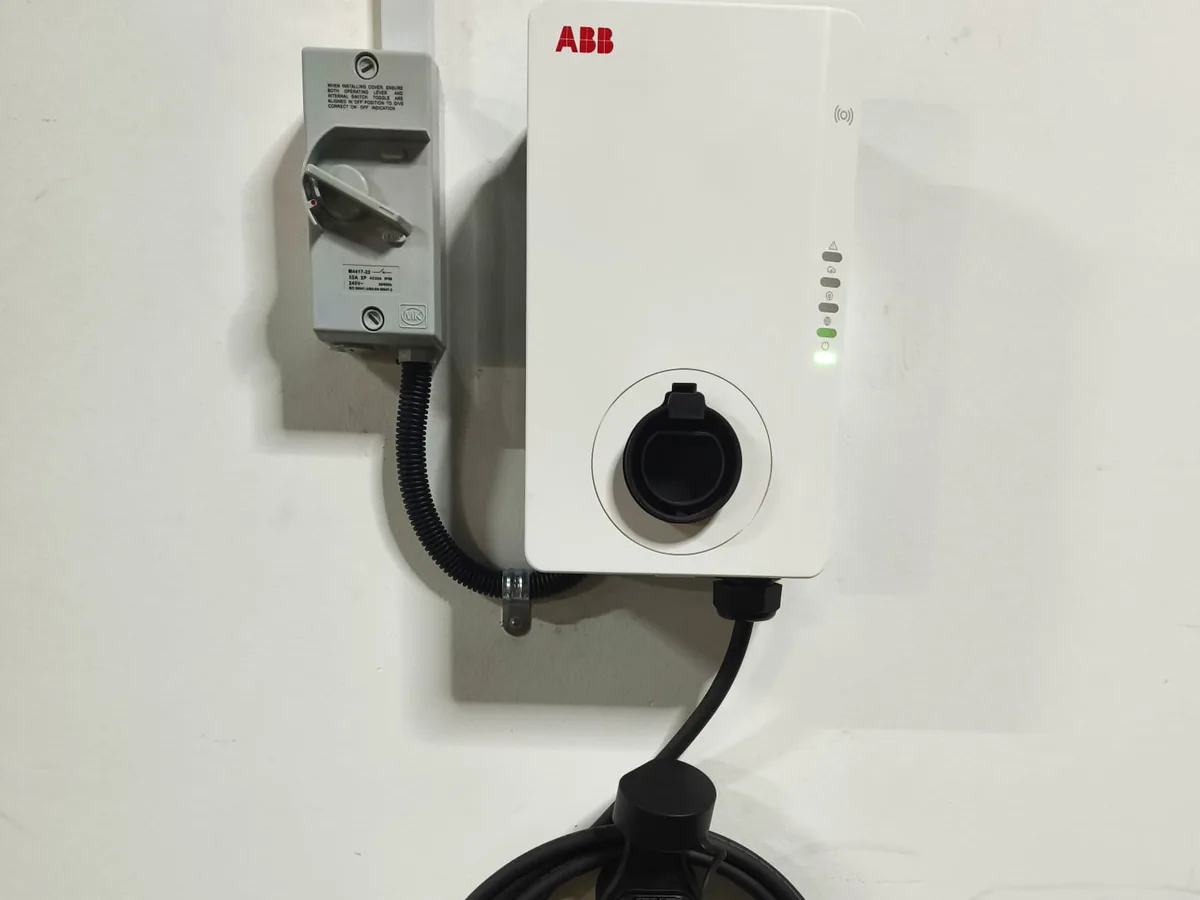
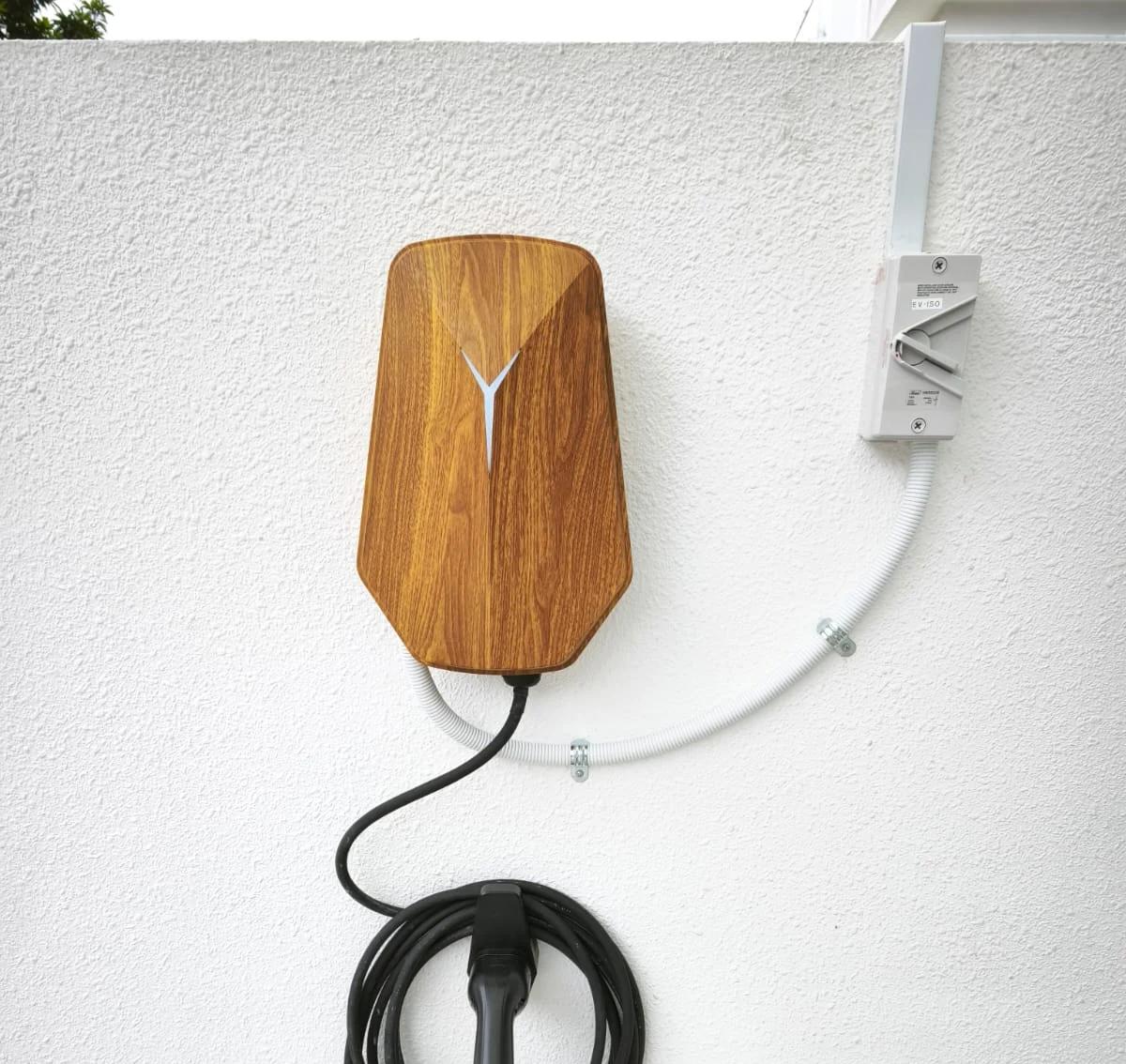
- An isolator position next to the charger, so the unit can be switched off on its own.
- A mounting wall or pillar that can take the charger's weight and keep the cable off the ground, with room for the isolator beside it.
- A thought about Wi-Fi or 4G at the parking spot, if you want a smart charger later. Signal in the house is not the same as signal at the porch.
If the renovation already includes a new board, ask for a spare way and a labelled route to the car porch on the first issue of the drawings. Adding them as a variation later is how they get missed.
An addition and alteration (A&A) and a full rebuild are the same job in one respect: the circuit is cheap when the walls are open, and expensive when they are not. They differ in how much of the electrical system is already being touched. On a rebuild, the charger route should be on the first electrical drawings, alongside the new board and the supply application. On an A&A, the existing board, the existing porch and any new extension have to be read together, so the conduit is not cut off by a finished beam or a waterproofing layer that nobody wants to open again.
Single-phase or three-phase: decide before the electrical works
SP Group supplies low-voltage connections in single-phase and three-phase configurations. For the home chargers discussed here, 7.4kW is a common single-phase rating; 11kW and 22kW models need three-phase supply. The actual usable capacity depends on the property's connection, other electrical loads and the circuit design. Extra AC power only helps if the car can accept it, so the Licensed Electrical Worker must assess the proposed installation.
Single-phase
230V on one phase
32A × 230V ≈ 7.4kW at most
Three-phase
400V across three phases
16A per phase ≈ 11kW · 32A per phase ≈ 22kW
If the house is being rebuilt, or the electrical works already include a conversation with SP Group, this is the moment to decide whether the new supply should be three-phase. A supply change on a finished house is a separate application, made by a Licensed Electrical Worker, and it has its own timeline, which SP Group sets. We do not publish a standard duration for it.
Do not let the drawings assume a size 'because most cars need it'. The honest sequence is: what the car can accept, what the supply can deliver, then which charger to hang. The 7kW vs 22kW guide walks through that matching, and the site survey settles it for your house.
Where to put the charger
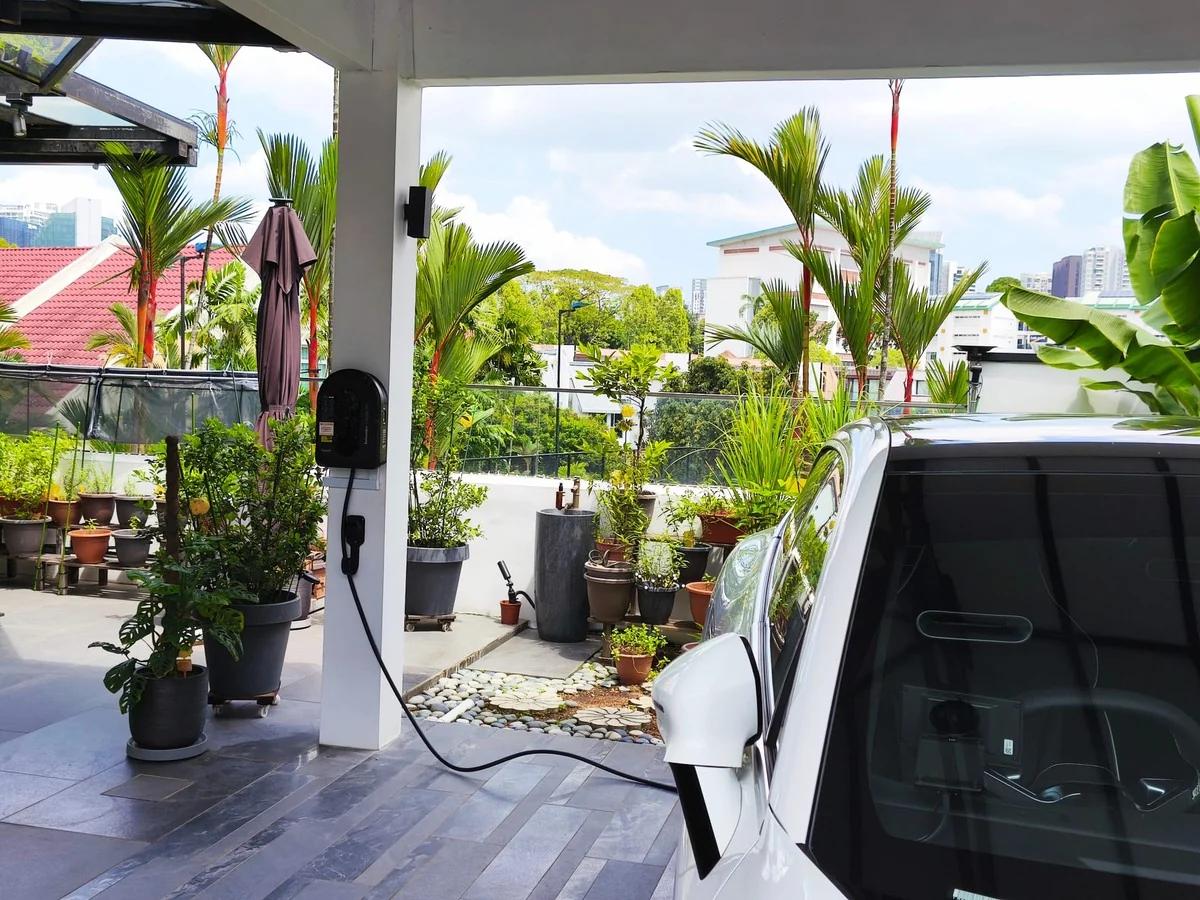
The charger should reach the car's charge port when the car is parked the way you actually park, not the way a plan view assumes. On a landed home that usually means the porch or the carport, close enough that the tethered cable does not cross a walkway, a drain or a second parking space.
Think about weather. An outdoor unit needs a wall or a pillar that stays reasonably dry, and a cable that is not lying in standing water. A small canopy helps; it is not a substitute for an outdoor-rated, type-approved model. If the porch floods or catches driving rain, say so at the survey: the mounting height, the isolator and the cable route all change.
If you have, or may have, a second car, leave a route or a second mounting position so a later bay does not have to cross the first car. You do not have to install two chargers now. You do have to avoid boxing in the only good wall.
The installations gallery shows how these choices look on finished jobs: conduit, isolator and a clear cable holster, rather than a unit dropped onto the nearest leftover wall.
Working with your contractor and the LEW
A renovation contractor can coordinate the builders' work: leaving a conduit, keeping a wall free, timing the board. They should not be treated as the person who installs the charger unless they are, or they engage, a Licensed Electrical Worker who will do that part of the job.
Two things are easy to mix up and should stay distinct, as our LTA type-approval guide sets out. LTA type-approves charger models. It does not approve installers. A Licensed Electrical Worker installs the charger and the circuit. A charger equipment specialist then certifies it, and the Certificate of Fitness is what the charger is registered with. The owner is responsible for registration. LTA permits an appointed third party to submit an application, but Charge N Go does not carry out LTA registration for you, and the LTA registration fee is not included in our quote.
The practical way to run this in a renovation is to bring the charger installer in at the drawing stage, so the LEW and the contractor are looking at the same route. If the charger is only discussed after the plaster, the contractor has already finished the work that would have made the circuit tidy.
Not buying an EV yet? Future-proof it
Pre-wiring is the name usually given to doing the circuit, the conduit and the isolator position now, and fitting the charger later. It is a good idea when the renovation will close the walls, and you are not ready to choose a model. It is a poor idea when 'pre-wire' is used as an excuse to skip the survey: the board space, the supply and the mounting position still need someone to look at them.
You do not have to choose a brand to pre-wire. You do have to choose a sensible cable size and a mounting location that will fit the chargers actually sold for Singapore, which means an LTA type-approved model with a Type 2 connector. Leave a little extra space around the isolator: models are not all the same width.
When you later pick the unit, the same compliance steps apply as for any home charger: type-approved hardware, installation by a Licensed Electrical Worker, certification and registration before use. The pre-wire just means those steps start from a circuit that already exists, instead of from a finished wall.
The site survey for a renovation project
Call at the drawing stage, not after the plaster. Bring the architectural and electrical drawings, and say whether an EV is already in the household or only planned. If a contractor and a Qualified Person are already on the job, it helps if they can join, or at least share the latest issue of the drawings.
| Stage | What to decide | Who is involved |
|---|---|---|
| Drawings and design | Parking position, mounting wall, conduit route, board space, single-phase or three-phase | Owner, architect or contractor, and the charger survey |
| Electrical works | Dedicated circuit, isolation, any supply application to SP Group | Licensed Electrical Worker, with the contractor coordinating access |
| Finishes and handover | Mounting, charger fitment if you are buying it now, or a capped conduit if you are pre-wiring | Installer and contractor |
| When the car arrives later | Choose a type-approved model, install, certify and register it | LEW and equipment specialist for installation and certification; owner for registration |
- 1
Share the current drawings
Architectural and electrical, even if they are still a draft. Mark the parking spot and the board.
- 2
Walk the porch and the board with us
A site survey at this stage checks the route, the supply and the mounting wall before the contractor closes anything.
- 3
Write the circuit into the programme
Dedicated way, conduit, isolator, mounting position, and a decision on single-phase or three-phase. Pre-wire if the charger itself will wait.
- 4
Install, certify and register when the unit goes in
Whether that is during the renovation or later, the Licensed Electrical Worker, the certification and the registration still have to happen before first use.
The survey puts the proposed charger route, board capacity and mounting position into the electrical plan before finishes are closed. Record the agreed provisions on the drawings so the contractor and electrical worker are working from the same revision.
Sources
The official pages this guide was checked against.
- How to apply for electricity connection (SP Group, January 2026)
- FAQs on electricity supply connection for landed residential premises (SP Group)
- Regulating the safety of EV chargers (Land Transport Authority)
- Guidelines for the registration of EV chargers (Land Transport Authority, as of 3 November 2025)
- EV charger registration (OneMotoring, Land Transport Authority)
- Charger grants (ECCG and EHVCG) (Land Transport Authority, last updated 4 September 2026)
- Electric Vehicle Guide for Drivers (Land Transport Authority, 2024)
Written by Charge N Go's installation team. We supply and install EV chargers for homes and businesses across Singapore, and we update this guide when the rules or the sources above change.